

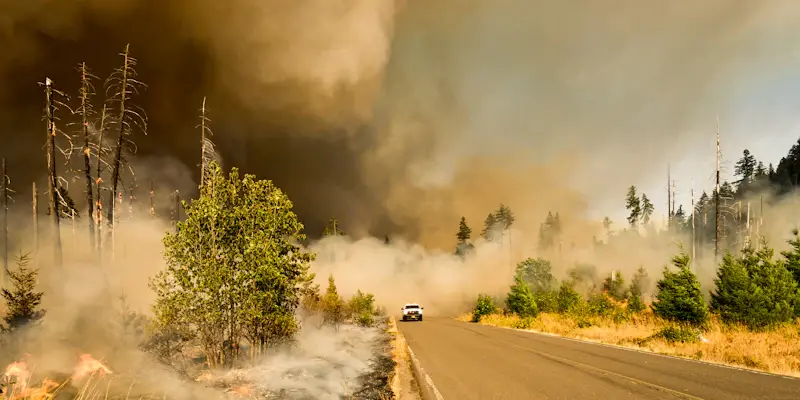
In a world increasingly threatened by climate change and its devastating impacts, wildfires have become one of the most destructive natural disasters, posing significant challenges for insurers. Traditional wildfire risk assessment methods often fall short in predicting and mitigating these risks, leading to substantial financial losses. As wildfire seasons grow longer and more severe, the insurance industry must embrace innovative solutions to better evaluate and manage wildfire exposure. ZestyAI’s AI-powered wildfire risk model, Z-FIRE, is poised to revolutionize wildfire risk assessment for insurers, offering a cutting-edge tool that combines scientific research, advanced technology, and granular data analysis.
Enhanced Underwriting and Risk Segmentation
Z-FIRE utilizes AI-driven analysis of over 2,000 historical wildfires, incorporating satellite and aerial imagery, topography, and property-level data to deliver precise risk assessments. This advanced model, supported by decades of scientific research and experimentation by institutions such as the Insurance Institute for Business & Home Safety (IBHS), covers nearly all U.S. properties. Trusted by over one-third of California’s insurance market, including the CA FAIR Plan, Z-FIRE represents a significant leap forward in the accuracy and reliability of wildfire risk modeling.
By enabling insurers to refine their underwriting processes, Z-FIRE enhances risk segmentation, ensuring that premiums accurately reflect wildfire exposure and vulnerability. The model’s precision allows insurers to make more informed decisions, reducing the likelihood of non-renewal or declined policies. According to Attila Toth, Founder and CEO of ZestyAI, Z-FIRE can be seamlessly integrated into rate filings, adhering to the highest actuarial and scientific standards. This translates to greater market stability and increased confidence among insurers and policyholders alike.
Real-World Validation and Mitigation Collaboration
The effectiveness of Z-FIRE is continuously validated through post-event analyses. After recent Los Angeles wildfires, preliminary analysis demonstrated a strong correlation between Z-FIRE’s highest-risk ratings and the hardest-hit areas, highlighting the importance of granular, structure-level insights in assessing wildfire risk. This level of detail is crucial, as it underscores that over 1.5 million structures in California are at high or very high risk of wildfire exposure. Such insights are invaluable for insurers seeking to better understand and manage their portfolios.
Moreover, Z-FIRE enables insurers to move beyond simple “insure or drop” decisions. Instead, it facilitates collaborative efforts with policyholders to reduce vulnerability through mitigation measures. For example, creating defensible space around properties and using fire-resistant roofing materials can significantly lower the risk of wildfire damage. Since its adoption, Z-FIRE has helped insurers write hundreds of thousands of policies that might have otherwise been non-renewed or declined, demonstrating its pivotal role in fostering a more resilient insurance market.
Regulatory Compliance and Market Adoption
Extensive engagement with the California Department of Insurance (CDI) has been crucial in establishing Z-FIRE’s credibility and ensuring its regulatory compliance. ZestyAI has actively participated in multiple CDI workshops and co-hosted a webinar on the new regulatory framework. This collaborative approach has paved the way for the approval of multiple carrier rate and underwriting filings using Z-FIRE, further solidifying its acceptance within the industry.
An independent actuarial review conducted in 2020 also reinforced the model’s credibility, providing insurers with additional assurance of its reliability. By meeting stringent regulatory standards and receiving formal endorsements, Z-FIRE has gained the trust of insurers and regulators alike. This trust is critical as the insurance industry grapples with the escalating challenges posed by wildfires and seeks innovative solutions to safeguard both their financial stability and their policyholders’ assets.
Future Prospects and Industry Impact
In a world increasingly threatened by climate change and its devastating impacts, wildfires have emerged as one of the most destructive natural disasters, presenting significant challenges for insurers.– Traditional methods for assessing wildfire risk often fall short, failing to accurately predict and mitigate these risks, and leading to substantial financial losses. As wildfire seasons grow longer and more severe, the insurance industry must adopt innovative solutions to more effectively evaluate and manage wildfire exposure. ZestyAI’s AI-powered wildfire risk model, Z-FIRE, is set to transform wildfire risk assessment for insurers. This cutting-edge tool combines scientific research, advanced technology, and granular data analysis to provide a more accurate and comprehensive understanding of wildfire risks. By leveraging Z-FIRE, insurers can improve their risk management strategies, better protect their clients, and reduce potential losses, ultimately contributing to a more resilient approach to wildfire risk in our changing world.