

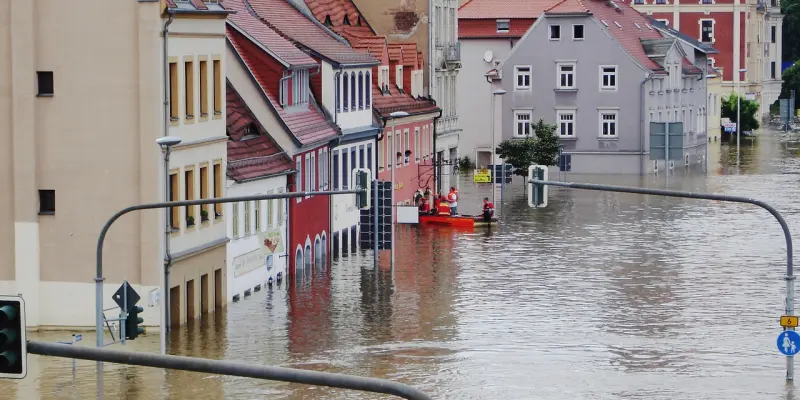
Flood risk is one of the significant challenges that businesses in the UK and Ireland face today. The increasing frequency and intensity of flood events, driven largely by climate change, necessitate innovative solutions to protect businesses and maintain resilience. One noteworthy development is the partnership between Previsico, flood forecasting specialists, and Descartes, a leader in corporate parametric insurance solutions. This collaboration leverages advanced technology to provide enhanced flood risk coverage, which is crucial for businesses aiming to safeguard their assets and operations against flooding.
Advanced Flood Forecasting Technologies
Previsico’s Flood Intel Platform
Previsico’s Flood Intel Platform is a cutting-edge tool designed to help businesses manage flood risks more effectively. The platform provides precise forecasts of flood depth and duration up to 48 hours in advance, enabling businesses to prepare for potential flooding events. Unlike traditional flood prediction methods, which often rely on historical data and general floodplain models, Previsico’s platform uses real-time data from advanced IoT sensors. These sensors are strategically placed to monitor local water levels and weather conditions, ensuring accurate and timely flood predictions.
The ability to predict flood events with high accuracy allows businesses to take preemptive measures, such as moving valuable inventory to higher ground, reinforcing flood defenses, and ensuring staff safety. These proactive steps can significantly reduce the damage and disruption caused by floods, ultimately protecting a business’s bottom line. Furthermore, the platform’s continuous monitoring feature means that businesses receive updated information as conditions change, allowing them to adapt their response plans as necessary. This real-time monitoring is essential for mitigating the impact of sudden and unexpected flood events that can cause widespread damage.
Real-Time Data Integration
One of the standout features of the collaboration between Previsico and Descartes is the real-time integration of flood data into insurance models. Descartes uses the data provided by Previsico’s sensors to trigger rapid claims payments automatically. This parametric insurance model differs from traditional insurance policies, which often require lengthy claims assessments and processing times. Instead, businesses receive payouts swiftly, based on predefined triggers such as specific water levels detected by the IoT sensors. This immediate financial support can be critical for businesses looking to recover quickly from a flood event.
The seamless integration of real-time data into the insurance process not only simplifies claims but also provides transparency and predictability for businesses. They know exactly what conditions will trigger a payout and can plan accordingly. This clarity ensures that businesses can manage their flood risk more effectively, with a clear understanding of the financial support available to them in the event of a flood. The combination of advanced forecasting and rapid, automatic insurance payments represents a comprehensive approach to flood risk management.
Parametric Insurance Solutions
Swift Claims Process
Descartes’ parametric insurance solutions are designed to provide businesses with rapid financial relief following a flood event. Traditional insurance claims processes can be time-consuming and complicated, often involving extensive documentation and assessments. However, with parametric insurance, claims are processed based on predefined criteria, such as specific flood water levels detected by Previsico’s sensors. This innovative approach ensures that businesses receive payouts promptly, typically within days of a flood event. Swift claims processing is crucial for businesses facing the immediate aftermath of flooding, allowing them to cover urgent expenses and start the recovery process without delay.
The parametric model also offers businesses a higher degree of certainty compared to traditional insurance. Since payouts are based on measurable and objective criteria, businesses can be confident that they will receive financial support when it’s needed most. This reliability is particularly important for small and medium-sized enterprises (SMEs), which may lack the financial reserves to withstand prolonged disruptions. By providing quick and predictable payouts, parametric insurance helps SMEs maintain their operations and avoid long-term losses.
Bespoke Payout Structures
Another advantage of Descartes’ parametric insurance is the bespoke payout structures tailored to the severity of the flood event. Unlike one-size-fits-all insurance policies, parametric insurance can be customized to match the unique risks and needs of each business. This flexibility ensures that businesses receive payouts that are proportional to the extent of the damage, providing adequate financial support for both minor and severe flooding events. The ability to tailor insurance coverage in this way enhances the overall resilience of businesses, allowing them to recover more effectively from varying levels of flood impact.
The bespoke nature of parametric insurance also allows businesses to optimize their risk management strategies. By understanding the specific triggers and payout levels, businesses can better align their preparedness and response plans with their insurance coverage. This alignment ensures a cohesive approach to flood risk management, where every aspect of the response plan is designed to maximize resilience and minimize financial loss. In an era where climate change is expected to exacerbate flood risks, such tailored and integrated solutions are indispensable for protecting business interests.
The Broader Implications
Building Resilience
The partnership between Previsico and Descartes exemplifies how advanced technologies and innovative insurance solutions can collectively enhance flood resilience for businesses. By leveraging accurate flood forecasts and real-time data integration, companies can take proactive measures to protect their assets and ensure swift financial recovery in the event of a flood. This dual approach not only mitigates immediate risks but also helps businesses build long-term resilience against the increasing threat of climate-driven flooding.
Future Preparedness
Flood risk is among the most significant challenges currently faced by businesses in the UK and Ireland. With climate change driving an increase in the frequency and intensity of flood events, companies must seek innovative solutions to maintain resilience and protect their assets. One notable advancement is the collaboration between Previsico, specialists in flood forecasting, and Descartes, leaders in corporate parametric insurance solutions. This partnership harnesses the power of advanced technology to offer enhanced flood risk coverage. This is vital for businesses striving to secure their assets and ensure continuity of operations in the face of flooding. The predictive capabilities provided by Previsico can forecast potential flooding events, giving businesses critical time to implement protective measures. Meanwhile, Descartes’ parametric insurance complements this by offering swift financial support based on pre-agreed parameters, reducing downtime and financial loss. This joint effort highlights the importance of merging technological innovations with strategic insurance solutions to create a robust defense against flood risks.