

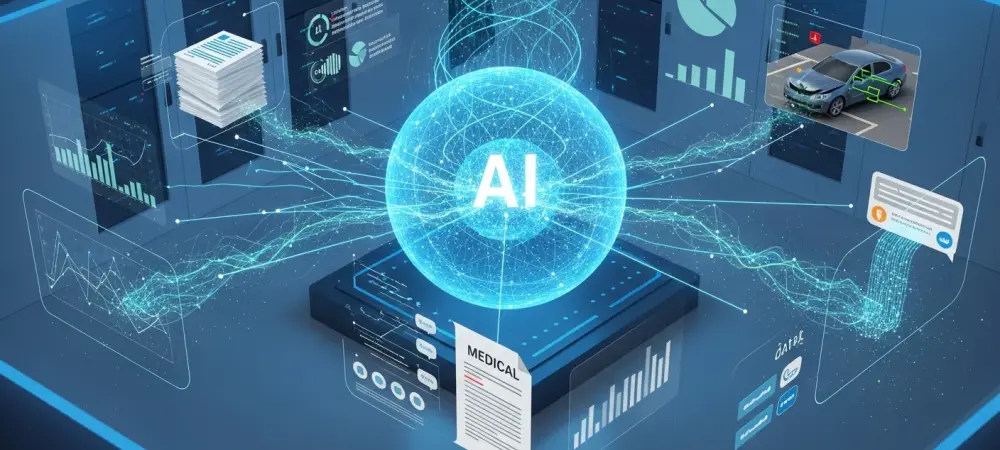
The traditional image of a claims adjuster buried under mountains of paperwork and fragmented data is rapidly fading. As artificial intelligence evolves from a passive assistant that merely flags risks into an active “agent” capable of orchestrating outcomes, the insurance industry is witnessing a fundamental rewiring of its core functions. This transformation isn’t just about speed; it is about shifting the focus from simply automating tasks to actively moving work forward through complex decision-making sequences. Today, we sit down with a leading expert in insurance technology to explore how agentic AI is redefining the “Golden Hour” of response, moving the industry toward a model of continuous prevention and navigating the emerging risks of autonomous liability.
The transition toward agentic AI represents a massive leap in how we handle the lifecycle of a claim. We are moving away from systems that wait to be queried and toward technology that actively participates in the work. By analyzing the First Notice of Loss (FNOL) immediately, these agents can identify exposures and propose concrete next steps without human prompting. This shifts the handler’s role from manual coordination to high-level oversight, prioritizing “momentum” as a key performance outcome. When a system can simultaneously analyze documents, images, and written descriptions to route a claim accurately, it ensures the process doesn’t just start faster, but stays on track until resolution.
AI is transitioning from simply surfacing information to actively moving workflows forward by identifying exposures and proposing concrete next steps. How does this shift from “assistant” to “agent” redefine the daily responsibilities of a claims handler, and what specific performance outcomes are being prioritized in this new model?
This shift fundamentally redefines the handler’s day by moving them away from the “grunt work” of manual data entry and task sequencing. Instead of spending hours gathering documents or chasing down information, the handler acts as a conductor of an automated orchestra. The technology now proactively proposes actions rather than just flagging a risk for the human to investigate later. We are prioritizing outcomes like “orchestration efficiency” and “triage accuracy,” where the goal is to move a claim from intake to resolution with as few manual touches as possible. It’s a transition from simply assisting with individual activities to managing a self-propelling workflow that identifies what needs to happen next before a human even logs into the system.
In cyber insurance, the “Golden Hour” of response is critical for reducing financial devastation. How do autonomous agents accelerate the triage and drafting of initial responses during these windows, and what measurable impact does this immediate speed have on the overall recovery process for a policyholder?
In a cyber incident, especially for a small business facing ransomware, speed is actually a security feature rather than just a customer service metric. A purpose-built claims agent can instantly triage an incoming report, assess the technical urgency, and draft the initial response within minutes of the notification. This immediate action drastically reduces the “financial devastation” a policyholder faces because the containment process begins almost instantly. By cutting down the time it takes to get the right experts involved, we see a tangible reduction in the overall cycle time of the claim and, more importantly, a significant decrease in the total business interruption costs.
Some systems now trigger autonomous interventions, such as shutting off water valves to prevent damage before a human even files a claim. What are the operational challenges of moving the claims function upstream into prevention, and how does this change the traditional insurance “promise to pay”?
Moving upstream requires a massive technical integration between physical IoT devices and insurance software, which is no small feat. The operational challenge lies in ensuring these systems can distinguish between normal behavior and a true emergency to avoid unnecessary disruptions. This shift essentially transforms the industry’s “promise to pay” after a loss into a “promise to protect” by preventing the loss entirely. At Quensus, for example, our agents identify abnormal water behavior and autonomously trigger shut-off valves without waiting for a person to intervene. This changes the claims department into a “resilience department” where the value is found in the damage that never happened.
When an AI agent independently negotiates with suppliers or authorizes payments, the liability surface changes significantly. How can organizations prevent small errors from compounding across a chain of autonomous decisions, and what safeguards are necessary to ensure these systems do not accelerate bad outcomes?
This is a critical concern because the autonomy that makes these systems useful is the same thing that allows errors to propagate at lightning speed. When you combine multiple AI models in a chain, the total reliability can fall sharply even if each individual model is 95% accurate. To safeguard against this, we must implement “controlled delegation” rather than blind automation, ensuring that the human-in-the-loop remains non-negotiable for high-stakes decisions. If a system is fed incomplete or inconsistent data, it can accelerate a bad decision with more confidence than a human ever could, so rigorous data validation at the entry point is the first line of defense.
Unsanctioned agents often interact with customer data or operate across critical infrastructure without explicit coverage in existing policies. How can insurers effectively detect these “silent” invisible exposures, and what adjustments must be made to policy language to account for autonomous agents acting as independent actors?
Detecting “silent AI” is difficult because many agents operate on personal devices or via unsanctioned hosted models that don’t leave an obvious trail on internal infrastructure. Insurers need to develop better external signals to prove where these agents are active, while remaining conservative about what their data can actually prove. We are reaching a point where policy language must be updated to explicitly define whether an “actor” is a human or an autonomous agent. Many current policies were not written with the scenario of an independent AI making a consequential error in mind, so we need to bridge that gap in the fine print to ensure coverage is priced accurately for these new digital risks.
Agentic AI is increasingly used to guide handlers through complex documentation and share institutional knowledge across the workforce. How does automating lower-complexity claims through straight-through processing allow for more personalized customer interactions, and what does the resulting redistribution of human talent look like?
By moving lower-complexity claims into fully autonomous, straight-through processing, we liberate our most experienced adjusters from the repetitive “easy” cases. This allows them to dedicate more time to complex, emotionally charged, or high-value claims that require true human empathy and nuanced judgment. The redistribution of talent means we see “claims knowledge” shared more evenly because the AI can guide junior handlers through difficult documentation using institutional data. Ultimately, this creates a bifurcated workforce where the machines handle the routine volume, and humans provide a more personalized, data-driven experience for customers facing major life disruptions.
High-quality, well-structured data is a prerequisite for orchestration tools to function across different systems. What are the primary technical hurdles when integrating autonomous agents into fragmented legacy workflows, and how can firms maintain “human-in-the-loop” oversight without sacrificing the speed gains provided by the technology?
The primary hurdle is the sheer fragmentation of legacy systems that weren’t designed to talk to one another, making it difficult for an agent to retrieve or autofill documentation seamlessly. Orchestration tools are still maturing, and their “explainability”—the ability to tell us why a decision was made—is still imperfect. To maintain oversight without losing speed, we focus on a model where the AI proposes the action and prepares all the supporting evidence, but a human provides the final “judgment” click. This keeps accountability where it belongs while still allowing the AI to do the heavy lifting of gathering and structuring the information.
What is your forecast for the future of the insurance claims department?
I believe the claims department will eventually evolve into a proactive “resilience department” where the primary goal isn’t just settling a loss, but managing risk 24/7. We will see a world where autonomous agents sit upstream of the loss, using real-time data to prevent accidents and malfunctions before they result in a claim. For those losses that do occur, straight-through processing will become the standard for the majority of cases, leaving humans to handle only the most complex and sensitive negotiations. The industry will move from being a reactive financial safety net to a continuous, proactive partner in safety and recovery.