

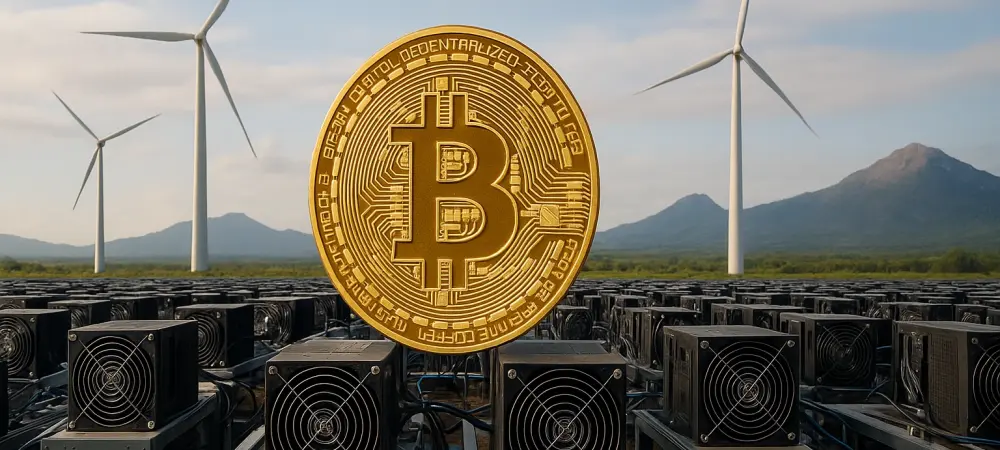
The once-volatile world of cryptocurrency mining has matured into a sophisticated pillar of global energy infrastructure, where physical hardware ownership now defines the boundary between speculative risk and institutional-grade asset management. This transition marks a fundamental departure from the era of opaque cloud contracts toward a transparent, hardware-centric model that prioritizes tangible assets. As of 2026, the sector has effectively bridged the gap between individual retail investors and massive industrial data centers, creating a hybrid ecosystem that functions with the precision of traditional financial services. This review analyzes the current state of the industry, focusing on the technological advancements, energy strategies, and operational standards that govern the modern mining landscape.
Evolution of the Mining Ecosystem: From Industrial Silos to Retail Empowerment
The transformation of the mining sector has seen a movement away from localized, private industrial silos toward a decentralized “hosted mining” model. In the past, industrial-scale mining was the exclusive domain of large corporations that could afford to build and maintain massive data centers near cheap energy sources. However, the 2026 landscape is defined by the democratization of this infrastructure. Modern providers now allow individual and enterprise buyers to purchase specific, serial-numbered hardware that is managed within professional facilities. This shift ensures that the economies of scale—low electricity costs, specialized cooling, and 24/7 security—are accessible to anyone, regardless of their physical location or technical expertise.
The core of this evolution lies in the separation of hardware ownership from operational management. While a buyer in Europe or North America owns the physical miner, the unit resides in a data center in a region with surplus energy, such as Ethiopia or Paraguay. This model has replaced the “cloud mining” scams of previous years with a verifiable asset-backed system. By 2026, the industry has standardized the process of remote management through intuitive mobile applications, allowing users to monitor their hashrate, adjust energy settings, and manage payouts with a few taps. This transition has turned what was once a technical hobby into a structured, professionalized infrastructure business that mirrors the managed services of the traditional IT world.
The relevance of this shift extends beyond simple convenience. It represents a fundamental restructuring of how energy and technology intersect. By allowing retail capital to flow into industrial-scale energy projects, the mining sector has become a vital partner for power grids worldwide. The ability to deploy high-performance computing hardware in remote areas has incentivized the development of renewable energy sources that would otherwise remain untapped. Consequently, the 2026 mining ecosystem is not just a digital asset factory; it is a global load-balancing mechanism that supports the modernization of energy infrastructure across multiple continents.
Core Technical Features and Evaluation Criteria
Verifiable Hardware Ownership and Hosted Infrastructure
The pivot toward verifiable hardware ownership is the most significant technical milestone in the current mining era. In contrast to the ephemeral nature of cloud hashing, 2026 standards require that every hosted unit be tied to a specific physical asset with a documented serial number and legal title. This structure provides a crucial layer of security; should a hosting provider face financial difficulties, the hardware remains the property of the customer. This legal clarity has invited a higher caliber of investor into the space, as the risk is shifted from “platform performance” to the actual performance of the hardware itself.
Modern data centers are now engineered to maximize the longevity and output of these physical assets. The 2026 infrastructure includes advanced cooling systems, such as immersion tanks and hydro-cooling racks, which allow machines like the Antminer S23 series to operate at peak efficiency without the degradation caused by heat or dust. These facilities offer uptime guarantees of 98% or higher, backed by service level agreements (SLAs) that were once only found in enterprise-grade web hosting. The physical security of these sites is equally robust, featuring biometric access, constant surveillance, and regional redundancy to protect the capital expenditure of the global buyer.
Energy Transparency and Prepaid Electricity Models
Energy procurement has moved from a variable, often hidden cost to a transparent and predictable financial instrument. The introduction of “prepaid electricity ladders” has allowed users to lock in competitive rates for extended periods, sometimes as low as $0.0364/kWh. This technical innovation allows for precise ROI calculations, removing the uncertainty of fluctuating utility bills. By prepaying for power, miners can secure their operations against energy spikes, much like a commodity hedge in traditional markets. This transparency is facilitated by real-time energy wallets within mining apps, where users can see exactly how much power their machines consume and what remains in their balance.
The significance of these transparent rate cards cannot be overstated. In an industry where electricity accounts for the vast majority of operational expenses, the ability to access and verify industrial rates is the primary differentiator between profitable and failing operations. The best providers in 2026 publish their energy costs across various global sites—from the hydroelectric dams of the Global South to the wind farms of Northern Europe—allowing users to diversify their “energy portfolio.” This level of detail empowers investors to choose hosting locations not just based on price, but also on the stability and sustainability of the underlying power grid.
Warranty Structures and Maintenance Engineering
Hardware reliability has become a central focus, leading to the emergence of the 7-year warranty as a standard for premium hosting services. This represents a massive leap from the 6-month or 1-year warranties that were common in the early 2020s. This extended coverage is made possible by the professionalization of maintenance engineering and the establishment of local, specialized workshops in major hubs like Prague and Dubai. These workshops are equipped to handle everything from chip-level soldering to the recalibration of power supply units, ensuring that a machine’s lifecycle is measured in nearly a decade rather than just a few years.
This maturation of the repair infrastructure significantly protects capital expenditure. When a machine fails in 2026, it is no longer shipped back to a distant manufacturer in Asia for months of downtime. Instead, on-site technicians or regional service centers perform repairs within days, maintaining the continuity of the hashrate. This “circular economy” within the mining sector—where hardware is continuously maintained, upgraded, and eventually repurposed—has stabilized the secondary market for mining machines. It ensures that the hardware remains an active, revenue-generating asset throughout its entire functional life, rather than becoming e-waste after a single halving cycle.
Emerging Trends: AI Integration and Efficiency Breakthroughs
The convergence of Bitcoin mining and Artificial Intelligence (AI) has created a new class of “dual-use” data centers. These facilities use high-density cooling systems that can seamlessly switch between hashing for decentralized networks and providing compute power for large language models. This flexibility allows operators to pivot their infrastructure toward the most profitable use case at any given moment. By 2026, the technology used to cool a 1,100 TH/s hydro-miner is the same technology used for the latest AI training clusters. This synergy has driven down the cost of infrastructure for both industries, as the R&D costs for thermal management are now shared across two massive sectors.
Hardware efficiency has reached a point of diminishing returns, but with a focus on stability rather than raw speed. The current generation of miners, such as those in the 9.50 J/TH (Joules per Terahash) range, represents a stabilization of semiconductor technology. While earlier eras saw hardware become obsolete in 18 months, the 2026 hardware generation is expected to remain competitive for five to seven years. This plateau in efficiency has shifted the competitive advantage from “who has the newest chip” to “who has the best energy contract and maintenance program.” It has effectively lowered the barrier to entry for long-term investors who previously feared the rapid depreciation of their assets.
Furthermore, the “Global South” strategy has become the dominant trend for new deployments. Regions like Nigeria, Ethiopia, and Paraguay have become the new frontiers of the digital economy, leveraging their vast, underutilized renewable energy resources to attract global capital. These countries provide the “surplus energy” required for high-efficiency mining, while the mining operations provide the steady “base load” demand needed to fund new power projects. This symbiotic relationship has led to the decentralization of the hashrate across multiple continents, significantly reducing the geopolitical risk associated with the concentration of mining in any single nation.
Real-World Applications and Industrial Implementations
The implementation of mining technology has moved far beyond the server room and into the fabric of the energy industry. Large-scale utility companies now use Bitcoin mining as a “digital battery” to balance the grid. During times of low consumer demand, excess renewable energy is diverted to mining units; when demand peaks, the miners are powered down within seconds to free up capacity for the city. This rapid-response capability makes mining an essential tool for the transition to green energy, as it provides a constant, interruptible buyer for power that would otherwise be wasted. This industrial application has turned mining into a respected component of modern ESG (Environmental, Social, and Governance) strategies.
On the retail side, specialized implementations have brought mining into the home and small office. Noise-reduction enclosures, such as those developed by firms like MinerBoxes, have solved the primary barrier to residential mining. These enclosures use advanced sound-baffling materials and high-flow fans to reduce the roar of a miner to the level of a quiet refrigerator. This allows individuals to participate in the network from their own basements while using the waste heat to provide domestic warmth. This “micro-mining” trend complements the industrial centers, ensuring that the network remains decentralized at both the macro and micro levels.
Beyond Bitcoin, the infrastructure now supports a multi-asset digital economy. High-performance data centers often host machines for niche algorithms like kHeavyHash or Scrypt, catering to the growing market for altcoins like Kaspa or Litecoin. This versatility ensures that the physical infrastructure remains relevant even as the digital asset landscape evolves. The ability to switch between different coins or algorithms provides a hedge for investors, allowing them to allocate their hashrate to the most profitable network based on real-time market data. This flexibility is managed through sophisticated software layers that automate the switching process, maximizing the yield on the physical hardware.
Operational Challenges and Regulatory Hurdles
Maintaining a 98% uptime on a global scale presents immense technical and logistical hurdles. The supply chain for specialized components—such as power supply units (PSUs) and control boards—remains complex, requiring operators to maintain strategic stockpiles across multiple continents. Furthermore, managing the thermal dynamics of thousands of high-power machines requires constant vigilance and automated monitoring systems. A single cooling failure in a 50 MW facility can lead to catastrophic hardware loss within minutes. To mitigate this, 2026 data centers rely on AI-driven environmental controls that predict hardware failures before they occur, using vibration and heat sensors to identify components that are nearing the end of their functional life.
Regulatory obstacles also remain a significant factor in the 2026 landscape. Governments worldwide are increasingly requiring verifiable legal identities for all mining participants, as well as transparent service level agreements. This push for regulation has largely purged the industry of “bad actors” and opaque operators, but it has also increased the compliance costs for legitimate businesses. Companies must now navigate a complex web of international tax laws, import duties, and environmental regulations. However, this regulatory pressure has also led to the professionalization of the sector, with top-tier providers now operating as fully transparent, audited entities that provide the same level of reporting as traditional financial institutions.
Geopolitical risks are managed through aggressive geographic diversification. The industry has learned from past disruptions that relying on any single jurisdiction is a recipe for disaster. Consequently, the leading providers of 2026 distribute their capacity across at least three or four continents to ensure that if one region faces political instability, the overall network remains resilient. This geographic spread is not just a safety measure for the providers; it is a fundamental requirement for the decentralized nature of the Bitcoin network itself, preventing any single government from exerting undue influence over the global hashrate.
Future Outlook: The Path Toward Global Decentralization
The next generation of mining technology is expected to focus on even deeper integration with energy-capturing systems. We are already seeing the early stages of mining units built directly into the turbines of hydroelectric dams or the pedestals of wind turbines. This “at-the-source” mining eliminates the transmission losses associated with the traditional power grid, making the process even more efficient. Additionally, the evolution of hydro-cooling is likely to make air-cooled machines obsolete for industrial use, as liquid-based systems allow for much higher power densities and quieter operation. These advancements will continue to push the boundaries of where and how mining can be conducted.
The professionalization of the sector will likely lead to its full integration into traditional financial portfolios. As mining hardware is increasingly viewed as a “digital real estate” asset—producing a steady yield through the generation of digital currency—it will become a standard component of institutional asset allocation. We can expect to see more mining-backed financial products, such as exchange-traded funds (ETFs) that hold physical hardware rather than just the underlying coin. This will further blur the lines between the digital and physical economies, as the value of the network becomes inextricably linked to the physical infrastructure that supports it.
Ultimately, the long-term impact of these advancements is a more robust and decentralized global network. The shift toward the Global South and the rise of home-based “micro-mining” ensure that the power to secure the network is distributed among millions of individuals and thousands of businesses worldwide. As energy-capturing technologies continue to improve, the cost of securing the decentralized economy will fall, making the network more sustainable and accessible. The maturation of the mining landscape in 2026 has set the stage for a future where decentralized finance is backed by a professional, transparent, and globally distributed infrastructure.
Summary of the 2026 Mining Landscape
The review of the global mining landscape confirmed that the industry transitioned from a chaotic, speculative phase into a structured infrastructure business. The analysis demonstrated that physical hardware ownership and electricity transparency became the non-negotiable standards for any legitimate operator. It was observed that the “hosted mining” model successfully democratized industrial-scale advantages, allowing retail buyers to compete on equal footing with institutional players. The integration of AI-driven optimization and high-density cooling technologies further stabilized the sector, providing a dual-use case for the massive capital investments required to build modern data centers.
The investigation into geographic trends showed that the “Global South” became the new heart of the mining industry, utilizing surplus renewable energy to decentralize the network across the globe. The study also highlighted how the emergence of long-term warranties and professional repair hubs protected investor capital, extending the hardware lifecycle and reducing the environmental impact of the sector. The operational challenges, while significant, were met with sophisticated AI monitoring and robust regulatory compliance, which ultimately served to strengthen the industry’s legitimacy. These advancements collectively ensured the long-term viability of decentralized networks as a core component of the global financial system. The findings suggested that the future of mining lies in even deeper integration with the renewable energy sector and the continued professionalization of management services. The transition toward hydro-cooling and source-based energy capture pointed to an even more efficient and sustainable operation in the coming years. By 2026, the mining industry had effectively shed its “wild west” reputation, replacing it with a transparent, asset-backed framework that provided a secure entry point for global investors. This evolution not only secured the digital economy but also incentivized the development of energy infrastructure in the regions that needed it most, marking a significant contribution to global technological progress.