

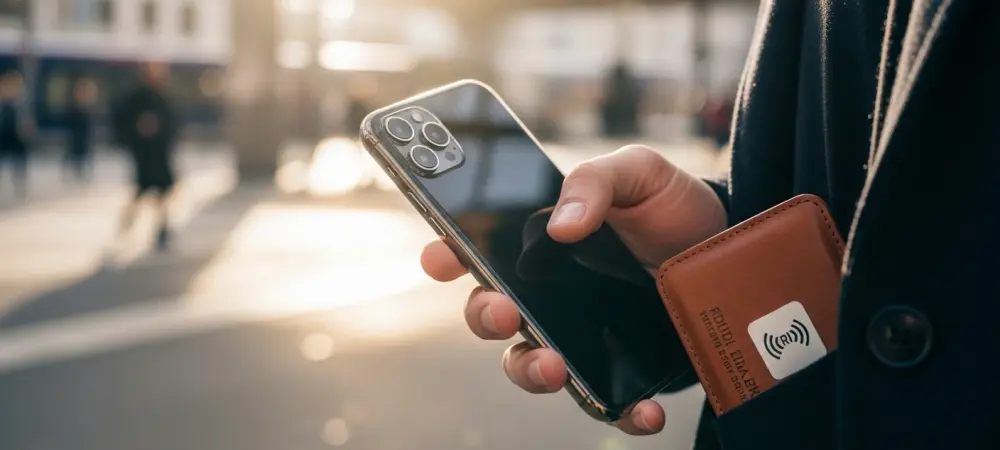
In the bustling neighborhoods of Chicago, a sophisticated method of financial theft is quietly stripping residents of their savings through a high-tech maneuver known as ghost tapping. This emerging threat leverages the very convenience consumers have come to rely on for daily transactions, turning the seamless nature of contactless payments into a significant vulnerability. One recent victim in Logan Square, Emilie Kostecka, experienced the devastating reality of this scam when she was approached by individuals purportedly raising money for a victim of gun violence. While she was distracted by photos on a mobile device, the perpetrators managed to siphon five thousand dollars from her account in a matter of seconds. This incident serves as a stark reminder that modern thieves no longer need to physically reach into a purse or pocket to steal a fortune; they simply need to be within a few inches of a target’s smartphone or tap-to-pay credit card to initiate a fraudulent transaction. Such crimes highlight a shift in criminal behavior where digital proximity replaces physical contact, making public spaces like festivals or train stations prime hunting grounds for those equipped with the right tools.
The Mechanics of Proximity-Based Digital Theft
At the heart of the ghost tapping phenomenon is Near Field Communication technology, which allows for the wireless exchange of data over very short distances, typically less than four centimeters. While this innovation has revolutionized the way people pay for groceries, transit, and coffee by enabling services like Apple Pay and Google Pay, it has also opened a backdoor for tech-savvy criminals. Unlike the traditional skimming devices found on older gas station pumps or ATMs, which require a physical card to be inserted, ghost tapping is entirely contactless and can occur without any physical interaction between the victim and the thief. By using a specialized reader or even a standard smartphone configured to act as a point-of-sale terminal, a fraudster can trigger a payment request that an unprotected mobile wallet may automatically fulfill. This process happens so rapidly that the victim often has no time to react or even realize that a transaction has been initiated until they check their banking app.
To execute these high-tech heists, criminals frequently utilize legitimate mobile point-of-sale applications that are readily available to small business owners. By registering a dummy account under a generic name, such as a local service provider or a construction firm, the scammers can process payments that appear legitimate to automated fraud detection systems. When a thief brings their device close to a victim’s pocket or handbag, the software prompts the victim’s phone or card to authorize a payment, often for the maximum amount allowed without a PIN. The deceptive labeling of these charges, such as “carpentry services” or “landscaping fees,” is a deliberate strategy to bypass the immediate scrutiny of banking algorithms that look for suspicious merchant categories. This layer of abstraction provides the criminals with a window of time to move the funds through multiple accounts before the victim or the financial institution can flag the activity, making the recovery of the stolen money an uphill battle for most consumers.
Tactical Variations of the Modern Pickpocket
The success of ghost tapping often relies as much on social engineering as it does on technological exploits, with scammers frequently using emotional triggers to lower a victim’s guard. In Chicago, many of these incidents have occurred in environments where people are naturally more inclined to be helpful, such as community festivals or busy street corners. By presenting a compelling story about a personal tragedy or a charitable cause, fraudsters can create a distraction that allows them to get within the necessary range for a digital transaction. In some cases, they may even ask to show the victim a photo or a website on their own phone, providing a reason for the victim to look away from their belongings. This brief moment of focused attention elsewhere is all a skilled operator needs to bring a concealed reader into contact with the victim’s device. The psychological pressure of being in a social interaction makes it less likely that the target will notice a small vibration or a faint notification indicating a payment.
Beyond emotional manipulation, criminals also employ more aggressive physical tactics that are reminiscent of classic pickpocketing but adapted for the digital age. In crowded areas like the Chicago ‘L’ trains or during large public events, a scammer might “accidentally” bump into a commuter while holding a mobile reader hidden in a sleeve or a pocket. This momentary contact is often sufficient for the device to ping a nearby tap-enabled credit card or an active mobile wallet, successfully processing a charge before the victim can even regain their balance. Another sophisticated method involves the “device hand-off,” where a criminal convinces a target to hand over their phone under the pretense of helping with a technical issue or taking a group photo. Once the phone is in the thief’s possession, they can quickly tap it against a hidden reader or navigate through the interface if the screen is unlocked. These methods demonstrate that even the most advanced security features can be rendered useless when a user is convinced to bypass their own safety protocols.
Institutional Challenges and the Path to Recovery
Navigating the aftermath of a ghost tapping incident reveals significant gaps in how financial institutions handle contactless fraud, often placing a heavy burden of proof on the victim. Because NFC transactions are designed to be seamless and authenticated through the device itself, banks frequently categorize these charges as “authorized” by the user. When a victim reports a suspicious transaction, the initial response from the bank’s fraud department is often a denial of the claim, based on the logic that the physical presence of the device or card at the point of sale implies consent. This creates a frustrating paradox where the victim must prove they did not perform an action that their own device says they did. The lack of a physical signature or a required PIN for smaller but still significant amounts makes it difficult to distinguish between a legitimate payment and a proximity-based theft. For many, this institutional resistance is just as traumatizing as the original theft, as they find themselves fighting to reclaim their own money.
To overcome these institutional hurdles, victims are often required to be exceptionally persistent and meticulous in their documentation of the event. Filing a formal police report is a critical step that provides a legal foundation for the claim, even if the chances of immediate arrest are low. In the case of the Logan Square theft, the victim’s persistence in contesting the initial denial from her bank was what eventually led to a reversal of the charges. This process involves providing detailed timelines, highlighting the discrepancy between the merchant’s supposed service and the victim’s actual location, and potentially gathering witness statements if the incident occurred in a public setting. It is also beneficial to document any communication with the merchant, as some scammers may even attempt to argue that a service was actually provided. The burden on the consumer highlights the necessity for a shift in how these digital crimes are categorized, as the current framework often favors the efficiency of the payment system over the protection of the individual.
Strategic Defenses Against Contactless Fraud
While the threat of ghost tapping is significant, several proactive measures can be implemented to mitigate the risk of becoming a target in high-traffic urban environments. One of the most effective physical defenses is the use of RFID-blocking wallets or sleeves, which act as a Faraday cage to prevent external readers from communicating with the cards or devices inside. Additionally, users should configure their mobile wallets to require biometric authentication, such as facial recognition or a fingerprint scan, for every single transaction regardless of the amount. Disabling the “express transit” or “automatic payment” features on smartphones ensures that no data can be transmitted without an intentional act by the user. It is also recommended to use credit cards for contactless payments rather than debit cards, as credit accounts generally offer more robust legal protections and zero-liability policies under federal law. Staying aware of one’s surroundings and maintaining physical control over mobile devices remains the most fundamental defense against those who look to exploit moments of distraction.
The rise of ghost tapping in Chicago served as a vital wake-up call for both consumers and financial regulators regarding the vulnerabilities inherent in modern payment convenience. Moving forward, the adoption of dynamic security codes for each transaction and the implementation of more granular notification systems provided a necessary layer of transparency. Victims who faced these challenges discovered that immediate action, such as freezing accounts and reporting the theft to the Federal Trade Commission, was essential in limiting the damage. Financial institutions also began to reconsider their “authorized” transaction definitions, recognizing that proximity does not always equal consent. For the average user, the shift toward a more skeptical approach to unsolicited public interactions proved to be the most effective deterrent. This period of transition highlighted that while technology will continue to evolve, the human element of vigilance remained the strongest link in the security chain.