

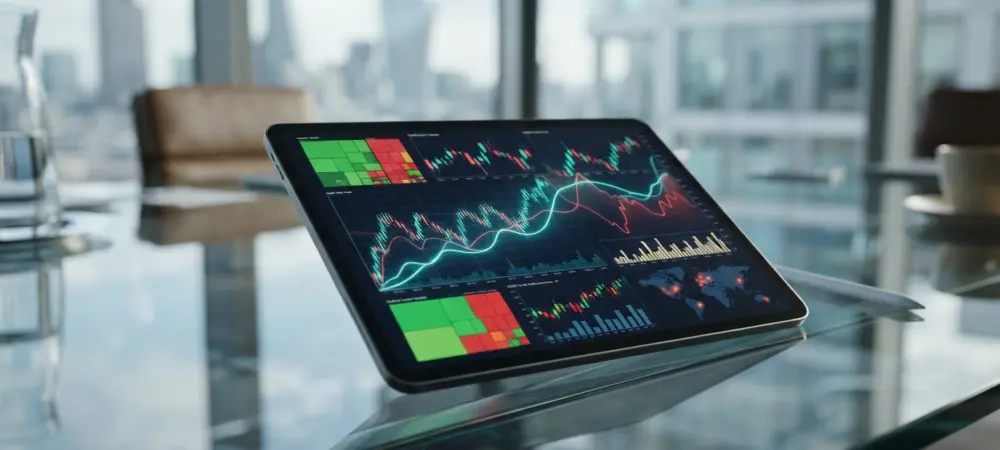
Modern retail finance has transitioned from the exclusive domain of high-frequency trading floors to the palm of the everyday investor, fundamentally altering how capital moves across the globe. This shift is epitomized by the Fortrader platform, which bridges the gap between sophisticated institutional tools and the high-speed accessibility required by today’s mobile-first demographic. As market volatility becomes the new norm, the demand for platforms that provide both depth and portability has surged, forcing a reevaluation of what a trading environment should look like in 2026.
Evolution of Modern CFD Trading Environments
The architecture of contemporary trading has shifted away from the traditional, stationary desk-bound model toward a more fluid, ecosystem-based approach. Fortrader reflects this evolution by moving away from isolated software installations toward a unified cloud-based structure. This philosophy recognizes that a trader’s environment is no longer a physical location but a persistent digital state that follows them throughout their daily routine.
This transition is not merely about aesthetic updates; it represents a fundamental change in how data is consumed. In the current landscape, the ability to pivot between different analytical contexts without losing trade progress is the primary metric of a platform’s utility. By centering the experience on the user rather than the device, the technology ensures that the transition from a broad market overview to granular execution remains frictionless.
Technical Infrastructure and Core Functionalities
Multi-Device Synchronization and Cross-Platform Accessibility
The technical backbone of this platform relies on near-instantaneous synchronization across diverse hardware. Whether a user initiates a position on a smartphone or modifies a stop-loss order via a web browser, the low-latency updates ensure that no data fragmentation occurs. This seamless handoff is critical because it prevents the informational delays that historically plagued mobile trading attempts.
Moreover, the cross-platform accessibility is designed to maintain a consistent logical flow. The interface does not compromise on complexity when moving to smaller screens; instead, it optimizes the visibility of critical data points. This ensures that the professional-grade analytical capabilities are as responsive on a mobile device as they are on a high-powered laptop, maintaining the integrity of the trading strategy across all touchpoints.
Integrated Risk Management and Technical Analysis Tools
Beyond mere connectivity, the platform integrates structural safeguards that are often overlooked by novice participants. Automated exit settings and a built-in “Economic Calendar” provide a framework for technical analysis that discourages purely emotional decision-making. These tools transform the interface from a simple execution engine into a research-driven workstation that prioritizes longevity over momentary gains.
The performance characteristics of these tools are calibrated for high-speed markets where seconds can dictate the outcome of a trade. By embedding risk management directly into the primary workflow, the platform compels users to consider their exit strategy as carefully as their entry point. This integration is essential for fostering a disciplined approach in an environment characterized by constant price fluctuations and high leverage.
Emerging Trends in On-the-Go Financial Management
Industry leadership, including insights from CEO Chris Warburton, suggests that the modern trading session is characterized by intermittent, high-frequency interactions rather than prolonged observation. This behavior reflects a broader cultural trend where financial management is woven into the gaps of a busy schedule. However, this accessibility requires a psychological shift; the ease of a two-tap execution must be balanced by a pre-defined strategy to avoid the pitfalls of overtrading.
As market participation becomes more fragmented throughout the day, the role of the platform evolves from a passive tool to an active monitor. Traders now use these brief windows of time to adjust to real-world events in real-time, making the “on-the-go” philosophy a necessity rather than a luxury. This trend emphasizes the importance of platform stability and the immediate availability of global news feeds to inform these quick decisions.
Real-World Applications and Market Deployment
In practice, the platform serves as a gateway to over 500 instruments, encompassing forex, commodities, and shares within a single interface. While the proprietary platform targets ease of use, the inclusion of MetaTrader 4 support acknowledges the needs of veterans who require industry-standard technical depth. This dual-track deployment ensures that the ecosystem remains viable for a wide spectrum of experience levels, from beginners to seasoned professionals.
Furthermore, the implementation of the “Trading Academy” provides a practical application for the technology beyond simple speculation. By offering webinars and video tutorials, the platform acts as an educational hub, helping users translate theoretical market concepts into actionable strategies. This approach mitigates the steep learning curve associated with complex financial instruments like CFDs.
Navigating Technical Hurdles and Market Risks
Despite the technological sophistication, the inherent risks of leveraged CFDs remain a significant hurdle for retail participants. Statistics consistently show that a vast majority of retail investor accounts experience losses when navigating these volatile instruments. To address this, the developer has implemented extensive educational frameworks and demo accounts with virtual funds, which serve as a necessary friction to slow down impulsive capital allocation.
The challenge lies in balancing user-friendly design with the gravity of financial risk. While the platform makes trading feel accessible, the underlying market mechanics remain unforgiving. Ongoing development efforts focus on refining these educational barriers to ensure that users are not just technically capable of placing a trade, but are also cognitively aware of the potential consequences of leverage.
The Future Trajectory of Retail Trading Platforms
Looking ahead, the trajectory of retail trading favors platforms that can blend ultra-fast execution with deep pedagogical support. The long-term impact of such accessible technology will likely be a more democratized but also more competitive global market. Success in this future landscape will depend less on the speed of the connection and more on the quality of the structural planning used by the individual trader.
Future developments will likely see an even deeper integration of automated intelligence to assist in risk mitigation. As mobile-centric platforms continue to dominate market participation, the focus will shift toward providing users with more sophisticated data visualization tools. This will help bridge the gap between simple price tracking and complex market sentiment analysis, allowing for more informed participation.
Final Assessment of the Fortrader Ecosystem
The evaluation of this ecosystem revealed that the most successful users were those who treated the platform’s convenience as a tool for discipline rather than a license for impulsivity. While the technical infrastructure effectively bridged the gap between different devices, the ultimate value was found in the integrated risk-management features. Future participants needed to recognize that while technology simplified the process of entry, it did not eliminate the fundamental necessity of market research.
To move forward effectively, investors should prioritize the use of demo environments to stress-test their strategies before engaging with live capital. The transition toward mobile-first trading was seen as a permanent shift that required a new set of psychological habits focused on objective analysis. Ultimately, the impact of the platform depended on the user’s ability to maintain a rigorous trading plan despite the ease of digital access.