

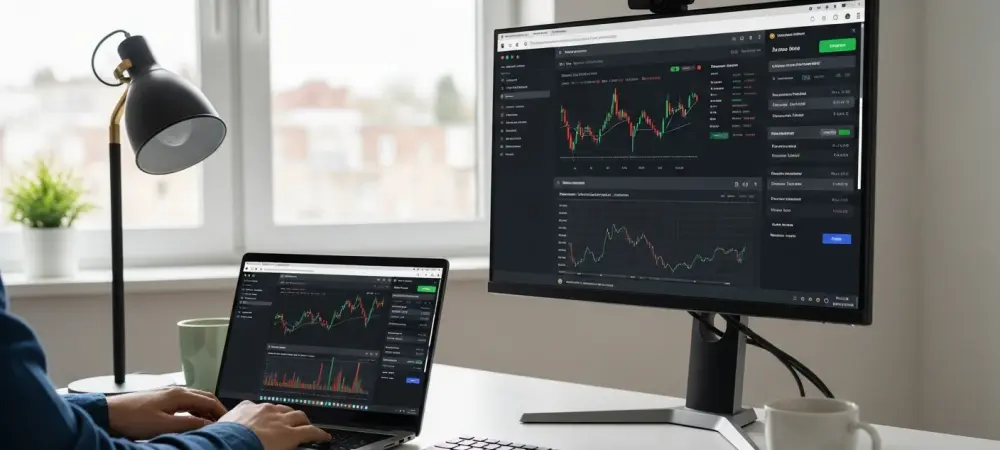
The allure of rapid, substantial gains in the cryptocurrency market has drawn countless traders to the high-stakes world of leverage trading, a powerful tool that can amplify profits from even minor price fluctuations. In this dynamic environment, where fortunes can be made or lost in moments, the choice of a trading platform becomes more than a matter of convenience; it is a critical component of a trader’s strategy and security. As digital asset markets continue to mature, platforms are evolving, offering sophisticated tools, enhanced security, and varying levels of leverage to meet the demands of a growing user base. However, this amplification works both ways, magnifying losses just as effectively as gains, making a deep understanding of the mechanics, risks, and available platforms essential for anyone looking to navigate these volatile waters successfully. Selecting an appropriate platform requires a careful evaluation of security protocols, user interface design, fee structures, and customer support, ensuring that a trader’s chosen environment aligns with their risk tolerance and strategic goals.
1. How to Choose the Right Platform for Leverage Trading
When selecting a platform for cryptocurrency leverage trading, the foundational consideration must be security. In an industry where digital asset theft and platform vulnerabilities remain persistent threats, entrusting capital to an exchange requires rigorous due diligence. Traders should prioritize platforms that implement a multi-layered security framework, starting with mandatory two-factor authentication (2FA) to protect account access. Beyond this basic measure, leading platforms utilize advanced encryption protocols to safeguard data in transit and at rest. Furthermore, the practice of storing a significant majority of user funds in cold storage—offline wallets inaccessible to remote attackers—is a critical indicator of a platform’s commitment to asset protection. A platform’s history is also telling; a long track record free of major security breaches, coupled with transparency reports and regular third-party security audits, provides a strong vote of confidence. Neglecting these security fundamentals in favor of higher leverage or lower fees is a risk that can lead to the complete loss of funds, rendering all other platform features irrelevant. Beyond the paramount concern of security, the usability and cost-effectiveness of a platform are crucial factors that directly impact a trader’s efficiency and profitability. A well-designed, intuitive user interface is essential, especially in the fast-paced environment of leverage trading where split-second decisions are common. The platform should offer customizable dashboards, advanced and responsive charting tools with a full suite of technical indicators, and a seamless mobile application for managing positions on the go. An overly complex or clunky interface can lead to execution errors, delays, and missed opportunities. Equally important is a transparent and competitive fee structure. Traders must scrutinize the platform’s schedule of fees, including maker-taker fees for executing trades, overnight funding rates for holding leveraged positions, and withdrawal fees. Hidden costs can quickly erode profits, particularly for high-frequency traders. The ideal platform offers a clear breakdown of all potential charges, allowing traders to accurately calculate the cost of their strategy and make informed decisions that align with their financial objectives.
2. An Overview of the Top Platforms for Crypto Leverage Trading
Binance stands as a dominant force in the global cryptocurrency exchange landscape, renowned for its comprehensive ecosystem that caters to both novice and institutional traders. Its futures trading platform is a cornerstone of its offerings, providing leverage of up to 125x on certain trading pairs. This high level of leverage appeals to experienced traders aiming for maximized returns, though it carries commensurate risk. A key strength of Binance lies in its vast selection of tradable assets, which extends far beyond major cryptocurrencies to include a wide array of altcoins and emerging tokens, granting traders unparalleled market access and diversification opportunities. Security is a core priority, underscored by its Secure Asset Fund for Users (SAFU), an emergency insurance fund financed by a percentage of trading fees to protect users in the event of a security breach. This, combined with robust features like withdrawal address whitelisting and anti-phishing codes, has helped solidify its reputation as a relatively secure venue for high-stakes trading.
In contrast to all-in-one exchanges, specialized derivatives platforms like Bybit and Deribit have carved out significant market share by focusing exclusively on the needs of leverage traders. Bybit is particularly well-regarded for its user-friendly interface and high-performance matching engine, which is capable of handling 100,000 transactions per second, minimizing the risk of system overloads during peak volatility. Offering up to 100x leverage on major assets like Bitcoin and Ethereum, Bybit combines accessibility with powerful risk management tools, making it a popular choice for both newcomers and seasoned professionals. Deribit, on the other hand, caters to a more sophisticated trading audience with its primary focus on crypto options and futures. It is widely recognized for its institutional-grade infrastructure, providing deep liquidity and minimal slippage, which are critical for executing large orders. Its platform is built for speed and reliability, making it a preferred choice for advanced traders who employ complex derivatives strategies and require precise execution without compromise.
3. Getting Started with Leverage Trading: A Step-by-Step Guide
Embarking on a journey into leverage trading requires a foundational commitment to education before any capital is put at risk. A thorough understanding of the core concepts is non-negotiable. This includes grasping how leverage magnifies outcomes, the critical distinction between initial and maintenance margin, and the mechanics of liquidation, which is the forced closure of a position when it no longer meets the required margin level. Many aspiring traders underestimate the speed at which a leveraged position can be liquidated in volatile markets. Therefore, it is essential to study educational materials, participate in webinars, and review platform-specific tutorials to build a solid knowledge base. Once this theoretical foundation is in place, the next step is selecting a suitable platform. This decision should be guided by the principles of security, user experience, and fee transparency. Many top-tier platforms offer demo accounts or access to a testnet environment. These risk-free sandboxes are invaluable tools, allowing new traders to familiarize themselves with the platform’s interface, practice placing different order types, and experience the dynamics of leveraged positions using virtual funds before transitioning to live trading.
After selecting a platform and gaining confidence through practice, the next phase involves setting up a live account and implementing a disciplined trading approach. The account creation process typically involves a Know Your Customer (KYC) verification procedure, which is a regulatory requirement designed to prevent illicit activities and enhance account security. Once verified, the account must be funded with sufficient capital to serve as collateral for trading positions. It is crucial to understand the platform’s specific margin requirements and to avoid over-allocating funds to a single trade. The most prudent strategy for beginners is to start small. By opening modest position sizes with low leverage, traders can gain real-world experience without exposing themselves to catastrophic losses. This initial phase is about refining strategy and understanding market psychology under real-stakes conditions. Throughout this process, the consistent use of risk-management tools is paramount. Implementing a stop-loss order on every trade is a fundamental discipline that helps define the maximum acceptable loss, protecting capital and enabling a trader to remain in the market long enough to develop and profit from a successful strategy.
4. Core Risk Management Strategies for Leverage Trading
One of the most indispensable tools in a leverage trader’s arsenal is the stop-loss order, a fundamental mechanism for preserving capital. A stop-loss is a pre-set order that automatically closes a position once the market price reaches a specified level, thereby limiting potential losses. Its proper use is a hallmark of disciplined trading, acting as a crucial safety net in a market environment where prices can move swiftly and unpredictably. Setting an effective stop-loss level requires a strategic approach, often based on technical analysis, such as placing it just below a key support level for a long position or above a resistance level for a short position. This ensures the trade has room to fluctuate within a normal range without being prematurely closed by minor market noise. The level should also be determined by an individual’s personal risk tolerance, defining the maximum percentage of capital they are willing to lose on a single trade. By strictly adhering to the use of stop-loss orders, traders remove emotion from the decision-making process during adverse market moves and ensure that a single losing trade does not result in a devastating blow to their overall portfolio.
Beyond the tactical use of stop-loss orders, a robust risk-management framework for leverage trading must incorporate broader strategic principles, chief among them being diversification and prudent position sizing. Relying on a single asset or trading pair is a high-risk strategy, as it exposes a portfolio to the idiosyncratic risks of that specific market. By diversifying capital across multiple, non-correlated cryptocurrencies or market sectors, traders can mitigate the impact of a significant adverse price movement in any one position. This approach helps to smooth out portfolio returns and provides a buffer against extreme volatility. Furthermore, the responsible management of leverage and position size is critical to long-term survival. The temptation to use maximum available leverage can be strong, but it dramatically increases the risk of liquidation from even small market corrections. A disciplined trader will instead use lower leverage ratios and adjust position sizes based on their account balance and the perceived risk of a trade. Finally, staying consistently informed about market news, regulatory developments, and macroeconomic trends provides the contextual awareness needed to anticipate potential volatility and make proactive adjustments to trading strategies.
Navigating the High-Stakes World of Leveraged Trading
The exploration of cryptocurrency leverage trading reveals a landscape rich with opportunity but fraught with significant risk. The journey highlights that success is not merely a function of market timing but is deeply rooted in disciplined preparation and strategy. Traders who thrive are those who meticulously select platforms, prioritizing robust security and user-centric design. They understand that the powerful features offered by exchanges like Binance, Bybit, and Deribit are tools to be wielded with precision, not gambled with recklessly. The most effective participants engage in thorough education, practice in risk-free environments, and enter the live market with a clear plan. They learn to respect the dual-edged nature of leverage, employing it conservatively and always protecting their capital with diligent risk-management techniques like stop-loss orders and strategic diversification. Ultimately, the path to sustainable trading is paved with knowledge, discipline, and a constant awareness of market dynamics, proving that a well-informed mindset is the most valuable asset of all.