

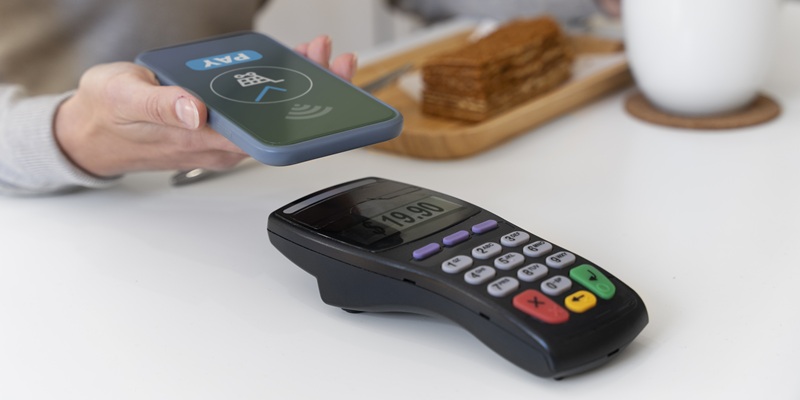
In a significant leap forward for the payments industry, Fime has launched the pioneering EMV® C-8 Contactless Kernel testing services. Designed to simplify the adoption of contactless payments, this new specification aims to eliminate costs and complexities typically associated with such systems. With enhancements in security and efficiency, this development impacts merchants, vendors, and solution providers, setting a new standard for the industry. Fime’s initiative is positioned to revolutionize contactless payment processing by addressing major pain points like security concerns and fragmented systems, making it one of the most promising advancements in the field for years to come.
Revolutionizing Contactless Payment Systems
Fime’s EMV® C-8 Contactless Kernel introduces groundbreaking innovations aimed at integrating contactless payment systems more seamlessly. With the kernel’s advanced cryptographic enhancements, Fime is tackling one of the most critical concerns in the payments sector—security. This innovation is poised to make contactless payments more reliable and secure, a crucial step in the broader adoption of digital payment methods. By incorporating state-of-the-art cryptography, it ensures that transactions are fortified against fraud and unauthorized access, thus providing a robust framework for future payment technologies.
This kernel aims to unify various payment systems, reducing the traditional fragmentation caused by multiple scheme-specific kernels. Standardization simplifies the transaction process, ensuring a more streamlined and user-friendly experience for both merchants and consumers. By eliminating the need to maintain different kernels for various payment schemes, Fime focuses on creating a simplified, unified approach that benefits everyone involved—from vendors to end-users. This new level of integration could mark a turning point in how the payments industry handles contactless transactions, leading to broader and faster adoption across markets.
Cost and Complexity Reduction
By introducing a single, unified kernel, Fime’s EMV® C-8 significantly lowers both the cost and complexity associated with contactless payment systems. Merchants no longer need to invest in multiple kernels for different payment schemes, resulting in considerable cost savings. This reduction in complexity also facilitates a smoother integration process, enabling quicker deployment of contactless payment solutions. Simplified processes translate into faster time-to-market for vendors and a less complicated setup for merchants, making the overall ecosystem much more efficient.
Moreover, the EMV® C-8 kernel can be integrated into existing point-of-sale terminals, thus allowing merchants to upgrade their systems without the expense of replacing hardware. This backward compatibility is not only cost-effective but also promotes a more sustainable approach to technology adoption. Merchants can extend the life of their existing terminals while still benefiting from the advanced features and capabilities of the new kernel. By reducing both financial and operational barriers, Fime’s new offering sets the stage for broader and quicker adoption of contactless payments across various sectors.
Enhanced Security Features
The security of contactless transactions is a top priority for Fime, and the EMV® C-8 kernel delivers on this front with advanced cryptographic techniques. These enhancements are designed to safeguard transactions against fraud and unauthorized access, thus ensuring the integrity of the payment process. With robust encryption methods in place, consumers and merchants can conduct transactions with heightened confidence. Such a high level of security is essential as digital payment methods become increasingly prevalent, addressing an industry-wide demand for secure, reliable systems.
This focus on security aligns with broader industry trends that prioritize the protection of financial data. As the fintech landscape evolves, so does the sophistication of cyber threats, making secure payment systems more crucial than ever. The EMV® C-8 kernel is designed to meet these challenges head-on by providing a secure framework for contactless transactions. By implementing these advanced security measures, Fime contributes significantly to making the entire payment ecosystem safer for all participants. This approach not only reassures users but also helps to build trust in contactless payment methods globally.
Compatibility and Efficiency
One of the standout features of the EMV® C-8 kernel is its compatibility with existing payment infrastructure. Merchants can deploy the new kernel on their current point-of-sale terminals, thus avoiding the need for costly hardware replacements. This compatibility ensures a smoother transition to the new system and minimizes disruption to business operations. By supporting existing hardware, Fime’s new kernel provides a hassle-free upgrade path that enhances operational efficiency for merchants, allowing them to adopt the latest payment technologies without significant financial outlay.
Additionally, the new kernel enhances the efficiency of the approval process for payment terminals. Fime’s automated, cloud-based testing environment—accredited by EMVCo—supports quicker development cycles and reduces errors. By leveraging tools like Eval+, the approval process becomes faster and more efficient, facilitating the timely launch of new payment solutions. This streamlined approval and certification process is critical in an industry where speed to market can be a significant competitive advantage. With fewer bottlenecks and a quicker path to deployment, the new kernel ensures that the latest payment technologies can be adopted rapidly and smoothly.
Automated Approval Process
Fime’s EMV® C-8 Contactless Kernel supports an automated approval process that streamlines the certification of new payment terminals. Leveraging cloud-based technologies, this innovation enhances test efficiency and reduces the time required for terminal approvals. The use of automated tools minimizes human error and accelerates the deployment of contactless payment systems. This move towards automation reflects broader industry trends where digital solutions are utilized for operational efficiency gains, marking another step in the evolution of the payments sector towards a more automated and reliable future.
The adoption of automated testing signifies a broader trend in the tech industry toward leveraging digital solutions for efficiency gains. By utilizing cloud-based platforms, Fime ensures that their testing processes are scalable and adaptable to the evolving needs of the industry. This advancement not only benefits merchants and vendors but also contributes to the overall acceleration of technological innovation in the payments sector. The benefits are twofold: quicker deployment of new technologies and a reduction in the errors that often accompany manual processes. All these factors combined set a new benchmark for how contactless payment systems are tested and approved.
Collaboration with Ingenico
The collaboration between Fime and Ingenico underscores the practical application and immediate benefits of the EMV® C-8 kernel. Ingenico’s AXIUM DX8000 payment device is the first to receive approval under the new specification, demonstrating the kernel’s capability in real-world scenarios. This partnership highlights the potential of the EMV® C-8 kernel to drive widespread adoption of secure, efficient, and cost-effective contactless payment solutions. By working together, Fime and Ingenico can push the boundaries of innovation and accelerate the adoption of cutting-edge technologies, benefiting the entire payments ecosystem.
The approval of the AXIUM DX8000 sets a precedent for other payment devices, paving the way for a broader rollout of the EMV® C-8 kernel across the industry. This collaboration exemplifies the mutual benefits that can be achieved through strategic partnerships in the tech and payments sectors. Both companies bring their unique strengths to the table, creating a synergy that results in better, more reliable products for end users. This joint effort is likely to inspire other companies to form similar alliances, driving further innovation and adoption in the payments industry.
Future Implications
Fime has made a groundbreaking move in the payments industry by launching the innovative EMV® C-8 Contactless Kernel testing services. This new specification is designed to streamline the adoption of contactless payments, aiming to slash costs and reduce complexities that are commonly encountered with such systems. The enhanced security and efficiency offered by this development have far-reaching implications for merchants, vendors, and solution providers. It sets a new benchmark for the industry and is expected to revolutionize contactless payment processing. By addressing major pain points like security concerns and the issues with fragmented systems, Fime’s initiative is poised to be one of the most significant advancements in the field in years. Additionally, the new testing service will facilitate smoother integration, improve user experiences, and make the process more accessible for businesses of all sizes. This transformative step forward not only simplifies transactions for consumers but also offers robust security features, making it an exciting time for everyone involved in the contactless payment ecosystem.