

As the financial landscape undergoes its most significant transformation in decades, few voices are as resonant as that of Nikolai Braiden. An early pioneer in the blockchain space and a seasoned advisor to the most disruptive startups in the industry, Braiden has spent his career championing the idea that technology should democratize and simplify how money moves. Today, we sit down with him to discuss a monumental shift in the European sector: the birth of the European Network for Payments. This initiative isn’t just another corporate merger; it is a declaration of independence for a continent that has long relied on outside infrastructure. We delve into how this new entity plans to unite 130 million users and whether this move will finally break the long-standing grip of global card giants on the European market.
The conversation explores the strategic formation of the European Network for Payments and its mission to create a unified, sovereign framework for transactions across borders. We discuss the technical harmonization required to link disparate national systems like Italy’s Bancomat and the Nordic’s Vipps MobilePay, while also examining the phased rollout that begins with peer-to-peer transfers. Furthermore, the expert provides insight into how this massive scale—covering over 70% of the population in the EU and Norway—will empower merchants and offer consumers a familiar, trusted experience even when they travel away from home.
With the European Network for Payments officially establishing its headquarters in Madrid, how do you see this new entity fundamentally changing the balance of power against the traditional international card schemes?
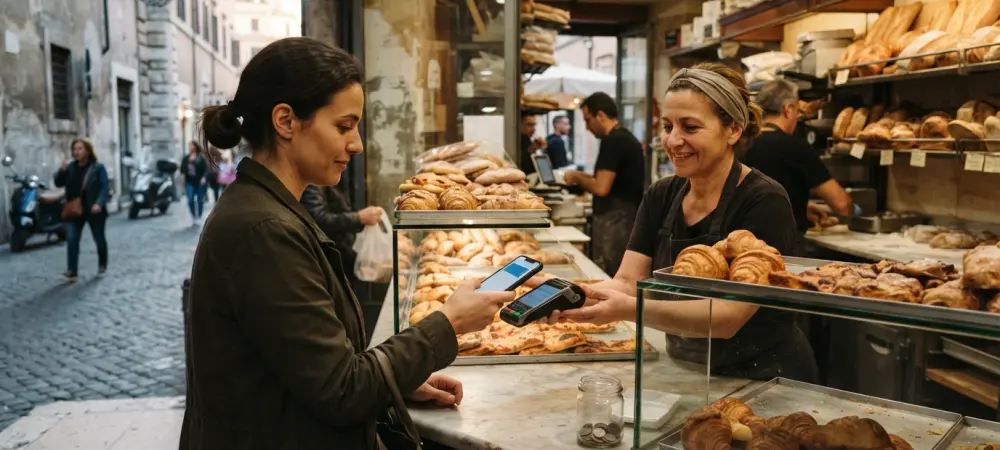
The establishment of the ENP is more than just a logistical move; it is a tectonic shift that directly challenges what many in the industry call the “duopoly” of international card schemes. By uniting five of the largest domestic providers—Bancomat, Bizum, EPI, SIBS, and Vipps MobilePay—Europe is finally building a sovereign alternative that keeps transaction data and infrastructure within its own borders. You can feel the tension in the market as these national champions, which already command the trust of 130 million users, join forces to create a single, seamless technical layer. This isn’t just a theoretical project; the Memorandum of Understanding signed back in February 2026 has already blossomed into a functional joint entity where each partner holds an equal share. For the first time, we are seeing a focused effort to use instant account-to-account payments to bypass the high fees and external reliance that have characterized European retail for years. It is an ambitious attempt to reclaim strategic autonomy while ensuring that a shopper in Lisbon can use their MB WAY app as easily in a bakery in Rome as they do at home.
The scale of this project is immense, covering 70% of the population in the EU and Norway, but technical fragmentation has always been the Achilles’ heel of such initiatives. What makes the common interoperability hub different this time?
The “secret sauce” here is the decision to build on a common technical and operational layer based specifically on European standards, rather than trying to force every country to adopt a single brand. Instead of erasing the local identities that people already trust—like the 20 million users Bizum surged to within just four months in Spain—the ENP functions as a bridge that works silently in the background. This hub-and-spoke model allows for a phased rollout, which is a very pragmatic way to handle the sheer complexity of connecting 13 different countries with varying banking infrastructures. By starting with cross-border peer-to-peer payments, they are testing the pipes with lower-risk transactions before moving into the high-stakes world of e-commerce and point-of-sale systems. I’ve seen many startups fail because they tried to do everything at once, but the ENP is being surgical, focusing on the account-to-account framework to ensure the speed and simplicity that made these domestic tools popular in the first place are not lost in translation.
Looking at the diverse group of founding partners, from the Nordic presence of Vipps MobilePay to the Iberian dominance of Bizum and SIBS, how do you think they will maintain a unified vision while preserving their local brand identities?
Maintaining that local “flavor” is actually the project’s greatest strength, because trust in financial services is deeply cultural and regional. When you look at the merger that created Vipps MobilePay, which brought together the leading mobile brands of Norway, Denmark, and Finland, you see a blueprint for how to scale without losing that sense of proximity to the user. The leaders involved, like Martina Weimert at EPI and Fabrizio Burlando at Bancomat, understand that a German consumer wants to see the “Wero” logo they recognize, while a Portuguese user wants to stick with “MB WAY.” The ENP acts as the invisible plumbing—the interoperability hub—that ensures these different “front ends” can talk to each other across 13 countries instantly. It is a delicate dance of technical coordination where the partners remain equal shareholders, ensuring that no single national interest dominates the others. This collective approach gives pan-European merchants the immediate scale they need to finally ditch fragmented domestic solutions in favor of a unified A2A framework that works for over 130 million people.
We’ve seen significant momentum recently, such as Bizum’s integration into SoftPOS apps and the rapid growth of in-store payments in Spain; how will this local success translate to the broader European merchant landscape?
The momentum we are seeing in Spain is a perfect microcosm of what the ENP hopes to achieve on a continental scale. When a service like Bizum hits 20 million users and starts dominating real-time payments at the point of sale via SoftPOS integrations, it proves that consumers are hungry for instant, phone-based alternatives to plastic cards. Merchants are equally excited because these account-to-account transactions often mean lower processing costs and immediate settlement, which is a huge win for cash flow. As the ENP rolls out its e-commerce and point-of-sale phases, a merchant in any of the 13 participating countries will be able to accept payments from a massive pool of 130 million customers without needing a dozen different integrations. It simplifies the entire “Pay-by-Alias” process that we’ve seen other global initiatives like Swift try to tackle, but with the added benefit of being a homegrown, sovereign European solution. This isn’t just about convenience; it’s about creating a competitive environment where European businesses can serve European customers without any major investment in new, non-European infrastructure.
As the network prepares for its phased rollout, starting with peer-to-peer payments, what is your forecast for the future of the European payments landscape by the end of this decade?
By the time we reach the end of this decade, I expect the European Network for Payments to have fundamentally broken the “card-first” mentality that has dominated our wallets for half a century. We will see a landscape where the distinction between a “domestic” and a “cross-border” payment has virtually disappeared for those 130 million users, making the act of paying in a different country as silent and frictionless as a local tap. The success of the initial P2P phase will provide the data and confidence needed to rapidly colonize the e-commerce space, potentially making A2A the preferred method for online shopping across the 13 countries involved. I also anticipate that the network will grow beyond the founding five partners, as other European payment solutions realize they cannot afford to be left out of this interoperable hub that already reaches 70% of the population. Ultimately, we are moving toward a future where “Wero,” “Bizum,” and “MB WAY” are just different doors into the same powerful, sovereign room, giving Europe the strategic autonomy it has craved while providing merchants and consumers with a choice that is faster, cheaper, and entirely theirs.