

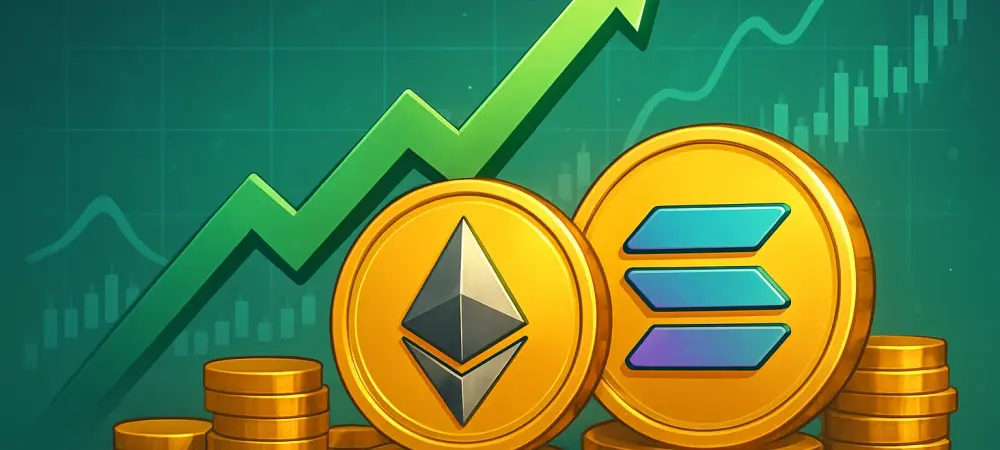
What happens when two crypto titans shatter price barriers in a single week, sending shockwaves through the digital asset world? Ethereum has soared beyond $4,520, while Solana has blasted past $237.60, igniting a firestorm of excitement among traders and investors alike. This isn’t just a fleeting rally; it’s a seismic shift that hints at something much larger—a potential altcoin season where smaller tokens could steal the spotlight. The crypto market is buzzing with anticipation, and the stage is set for a thrilling ride.
The importance of this moment cannot be overstated. With Bitcoin holding firm near $116,000, the surges in Ethereum and Solana signal a classic liquidity rotation, where capital flows from major cryptocurrencies to emerging altcoins. This pattern, observed in past market cycles, often results in explosive growth for lesser-known projects. As institutional interest and retail enthusiasm collide, the current rally could redefine investment strategies and reshape the crypto landscape for months to come.
Why Ethereum and Solana Are Dominating Headlines
Ethereum’s climb past $4,520 isn’t just a number—it’s a testament to its enduring role as the backbone of decentralized finance (DeFi). Bolstered by institutional investments and advancements in layer-2 scaling solutions, the network continues to attract developers and users alike. The upcoming Pectra upgrade promises further enhancements, solidifying Ethereum’s position as a blue-chip asset in the crypto realm.
Solana, meanwhile, has surged to $237.60, driven by its lightning-fast transaction speeds and rock-bottom fees. In the fourth quarter, its decentralized exchange (DEX) volumes have outpaced even Ethereum’s, a feat that underscores its growing dominance. Add to that a resurgence in NFT trading within its ecosystem, and Solana’s appeal as a market leader becomes undeniable.
This dual rally has caught the attention of everyone from day traders to hedge funds. The momentum suggests a broader trend: when these giants move, the rest of the market often follows. Investors are now eyeing the next wave of opportunities as capital begins to trickle down to smaller players.
Decoding the Market Impact of This Rally
Beyond the eye-popping price tags, the gains in Ethereum and Solana reflect a deeper cyclical pattern in cryptocurrency markets. Historically, when major assets like these rally, liquidity tends to rotate toward mid-cap and speculative tokens, sparking what’s known as an altcoin season. With Bitcoin providing a stable anchor, the conditions are ripe for smaller projects to capture significant gains.
Drawing from past market behavior, such as Ethereum’s role in fueling ERC-20 token booms or Solana’s ecosystem explosion a few years back, the current surge could trigger a similar cascade. Analysts note that trading volumes across exchanges have spiked, indicating heightened interest and activity. This isn’t just a blip—it’s a potential turning point for the entire digital asset space.
The ripple effect of this rotation impacts a wide range of participants, from casual investors seeking quick profits to institutional players hunting for undervalued gems. As capital shifts, the market dynamics favor innovation and risk-taking, setting the stage for new narratives to emerge. Keeping an eye on these trends could be crucial for anyone navigating this evolving landscape.
What’s Fueling the Rise of Ethereum, Solana, and Newcomers?
Ethereum’s strength lies in its unshakable foundation within the DeFi sector, where it hosts thousands of applications and smart contracts. Institutional backing has grown stronger, with major financial firms allocating significant portions of their portfolios to this asset. Layer-2 solutions have also reduced congestion and costs, making the network more accessible than ever.
Solana’s ascent is powered by its technical edge, offering transaction speeds that leave competitors in the dust. Its low-cost structure has made it a favorite for developers and users, especially in the booming NFT space. With DEX volumes hitting new highs, the platform’s ecosystem is thriving, drawing in a diverse crowd of enthusiasts and investors.
Amid these giants, emerging projects like MAGAX are starting to turn heads. Positioned as a Meme-to-Earn ecosystem, MAGAX stands out with AI-driven fairness mechanisms, NFT utilities, and a secure framework audited by CertiK. Currently in Stage 2 of its presale at $0.000293, with 65% already sold, analysts project a staggering 166x upside post-launch, highlighting how smaller tokens can leverage market momentum.
Expert Takes on the Brewing Altcoin Season
Market analysts are abuzz with predictions about where this rally could lead, often pointing to historical trends for clues. One expert remarked, “When Ethereum and Solana gain traction like this, it’s usually a precursor to explosive growth in mid-tier and speculative tokens—2025 might echo past meme coin frenzies, but with more utility-focused projects taking the lead.” This sentiment aligns with data showing sustained institutional inflows into Ethereum and soaring DEX activity on Solana.
Community chatter also reflects growing optimism, especially around presale projects gaining traction. Tokens with innovative models are generating significant buzz on social platforms, as traders seek to get in early on the next big thing. The consensus seems clear: while the majors are driving current momentum, the real action may soon shift to lesser-known names.
These insights paint a picture of a market on the cusp of transformation. With capital poised to flow into new sectors, staying attuned to expert opinions and on-chain metrics could provide a critical edge. The excitement is palpable, and the next few months might reveal which projects truly capture the market’s imagination.
How Investors Can Ride the Altcoin Wave
For those looking to navigate this dynamic market shift, a balanced strategy is key. Start by anchoring portfolios with established assets like Ethereum and Solana, which offer stability amid volatility. Their proven track records make them reliable cornerstones during uncertain times.
Next, consider scouting high-growth opportunities in early-stage projects. Tokens like MAGAX, with presale prices at $0.000293 and bonuses such as MAGAXLIVE, present low entry points with substantial upside potential. Diversifying across different tiers—mixing mid-cap tokens with speculative plays—can help balance risk while targeting exponential returns.
Staying informed is equally vital. Keep track of ecosystem updates, like Solana’s NFT resurgence or Ethereum’s network enhancements, to time investments effectively. By blending caution with calculated risk, investors can position themselves to capitalize on the liquidity rotation that often defines altcoin seasons.
Reflecting on a Market Milestone
Looking back, the dramatic surges of Ethereum and Solana marked a defining chapter in the crypto narrative of 2025. Their breakthroughs above key price levels sparked a renewed fervor, drawing attention to the intricate dance of liquidity within digital asset markets. The spotlight on both giants and emerging contenders painted a vivid picture of opportunity and risk.
As the dust settled, one thing became evident: preparation was paramount. Investors who had studied past cycles and diversified their holdings stood a better chance of navigating the volatility that followed. Monitoring on-chain activity and ecosystem developments proved invaluable in identifying the next wave of winners.
Moving forward, the lessons from this period suggested a focus on adaptability. Exploring innovative projects early, balancing portfolios with stable assets, and staying updated on market shifts offered a roadmap for success. The crypto space remained as unpredictable as ever, but for those ready to engage, the potential rewards were worth the journey.