

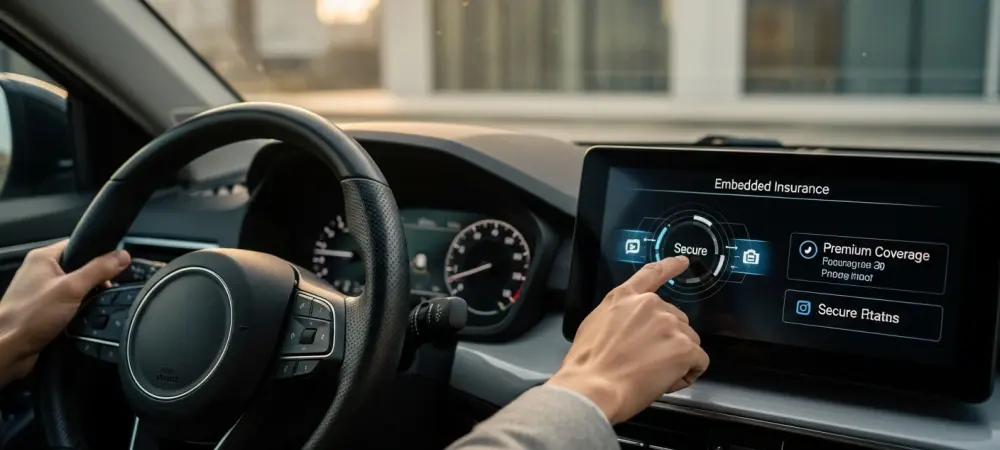
The traditional friction of securing automotive coverage is rapidly dissolving as sophisticated digital architectures weave insurance directly into the dashboard of new vehicles. This transition from a standalone product to a built-in feature marks a significant departure from fragmented consumer journeys. By integrating coverage at the point of sale, manufacturers transform a bureaucratic necessity into a smooth, value-added service that enhances brand loyalty through convenience.
The Evolution of Embedded Insurance: Automotive Sector
The shift toward a B2B2C distribution model allows legacy insurers to leverage manufacturer relationships to reach consumers effectively. Instead of competing on open search engines, providers now embed their underwriting logic into the vehicle purchase workflow. This integration simplifies acquisition by removing the need for customers to seek third-party validation after buying a car, creating a single point of interaction.
Furthermore, this model merges traditional underwriting expertise with advanced InsurTech platforms to optimize the user experience. Manufacturers are no longer just selling hardware; they are becoming central orchestrators of the entire ownership lifecycle. This change represents a fundamental shift in how insurance is perceived, moving from a complex legal requirement to an invisible, supportive layer of the driving experience.
Key Components: High-Performance Embedded Systems
Real-Time OEM Data Integration
Real-time OEM data integration provides a level of risk precision previously unavailable to traditional underwriters. By accessing vehicle-specific telematics and safety features directly from the source, insurers price policies based on actual hardware capabilities rather than broad demographic averages. This technical synergy creates a personalized experience that rewards owners of safer, modern vehicles.
Scalable InsurTech Platforms: Underwriting Synergy
Collaborative InsurTech platforms, such as the architecture used by Ageas and Wrisk, enable high-volume transaction processing through cloud-based channels. These systems act as a bridge between rigid legacy databases and the fast-paced digital requirements of modern car buyers. The result is a scalable infrastructure that supports instant quote generation without requiring extensive human intervention.
Current Trends: Industry Behavior Shifts
Industry behavior now prioritizes transparency through manufacturer-led initiatives that focus on the customer experience. Modern buyers expect immediate results, leading to a sharp decline in traditional, manual disclosure processes. This shift forces insurers to adopt smarter, tech-driven channels to remain competitive in a landscape where speed and data accuracy are the primary currencies.
Real-World Applications: Notable Use Cases
Practical applications are evident in the partnership between Ageas UK and Wrisk, which streamlines “drive-away” coverage at dealerships. This model ensures that new owners leave the lot fully protected, eliminating the dangerous gap between purchase and protection. Digital portals further extend this convenience, offering tailored insurance directly through vehicle smartphone applications.
Implementation Challenges: Market Obstacles
Despite these advancements, technical hurdles remain regarding the interoperability of older insurance systems with modern software. Data privacy also poses a significant obstacle, as consumers demand strict protocols for how telematics information is handled. Establishing standardized data formats across different vehicle brands is essential for achieving broad market adoption and consumer trust.
Future Outlook: Technological Trajectory
Looking ahead, artificial intelligence will likely refine risk assessment to a much more granular level. We may see a total transition toward usage-based products that adjust premiums dynamically based on real-time driving behavior. This evolution suggests a future where the traditional brokerage model becomes secondary to direct manufacturer distribution networks.
Summary and Final Assessment
The review demonstrated that embedded motor insurance successfully reduced consumer friction while increasing pricing accuracy. Stakeholders realized that technical agility was just as important as underwriting depth in securing market share. Moving forward, companies should prioritize the development of universal data protocols to ensure seamless cross-brand compatibility and long-term ecosystem growth.