

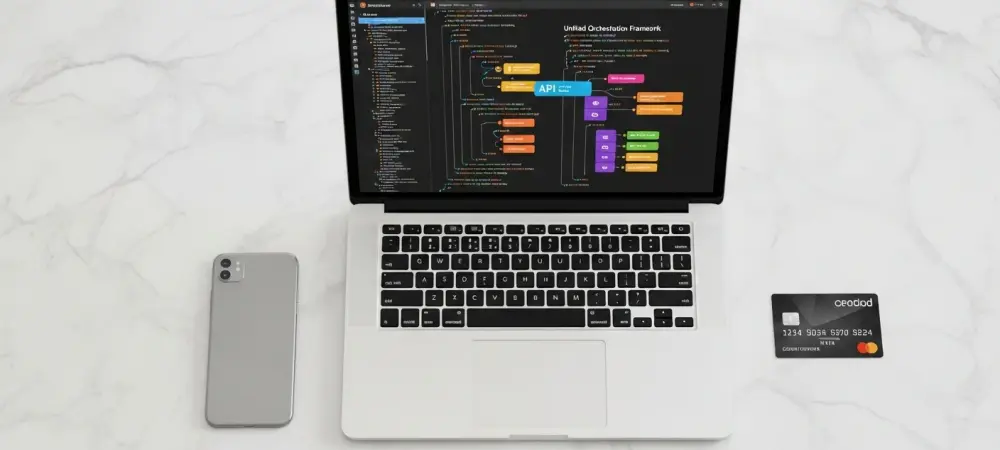
The traditional barriers between specialized banking infrastructure and consumer-facing digital platforms are dissolving at a rate that suggests the very definition of a “bank” is becoming obsolete for the modern enterprise. As businesses strive to keep users within their proprietary ecosystems, the technical debt and regulatory hurdles of launching financial products have historically acted as a prohibitive gatekeeper. Embedded finance orchestration has emerged as the definitive solution to this friction, acting as a sophisticated middleware layer that translates complex banking protocols into manageable, modular components. This review examines how this technology, specifically through the strategic alliance of AAZZUR and Wallester, is recalibrating the financial services industry.
Understanding Embedded Finance Orchestration
Embedded finance orchestration serves as a centralized command hub designed to simplify the integration of regulated services into non-financial platforms. It functions by abstracting the technical and legal complexities inherent in the fintech landscape, allowing brands to deploy financial tools without becoming banks themselves. Previously, a company would need to negotiate separate contracts and build custom integrations for every service, from KYC (Know Your Customer) to payment processing. Orchestration replaces this fragmented approach with a unified framework, drastically reducing time-to-market for digital innovators.
The true value of this technology lies in its ability to manage the “handshake” between various disparate APIs and regulatory bodies. By providing a single point of entry, orchestration platforms ensure that data flows securely and compliantly across the entire stack. This middleware does not just connect services; it synchronizes them, ensuring that a transaction triggered in a retail app is immediately recognized by the issuing bank and updated in the user’s ledger. This level of automation is what differentiates modern orchestration from the legacy “bank-as-a-service” models that often required heavy manual oversight.
Core Pillars of the Orchestration Framework
Smart Finance Blocks and Modular Architecture
The foundational strength of modern orchestration is the implementation of “Smart Finance Blocks,” which are essentially plug-and-play modules that allow a business to pick and choose specific functionalities, such as digital wallets, lending engines, or insurance protocols. This modularity means a company can start with a simple payment card and eventually scale into complex wealth management services without redesigning its entire architecture. It provides a level of agility that was previously unattainable, allowing businesses to pivot their financial offerings in response to real-time market demands.
Card Issuance: Regulatory Middleware in Action
A pivotal component of the current orchestration ecosystem is the integration of regulated issuing infrastructure, specifically through partnerships with entities like Wallester. As an EMI and Visa Principal Member, Wallester provides the necessary “legal rails” that allow the orchestration layer to issue physical and virtual cards. This integration is crucial because it handles the heavy lifting of compliance within jurisdictions like the EEA and the UK. The orchestration layer acts as the bridge, ensuring that the merchant’s front-end experience remains branded and fluid while the back-end remains strictly adherent to international banking standards.
Emerging Trends in Financial Modularity
The industry is moving toward a state of hyper-personalization where the “all-in-one” ecosystem is the gold standard. We are seeing a transition where technical execution is no longer enough; orchestration must now provide value-added services like advanced customer engagement and real-time expense management. This trend is driven by the realization that financial tools are most effective when they are contextually relevant to the user’s immediate needs. Consequently, orchestration providers are beginning to integrate AI-driven insights that help businesses predict which financial products a customer might need before the customer even asks.
Moreover, there is a growing emphasis on the democratization of these tools for smaller players. High-tier financial infrastructure, once reserved for global conglomerates, is now accessible to startups through the subscription-based models of orchestration platforms. This shift is also incorporating holistic elements like financial education. By embedding learning tools alongside transaction tools, providers are ensuring that the end-user is not just a consumer of debt or credit, but a financially literate participant in the digital economy.
Real-World Applications and Industry Use Cases
Corporate Expense Management: B2B Solutions
In the corporate sector, orchestration technology has revolutionized how businesses handle internal finances through white-label tools. Instead of relying on manual reimbursements and legacy banking portals, companies now deploy customized platforms that issue virtual Visa cards to employees instantly. These cards come with pre-set spending limits and automated accounting hooks, meaning every coffee or flight purchased is categorized in real-time. This level of granular control reduces administrative overhead and eliminates the possibility of “rogue” spending, providing a level of transparency that traditional corporate cards lack.
Retail and Consumer Platform Integration
Retailers are leveraging orchestration to transform their loyalty programs into full-scale financial ecosystems. By embedding “Buy Now, Pay Later” (BNPL) or branded digital wallets directly into the checkout flow, they keep the customer within their environment longer. This reduces “cart abandonment” and increases the lifetime value of the customer. The orchestration layer makes this possible by managing the risk assessment and credit checks in the background, allowing the retailer to offer a frictionless, branded banking experience that feels like a natural extension of the shopping journey.
Critical Challenges and Mitigation Strategies
The most significant hurdle facing this technology is the fragmentation of global regulations. While an orchestration platform might work flawlessly in the UK, moving that same stack to a different territory requires navigating a completely different set of compliance mandates. To combat this, leading providers are building “compliance-as-code,” where regulatory requirements are baked into the API calls themselves to ensure every transaction is vetted against the local laws of the user.
Technical resilience also remains a concern, as the orchestration layer represents a potential single point of failure. If the middleware goes down, the entire financial offering of dozens of brands could go dark. To mitigate this, developers are shifting toward multi-cloud architectures and “fail-safe” modules. If one financial block or third-party provider experiences an outage, the system can automatically reroute the request to an alternative provider, ensuring the high uptime required for financial services.
Future Outlook and Technological Evolution
The trajectory of embedded finance points toward a future of autonomous financial services. We can anticipate a deeper convergence between orchestration layers and Decentralized Finance (DeFi) protocols, where liquidity is sourced globally and optimized by AI. In this scenario, the orchestration layer will not just facilitate transactions but will actively manage them, moving funds between different accounts or assets to maximize interest or minimize fees for the end-user. The barrier to entry for launching a fintech product will continue to plummet, leading to a market saturated with niche, hyper-specialized financial apps.
As the technology matures, the distinction between “financial” and “non-financial” companies will blur further. We may soon see a landscape where every major brand—from automotive manufacturers to grocery chains—operates as a de facto financial institution. The orchestration layer will be the invisible engine driving this change, providing the necessary stability and security to support a global web of interconnected micro-services. This evolution will likely shift the power dynamic away from traditional banks and toward the platforms that own the primary customer relationship.
Summary of the Orchestration Review
The evaluation of embedded finance orchestration demonstrated that this technology has successfully transitioned from a niche developer tool to a fundamental pillar of the digital economy. It was observed that the modular “Smart Finance Blocks” provided the necessary flexibility for rapid scaling, while the integration of regulated infrastructure like Wallester’s card-issuing capabilities effectively bypassed traditional entry barriers. Although regulatory fragmentation and system resilience remained notable challenges, the move toward automated compliance and redundant architectures offered a viable path forward. The partnership model highlighted a shift toward more holistic, educational, and user-centric financial ecosystems. Ultimately, orchestration has proved to be the essential link required to make financial services a seamless, invisible part of any digital interaction.