

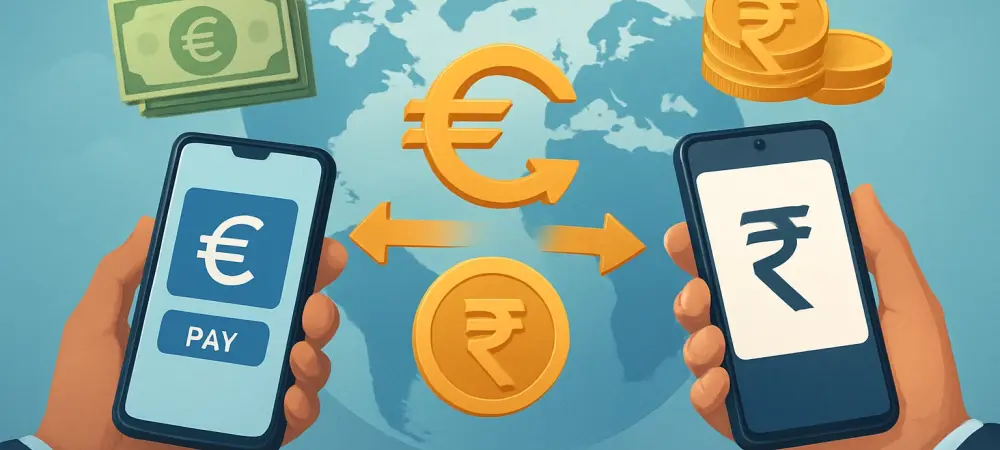
I’m thrilled to sit down with a leading expert in financial technology and international payment systems, whose deep understanding of global payment infrastructures offers invaluable insights. With years of experience in the fintech space, they’ve closely followed the evolution of instant payment systems and cross-border integrations. Today, we’re diving into the European Central Bank’s ambitious plans to connect its Target Instant Payment Settlement mechanism, known as TIPS, with India’s Unified Payments Interface (UPI) and other global networks. Our conversation will explore the motivations behind these integrations, the technical and legal hurdles, the potential impact on everyday users, and the broader vision for seamless cross-border payments.
Can you start by explaining what TIPS is and why the ECB introduced it in 2018?
Absolutely. TIPS, or Target Instant Payment Settlement, is a system launched by the European Central Bank under the Eurosystem to enable instant payments across Europe. The idea was to provide a pan-European platform where transactions could be settled in real-time, 24/7, using central bank money. It was introduced in 2018 to keep up with the growing demand for faster, more efficient payments in a digital economy, and to support the harmonization of payment systems across the Eurozone. Essentially, it’s about making money move as quickly as information does in today’s world.
What’s the driving force behind linking TIPS with India’s Unified Payments Interface, or UPI?
The main goal is to facilitate faster and more cost-effective cross-border payments between Europe and India, two regions with significant economic ties. UPI has revolutionized digital payments in India with its instant, low-cost transactions, and connecting it with TIPS could create a seamless bridge for individuals and businesses to send money across borders. It’s about reducing friction in international transfers, cutting down on intermediary costs, and ultimately fostering greater financial inclusion by making such services accessible to more people.
How does the partnership with the Nexus Global Payments network play into this integration?
The Nexus Global Payments network acts as a crucial enabler in this project. It’s a multilateral payment system designed to connect various national instant payment systems worldwide. By partnering with Nexus, the ECB can leverage a ready framework to interlink TIPS with UPI and other systems, rather than building bilateral connections from scratch. This collaboration helps standardize processes and ensures scalability, making it easier to expand to other regions down the line.
Can you describe what the Nexus Global Payments network does and why it’s so vital to this initiative?
Nexus is essentially a global connector for instant payment systems. It provides the technical and operational framework to link different national payment infrastructures, ensuring they can communicate and settle transactions smoothly. Its importance lies in its ability to harmonize diverse systems, handle currency conversions, and maintain security and compliance across borders. For the ECB’s vision with TIPS, Nexus is key because it offers a plug-and-play model to connect with multiple countries, starting with a strong presence in Asia.
What does the ECB mean by the “realization phase” for integrating TIPS with UPI?
The realization phase is the stage where the ECB moves from planning to actual implementation. This involves setting up the technical infrastructure to connect the two systems, testing interoperability, and ensuring that transactions can flow securely and instantly. It also includes finalizing legal agreements to cover issues like data protection and compliance with both European and Indian regulations. Think of it as the hands-on work to turn a concept into a working reality.
What are some of the legal or technical challenges that come up in a project like this?
On the legal side, there are complexities around aligning regulations between regions—things like data privacy laws, anti-money laundering rules, and consumer protection standards differ between Europe and India. Technically, the challenge is ensuring that TIPS and UPI, which were built on different architectures, can interoperate without glitches. This means standardizing protocols, managing currency exchange mechanisms, and securing transactions against cyber risks. It’s a balancing act to make everything mesh while maintaining trust and reliability.
How do you see these integrations impacting the speed and cost of cross-border payments for regular people?
The potential impact is huge. Right now, sending money internationally often involves multiple intermediaries, high fees, and delays of several days. By linking systems like TIPS and UPI, transactions could happen in seconds at a fraction of the current cost. For everyday users—say, someone in Europe sending money to family in India—this means more of their hard-earned money reaches its destination, and they don’t have to wait anxiously for days. It’s a game-changer for personal remittances and small business transactions.
The ECB emphasizes transparency and inclusivity in payments. Can you break down what that looks like in practice?
Transparency means users can clearly see the costs, exchange rates, and timelines involved in a transaction—no hidden fees or surprises. Inclusivity is about ensuring that these fast, affordable payment options aren’t just for big banks or tech-savvy users but are accessible to everyone, including underserved communities who rely on remittances. In practice, this could look like user-friendly apps with clear pricing, support for multiple languages, and outreach to bring more people into the digital payment ecosystem.
Looking ahead, what other regions or currency corridors might the ECB target for TIPS connections?
The ECB has expressed interest in expanding to additional currency corridors, though specifics are still under wraps. Beyond India, there’s potential to connect with other high-growth economies in Asia, Africa, or Latin America where instant payment systems are gaining traction. There’s also talk of linking with Switzerland’s Interbank Clearing Instant Payments system, which is already in the feasibility stage. The vision seems to be a global network where TIPS serves as a hub for multiple regions, enhancing Europe’s role in international finance.
What’s your forecast for the future of cross-border payment systems over the next decade?
I believe we’re heading toward a world where cross-border payments are as seamless as domestic ones. With initiatives like TIPS-UPI integration and networks like Nexus, the next ten years could see a dramatic reduction in costs and delays, driven by technology and international cooperation. We’ll likely see more central banks joining these networks, greater adoption of digital currencies or stablecoins for settlement, and enhanced security through innovations like blockchain. The end goal is a frictionless global payment system, and while challenges remain, the momentum is definitely there.