

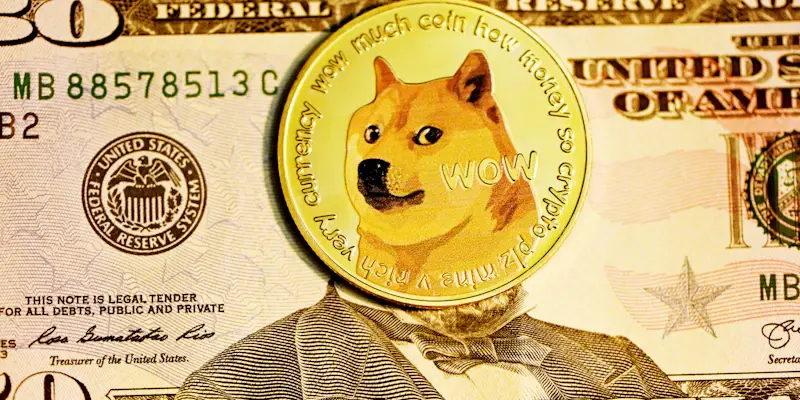
In the ever-evolving landscape of cryptocurrency, 2025 has witnessed remarkable developments with two notable assets: Dogecoin (DOGE) and Mutuum Finance (MUTM). Dogecoin, a meme cryptocurrency that gained traction with the backing of influential figures and a viral community, has now surged to the highly anticipated $1 mark. In contrast, Mutuum Finance, a promising DeFi token, has experienced an astronomical rise of 9900%, drawing considerable attention from investors seeking stability and substantial returns. These contrasting yet significant growth stories highlight the diverse dynamics within the crypto market, presenting investors with unique opportunities and risks.
Dogecoin’s Journey to $1
Dogecoin’s ascent to $1 represents a significant milestone for the cryptocurrency that started as a joke. Over the past few years, whale investors and strategic technical indicators like the Relative Strength Index (RSI) and MACD line have played pivotal roles in driving DOGE’s bullish trend. Whale movements, especially the notable transfer of 570 million DOGE tokens, further solidified this upward trajectory, signaling confidence among prominent investors. Although the trading volume saw a 22% decline at one point, the resilience of Dogecoin’s community and the strategic surpassing of crucial resistance levels spurred this remarkable growth.
Several factors contributed to Dogecoin’s impressive rise. The initial surge was largely fueled by social media hype and endorsements from high-profile individuals. However, as the market matured, DOGE began exhibiting more traditional bullish indicators, including strong support at lower levels and consistent breaking of resistance points. The $0.17 resistance level proved instrumental in paving the way for higher valuations, ultimately enabling Dogecoin to achieve its long-awaited $1 price point. This milestone not only validated the faith of its loyal supporters but also showcased the potential for meme-based cryptocurrencies to transition into more widely accepted digital assets.
The Phenomenal Boom of Mutuum Finance
In contrast to Dogecoin’s meme-driven ascent, Mutuum Finance emerged as a formidable player within the DeFi space, attracting investors with its structured lending platform and impressive revenue potential. During its presale phases, Mutuum Finance raised $7 million and saw 416 million tokens allocated to 8,400 unique holders, establishing a solid initial base of support. Priced at $0.025 per token during the presale, MUTM anticipated a listing price of $0.06 and ultimately surged to an astonishing $2.50 post-launch, rewarding early investors with a 9900% profit. Mutuum Finance’s remarkable boom can be attributed to its innovative approach to decentralized finance. The platform’s lending and borrowing mechanisms incentivize token holders through a buy-and-distribute system, ensuring consistent demand for MUTM tokens. Additionally, the introduction of mtTokens linked to deposits provides users with passive earnings through interest accrual, further enhancing investor appeal. Another crucial element is the employment of overcollateralization, which mitigates risk and appeals to conservative investors seeking more secure investment opportunities within the volatile crypto market. The project’s growing reputation was further bolstered by an ongoing audit of its smart contract by Certik, a respected cybersecurity firm specializing in blockchain technology. This independent audit not only enhanced the credibility of Mutuum Finance but also instilled confidence among potential investors, highlighting the platform’s commitment to security and transparency. With its structured tokenomics and focus on practical applications, Mutuum Finance successfully differentiated itself from other cryptocurrencies, positioning itself as a leading candidate for sustained long-term growth.
Utility vs. Speculation in the Crypto Market
The contrasting stories of Dogecoin and Mutuum Finance underscore a broader trend within the cryptocurrency market. While Dogecoin capitalized on speculative fervor and community-driven hype, Mutuum Finance’s success stemmed from its utility-oriented approach, appealing to investors seeking more practical financial applications. Analysts argue that meme-based assets like Dogecoin, although capable of generating substantial short-term gains, inherently possess higher volatility and unpredictability. Conversely, DeFi projects such as Mutuum Finance, with structured growth and clear revenue models, offer a more stable and potentially rewarding investment avenue.
Mutuum Finance’s emphasis on practical applications and structured tokenomics provides a robust framework for its sustained growth. The project’s successful presale and advanced lending mechanisms have attracted a diverse investor base, underscoring the increasing preference for utility-driven cryptocurrencies. As the market continues to evolve, such projects are likely to gain further traction, appealing to investors seeking both innovation and stability. The impressive performance of MUTM serves as a testament to the growing significance of decentralized finance within the broader cryptocurrency landscape, indicating a shift towards more sustainable investment opportunities.
Reflecting on Future Trends
In the continuously evolving cryptocurrency landscape, 2025 has seen remarkable advancements spotlighting Dogecoin (DOGE) and Mutuum Finance (MUTM). Dogecoin, initially a meme cryptocurrency that captured public attention through endorsements from influential figures and its viral community, has finally reached the long-anticipated $1 milestone. On the other hand, Mutuum Finance, a promising player in the DeFi (Decentralized Finance) sector, has skyrocketed with an unprecedented 9900% increase, attracting significant attention from investors eyeing both stability and impressive returns. These contrasting yet noteworthy growth trajectories underscore the varied dynamics within the crypto market, revealing unique opportunities and inherent risks for investors. Whether driven by community hype or substantial technological underpinnings, both assets encapsulate the unpredictable nature of cryptocurrency investments, offering a wide spectrum of potential outcomes. As such, 2025 has become a pivotal year, highlighting the prosperous yet volatile path of these digital assets.