

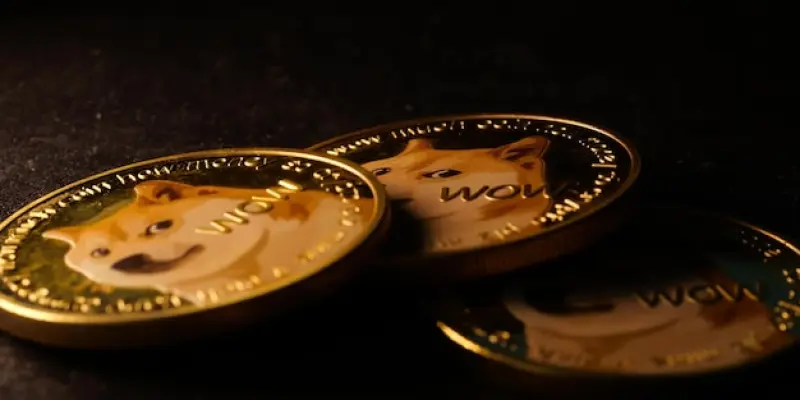
In the ever-evolving world of cryptocurrency, Dogecoin has once again captured attention with its recent market movements and the implications of a delayed decision by the US Securities and Exchange Commission (SEC) regarding the Dogecoin Exchange-Traded Fund (ETF) introduced by Grayscale Investments. With a backdrop of price fluctuations driven by dynamics both within and outside the crypto sphere, Dogecoin presents an intriguing case study in market volatility and investor sentiment. This article unpacks the market’s recent behavior, insights from leading crypto analysts, and what these developments mean for investors eyeing Dogecoin’s trajectory.
Analyzing Dogecoin’s Recent Volatility
Price Movements and Trading Volume
Dogecoin’s price has exhibited notable volatility, with the latest surge of over 4% pushing the price to $0.232 amid an increase in daily trading volume by 12%, surpassing $2 billion. Despite this bullish activity, Dogecoin’s higher prices remain bounded within a tight range of $0.22 to $0.25. This represents a 38% rise on the monthly chart. However, the $0.25 mark has emerged as a formidable resistance point, primarily due to active selling by early investors capitalizing on the latest price increases. These price behaviors have unfolded alongside the SEC’s decision to delay its verdict on the spot Dogecoin ETF proposed by Grayscale, an occurrence not uncommon, according to Bloomberg’s Senior ETF Analyst, James Seyffart.
Market Dynamics and SEC Decision Outcomes
The SEC’s postponement of the decision on Grayscale’s ETF application underscores a critical junction in the intersection of traditional finance and cryptocurrency markets. Such delays reflect ongoing regulatory challenges as governing bodies grapple with incorporating digital assets within the existing financial framework. This regulatory friction affects market sentiment and participants’ confidence as they anticipate whether digital currencies like Dogecoin will receive official endorsement through mechanisms such as ETFs. Grayscale’s involvement in this space signals a shift toward institutionalizing crypto investments, and how swiftly and favorably regulators act could set the precedent for future market dynamics.
Bullish Sentiment and Expert Forecasts
Insights from Crypto Analysts
Optimism remains a strong undercurrent within the Dogecoin community, particularly among analysts like Javon Marks, who projects a potential upswing of 215%. This forecast suggests that Dogecoin could soar to $0.73905, drawing parallels with its prior bull cycle patterns. These historical trends reveal similar market setups that hint at sustained upward momentum. Beyond these forecasts, some analysts propose even more ambitious targets, suggesting the possibility of Dogecoin achieving $6, reflecting heightened investor faith in the currency’s growth potential.
Technical Analysis and Potential Market Breakouts
Renowned analysts such as Ali Martinez outline potential breakout scenarios, emphasizing the positive momentum Dogecoin has been building. According to Martinez, exceeding the pivotal $0.239 resistance could trigger a rally toward $0.265, a technical possibility backed by accumulated buying interest. Simultaneously, Trader Tardigrade’s analysis introduces the prospect of Dogecoin forming its third significant cup and handle pattern—an indicator of strong underlying bullish sentiment. If this pattern completes, a significant increase in price, potentially reaching $6, could be on the horizon, offering lucrative opportunities for astute investors.
Strategic Moves and Broader Crypto Market Trends
Grayscale’s Role in Fostering Legitimacy
Grayscale Investments’ strategic decision to file for a spot Dogecoin ETF is a testament to its long-term vision to broaden its crypto offerings and foster legitimacy within the traditional financial space. The filing, acknowledged by the SEC, represents a significant milestone in bringing Dogecoin to mainstream financial markets. An announcement is expected by June 17. Meanwhile, challenges remain in navigating regulatory landscapes, as noted by Seyffart, who highlights the usual pattern of delays in crypto-related approvals.
Emerging Cryptocurrencies and Market Innovations
Amid the broader context of cryptocurrency dynamics, the market has witnessed the rise of meme coins like Bitcoin Bull (BTCBULL) as Bitcoin edges toward record price levels. BTCBULL adopts a novel incentive structure, offering rewards like Bitcoin airdrops and engaging in token burns tied to Bitcoin’s price escalations. These elements aim to attract investment and amplify market excitement, ultimately diversifying the landscape of cryptocurrencies. Innovations such as these not only reflect the creativity within the crypto ecosystem but also signify the potential for growth and diversity beyond established coins.
Navigating Opportunities and Challenges
In the dynamic landscape of cryptocurrency, Dogecoin has once again caught the spotlight due to recent market dynamics and the implications of the US Securities and Exchange Commission (SEC) postponing its decision on the Dogecoin Exchange-Traded Fund (ETF) proposed by Grayscale Investments. Amid fluctuating prices, influenced by factors both within crypto and broader economic conditions, Dogecoin serves as a fascinating example of market volatility and investor behavior. The digital currency’s ups and downs reflect the complex interplay of speculative interest and market confidence, making it a compelling subject for analysis. Insights from top crypto analysts can help unravel these recent developments and their potential impact on investors tracking Dogecoin’s future. This ongoing scenario also sheds light on the broader questions concerning regulatory responses to cryptocurrency innovations and the evolving landscape of crypto investments, adding further layers to the intrigue surrounding Dogecoin.