

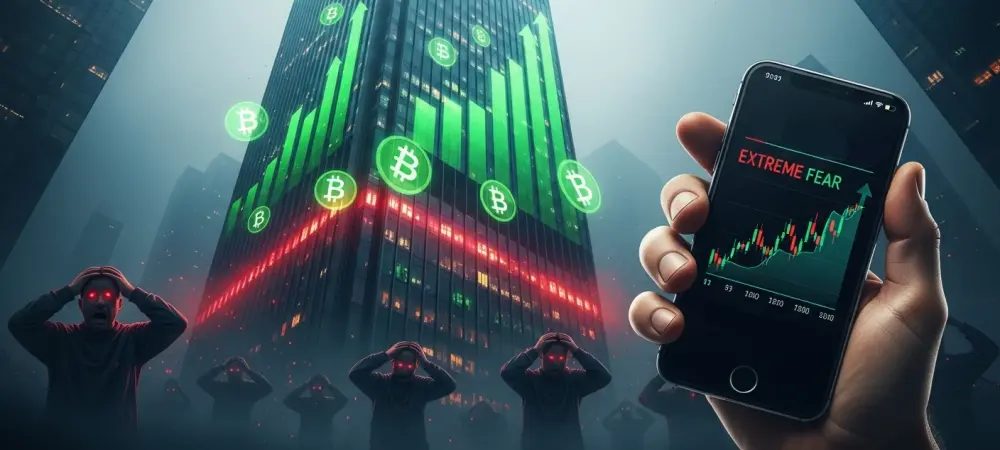
A curious and unsettling quiet has descended upon the cryptocurrency market, where the digital ticker for Bitcoin glows with a formidable price of approximately $88,000, yet the collective mood of investors is anything but celebratory. In a striking paradox that defies conventional market logic, the space is mired in a prolonged state of deep pessimism. The Crypto Fear & Greed Index, a key barometer of market sentiment, has been locked in the “Extreme Fear” zone for 14 consecutive days, registering a bleak score of 20. This period of sustained anxiety is not just significant; it is historically noteworthy, surpassing the duration of fear witnessed during the cataclysmic collapse of the FTX exchange in November 2022. At that time, Bitcoin’s price had cratered below $16,000, sending shockwaves through the industry. Today, even with prices roughly five times higher and the landmark introduction of spot ETFs, the prevailing atmosphere is one of persistent dread rather than confident accumulation.
Decoding the Market’s Anxious State
A Lingering Pessimism Beyond Singular Shocks
The current wave of fear is fundamentally different from the acute, event-driven panic that characterized the FTX crisis. While the exchange’s collapse was a singular, explosive shock that instantly drained liquidity and froze credit lines across the ecosystem, the anxiety gripping the 2025 market is a more chronic condition born from a confluence of persistent background pressures. A challenging macroeconomic environment looms large, with restrictive U.S. interest rate policies making high-risk assets like cryptocurrencies less appealing compared to safer, yield-bearing investments. This economic headwind is compounded by a steady drumbeat of regulatory pressure. U.S. agencies continue to scrutinize centralized exchanges and stablecoin issuers, creating a climate of uncertainty that deters institutional capital and worries retail participants. Unlike a sudden market crash that can be quickly processed and priced in, these lingering macroeconomic and regulatory threats create a sustained undercurrent of caution, leading investors to believe that another significant downturn could be triggered not by an internal “crypto” event, but by forces outside the industry’s control.
Derivatives and Spot Markets Signal Caution
This undercurrent of caution is not merely anecdotal; it is clearly reflected in hard market data from both derivatives and spot trading. The derivatives market, often a leading indicator of speculative appetite, shows clear signs of reduced leverage. Funding rates on major Bitcoin perpetual contracts, which reflect the cost of holding leveraged long positions, are hovering around flat or even slightly negative. This indicates that traders are unwilling to pay a premium to bet on rising prices, a stark contrast to the bullish sentiment seen in previous rallies. Furthermore, open interest—the total value of outstanding derivative contracts—has declined from its recent highs, suggesting that capital is being withdrawn from these more speculative instruments. This trend is mirrored in the spot markets, where trading volumes remain noticeably muted. The current level of activity pales in comparison to the frenzy that accompanied the launch of spot Bitcoin ETFs earlier in the year, a period that saw a massive influx of new capital. The present low volumes suggest a lack of conviction from both retail and institutional buyers, who appear content to wait on the sidelines rather than actively accumulating at current price levels.
Navigating the Contradictory Signals
The Quiet Rotation of Capital
Despite the overarching narrative of fear and inactivity, the market is not entirely frozen. A closer examination reveals a subtle but important dynamic: a quiet rotation of capital between different sectors of the digital asset economy. While the market as a whole is trading sideways, there is discernible movement beneath the surface. For instance, sectors that were recently popular, such as NFT-related tokens, have experienced a decline as investor interest wanes. Simultaneously, capital appears to be flowing into other, more nascent narratives, with tokens related to AI and SocialFi posting minor gains. This sector-specific activity indicates that while a broad, risk-on appetite is absent, sophisticated investors have not abandoned the market. Instead, they are engaging in more tactical and thesis-driven strategies, seeking out pockets of potential growth that can perform independently of the broader market sentiment. This behavior points to a maturing market where participants are becoming more selective, prioritizing specific use cases and technological developments over simply riding a generalized bull run.
A Contrarian Outlook from the Depths of Despair
The prolonged state of extreme fear, persisting longer than during one of the industry’s most devastating crises, left the market in a peculiar state. On one hand, long-term price charts painted a picture of a robust and highly valued asset class. On the other, participant behavior reflected a deep-seated anxiety, as if another shoe was about to drop. This divergence highlighted the critical insight offered by the Fear & Greed Index’s own methodology: its function as a contrarian indicator. The index’s design implies that when sentiment reaches such pessimistic extremes, it can often signal that investors have become overly worried, potentially pushing asset prices below their intrinsic value. The pervasive fear, driven by a combination of macroeconomic, regulatory, and internal market dynamics, had arguably created an environment where assets were being discounted due to emotion rather than fundamentals. This situation ultimately presented a potential inflection point where the very intensity of the market’s pessimism may have been the strongest signal of a looming buying opportunity.