

For years, software vendors have struggled to bridge the gap between digital and physical commerce, often finding the world of in-person payments to be a complex and costly puzzle. We’re joined by a fintech leader whose company just launched a Card Present API designed to finally solve this integration challenge. Today, we’ll explore the persistent pain points this technology addresses, how real-time data transforms a merchant’s daily operations, and what the future holds for a truly unified commerce experience.
The article highlights that ISVs traditionally face slow and expensive challenges with in-person payments. Could you elaborate on these specific integration and compliance pain points and then walk us through how your cloud-based API solves them for a new partner?
Absolutely. The friction for Integrated Software Vendors, or ISVs, has been a massive barrier. Historically, if they wanted to offer in-person payments, they were looking at a mountain of work. It meant months of bespoke development, wrestling with different hardware and legacy systems, and navigating the labyrinth of compliance and maintenance. This wasn’t just slow and expensive; for many, it was simply prohibitive. What we’ve done with our cloud-based API is essentially take that entire mountain of complexity and move it onto our own shoulders. When an ISV partner integrates with us, they’re not building from scratch. They’re plugging into a ready-made solution. We handle everything from that point on—all the terminal setup, the connectivity, the ongoing support, and the compliance. It completely removes those traditional pain points and turns a months-long development headache into a simple, streamlined integration.
You mention that merchants often wait 1-3 business days for transaction visibility. Can you describe how this delay typically impacts a merchant’s daily operations and then illustrate how real-time reporting concretely improves their reconciliation process?
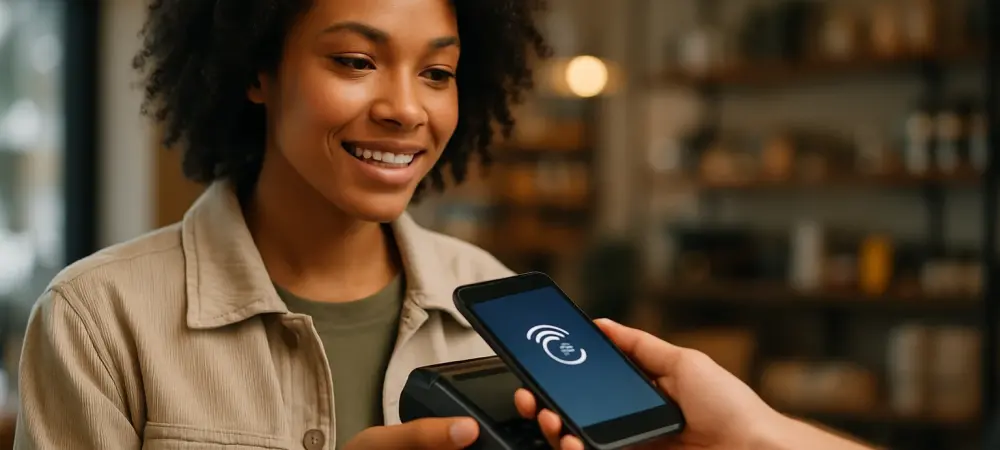
That 1-3 day delay is more than just an inconvenience; it’s a critical blind spot for a business. Imagine you’re a retailer trying to close out your books for the day. You know how much cash you have and you can see your online sales, but there’s this black hole where your in-person card sales should be. You’re operating on partial information, which negatively impacts everything from cash flow management to inventory decisions. It makes reconciliation a frustrating, manual chore of matching batch deposits to sales records days later. With our real-time reporting, that entire dynamic changes. The moment a card is tapped on a terminal, that transaction appears instantly on the merchant’s platform, right alongside their online sales. There’s no more guesswork. The reconciliation effort is drastically reduced because the data is already there, unified and immediate. It allows merchants to understand their business as it’s happening, not as it was two days ago.
Your API provides a unified view of online and in-person payments. Beyond simplified accounting, how does having this seamless omnichannel data in real-time empower a merchant to make faster, more informed business decisions on a daily basis?
It’s really about elevating the data from a simple accounting tool to a strategic asset. When online and in-store payments are no longer in separate silos, a merchant gets a complete, 360-degree view of their business in the moment. Think about a boutique owner who sees a particular dress flying off the shelves in her physical store. With a unified view, she can instantly check her online stock, see the same trend, and make a quick decision to reorder from her supplier before she sells out completely. It allows for smarter inventory management, more effective flash sales, and better staff allocation based on real-time traffic across all channels. It’s about being proactive rather than reactive, making faster decisions that can directly impact revenue and customer satisfaction.
You’re launching with Verifone’s T650p and P630 terminals. What made these specific Android-based models the right choice for the initial rollout, and what does the “fully configured” setup process look like for a merchant from unboxing to their first transaction?
We chose the Verifone T650p and P630 because they represent the modern, flexible future of payment terminals. Being Android-based, they provide a familiar, intuitive interface that’s much more powerful than traditional clunky hardware. This allows for a much richer and more connected experience. For the merchant, our promise is to make the setup effortless. The “fully configured” process means they receive a terminal that is truly plug-and-play. They take it out of the box, connect it to their network, and it’s ready to go. There’s no separate Verifone setup, no complex manuals to read. Because we’ve handled the entire configuration through our cloud platform, the terminal immediately recognizes the ISV’s system and is ready to process payments within minutes. It’s a seamless experience designed to get them transacting without any technical friction.
What is your forecast for the evolution of unified commerce, particularly regarding how ISVs will continue to bridge the gap between physical and digital payment experiences over the next few years?
I believe we’re at a turning point. For years, “unified commerce” has been more of a buzzword than a reality, but the technology is finally catching up to the vision. The Card Present API is a critical piece of that foundation, closing the technical gap between online and in-person worlds. Looking forward, I forecast that ISVs will move beyond just unifying payment data to creating truly integrated customer experiences. We’ll see them leverage this connected infrastructure to enable seamless journeys like buying online and returning in-store, or starting a shopping cart on a mobile app and completing the purchase at a physical kiosk. The gap won’t just be bridged; it will effectively disappear, leading to a single, fluid commerce ecosystem where the distinction between “online” and “in-store” becomes irrelevant to the consumer.