

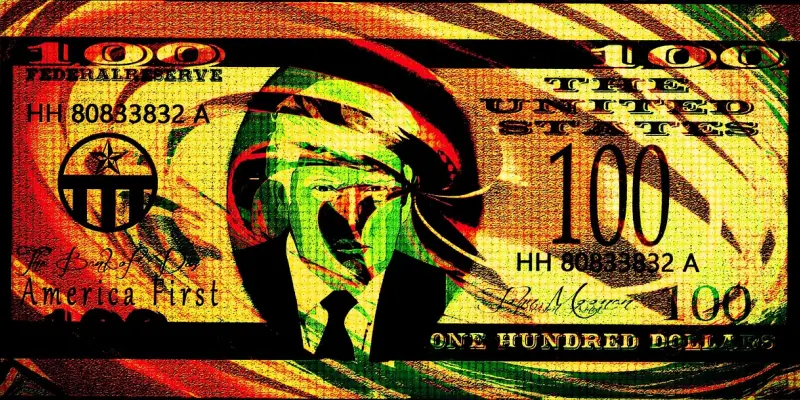
Cathie Wood, the CEO and chief investment officer of ARK Invest, has recently voiced her critical stance on Donald Trump’s newly launched cryptocurrency, the Official Trump token (TRUMP). Known for her forward-thinking approach to investments, Wood’s perspective on meme coins, including the TRUMP token, has drawn attention within the financial community. By analyzing Wood’s critical views on these meme coins, especially when contrasted with ARK Invest’s strategic focus on digital assets, we gain a deeper understanding of the broader outlook on decentralized finance (DeFi) and its potential within the financial ecosystem.
Cathie Wood’s Criticism of TRUMP Token
Wood has openly dismissed the TRUMP token, citing its lack of real-world utility as a fundamental flaw in her January 22 interview with Bloomberg. While there is speculation that owning TRUMP tokens might provide exclusive access to Donald Trump, Wood highlighted that the token’s primary identity as a meme coin considerably limits its value. She expressed skepticism regarding the coin’s long-term viability and practical applications, stressing that its speculative nature does not align with ARK Invest’s investment philosophy.
Launched just before Trump’s January 20 inauguration, the TRUMP token saw an explosive upsurge in value by 11,000% within hours, which correlated with a broader surge in meme coin trading volumes, peaking at nearly $18 billion within a week. Despite these impressive figures, Wood maintains that ARK Invest’s strategy focuses on digital assets with more concrete use cases and long-term adoption potential. She remains unconvinced by the short-term hype and volatility that often characterize meme coins, asserting that sound investments require robust fundamentals and sustainable growth prospects.
Memecoins and Political Tokens
The rise of meme coins and their association with political figures is a growing trend in the cryptocurrency market, with the TRUMP token serving as a notable example. These tokens often experience rapid value increases due to their novelty and the public figures they are associated with, driving short-lived viral interest and speculative trading. Wood’s critique of the TRUMP token extends to broader concerns about the credibility and sustainability of such coins, questioning their real-world utility and the long-term commitment of their backers.
Wood likens the enthusiastic surge around meme coins, including the TRUMP token, to the initial coin offering (ICO) boom of 2017. The ICO boom saw a massive influx of new investors attracted by the promise of quick gains, only to face subsequent regulatory scrutiny and widespread market correction due to rampant speculation. Wood suggests that much like the ICO craze, the current wave of meme coin interest lacks robust fundamentals and is highly susceptible to extreme volatility, rendering these assets unreliable for serious long-term investments.
ARK Invest’s Investment Focus
Cathie Wood reaffirmed her commitment to focusing on the “big three” crypto assets: Bitcoin, Ethereum, and Solana. ARK Invest historically emphasizes investments in assets that promise sustainable growth and real-world applications, diverging from the speculative nature of meme coins. Wood has been an ardent advocate for Bitcoin, consistently predicting that its value could exceed $1 million by 2030, based on its growing acceptance and foundational role in the decentralization of finance.
Ethereum and Solana also fall within ARK Invest’s key investment targets due to their crucial roles in supporting innovative blockchain projects and decentralized financial services. These assets are seen as pivotal to the future financial landscape, especially through their abilities to facilitate DeFi applications seamlessly. Wood’s dedication to these established cryptocurrencies underscores a strategic focus on assets that possess sound underlying technology and the potential for scalable solutions, distancing ARK Invest from the speculative allure of meme coins.
Market Concentration and Manipulation
Further compounding Wood’s concerns about the TRUMP token are issues related to its market concentration and the potential for manipulation. A report by blockchain analytics firm Chainalysis revealed that the TRUMP token is significantly concentrated among a small group of wealthy holders, with just 40 crypto whales controlling 94% of the total supply. This high level of concentration raises red flags regarding the potential for market manipulation and artificial price inflation, echoing the pitfalls of unchecked speculation in the crypto market.
Despite these red flags, the concentration has not deterred new investors. Data indicates that around 790,000 wallets hold TRUMP tokens, with nearly half of the buyers being first-time crypto users who created new wallets on the day of their purchase. Wood’s critique of the TRUMP token extends to these concerns, emphasizing the importance of investing in digital assets characterized by more distributed ownership and transparent governance structures. She argues that excessive concentration diminishes the overall integrity and investment potential of a digital asset.
Cathie Wood’s Broader Crypto and DeFi Perspective
Cathie Wood, the CEO and chief investment officer of ARK Invest, has recently expressed her critical opinion on Donald Trump’s newly released cryptocurrency, the Official Trump token (TRUMP). Known for her innovative approach to investment strategies, Wood’s views on meme coins, including the TRUMP token, have garnered significant attention within the financial community. Her perspective is particularly notable given ARK Invest’s strategic emphasis on digital assets and forward-thinking investments. By examining Wood’s critical stance on these meme coins, we gain valuable insights into the broader outlook on decentralized finance (DeFi) and its potential impact on the financial ecosystem. This contrast highlights the differing views on the future of digital currencies and how emerging technologies might shape the world of finance. Understanding Wood’s skepticism towards meme coins like TRUMP provides a clearer picture of the complexities involved in the evolving landscape of digital finance and the role that serious, strategic investments play in shaping that future.