

The American home insurance market is currently grappling with a severe volatility crisis as climate-related disasters causing over one billion dollars in damage now occur across the country approximately every ten days. Traditional actuarial science, long the backbone of the insurance industry, is increasingly failing to account for the rapid shifts in environmental risk that define the modern landscape. For decades, premiums were calculated based on historical loss data, a methodology that often penalizes homeowners for their zip code rather than the specific structural integrity of their residence. Amidst this turmoil, the InsurTech firm Stand has emerged as a disruptive force, recently achieving a unicorn valuation following a successful seventy-million-dollar Series C funding round. As the total value of property covered by the firm has jumped tenfold within the last year, the market is signaling a clear demand for more precise and physics-based risk assessment tools.
The Mechanics of Resilience: Building Digital Twins
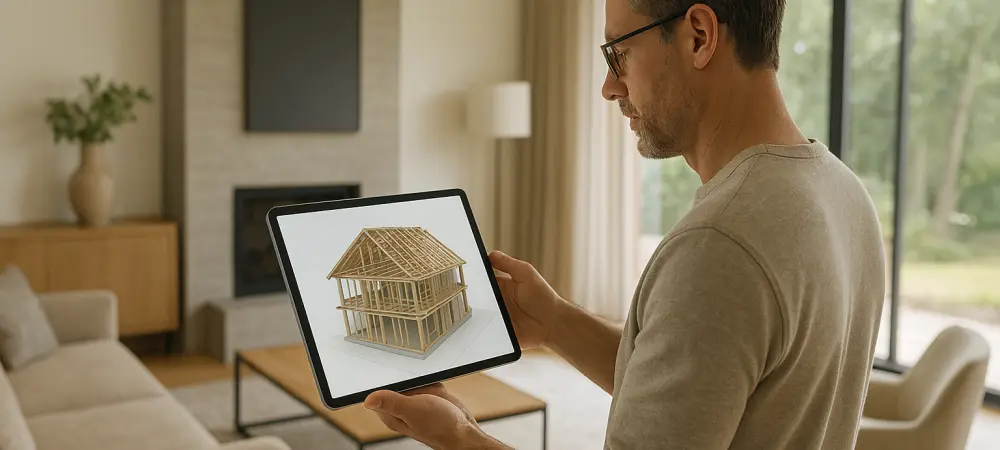
The core of this shift lies in the Stand World Model, a sophisticated physics-led digital platform that creates high-fidelity virtual twins of individual properties to simulate environmental stress. Rather than viewing a home as a mere entry in a spreadsheet, this technology analyzes specific structural components, such as roof geometry, building materials, and the immediate surrounding vegetation. By running complex simulations of wildfires, high-intensity winds, and flash floods, the system identifies the exact vulnerabilities that could lead to catastrophic loss during a disaster event. This granular approach allows the company to move beyond the limitations of historical data, providing a forward-looking assessment of risk that is rooted in the laws of physics. Homeowners are no longer limited by regional trends but are evaluated on the actual durability of their structures. This transition represents a fundamental change in how the industry perceives risk.
Beyond mere analysis, the model integrates financial rewards with physical mitigation strategies to create a sustainable ecosystem for both the insurer and the insured. When the digital twin identifies specific weaknesses, the company provides actionable recommendations for cost-effective upgrades, such as installing ember-resistant vents or upgrading to impact-rated windows. Once these resilience improvements are implemented and verified through the platform, homeowners can unlock substantial premium discounts that can reach as high as seventy percent of the total policy cost. This incentive structure ensures that insurance serves as a tool for driving infrastructure improvements rather than just a financial safety net after a disaster has already occurred. By aligning the interests of the homeowner with the stability of the insurance pool, this model reduces the frequency of claims. This strategy is effective in high-risk zones where traditional carriers have frequently withdrawn coverage.
Scaling Stability: Leadership and Future Directions
To manage this rapid expansion and navigate the complexities of the global reinsurance market, the firm has strategically bolstered its leadership team with seasoned industry veterans from major legacy institutions. The appointment of Drew Saad, formerly of PURE Insurance, as President of Property and Casualty, signals a commitment to blending innovative technology with established underwriting excellence. Simultaneously, Tony Landi, a veteran of Nephila and Everest Re, has stepped in as Chief Financial Officer to oversee finance and reinsurance strategy, ensuring the company has the capital depth to support its ten-billion-dollar portfolio. These appointments reflect a broader trend where tech-driven startups are no longer operating on the fringes but are actively recruiting top-tier talent to challenge the dominance of traditional insurance giants. Through partnerships with specialty carriers, the firm is successfully underwriting policies in the most volatile regions today.
The evolution of the insurance sector necessitated a departure from legacy actuarial tables toward a more dynamic and physics-oriented understanding of property risk. For homeowners, the next logical step involved investing in verified structural enhancements that directly lowered the probability of damage, thereby securing long-term coverage eligibility in a tightening market. Regulators and policymakers also began to recognize the value of digital twin technology in creating more equitable rating systems that rewarded individual responsibility rather than punishing collective geography. This shift effectively transformed the insurance policy into a roadmap for climate adaptation, encouraging the development of more durable infrastructure. As the industry moved toward this preventative framework, the focus transitioned from simply paying out claims to actively preventing them through rigorous engineering. Ultimately, the successful integration of physics-based modeling provided a blueprint for how technology mitigates risk.