

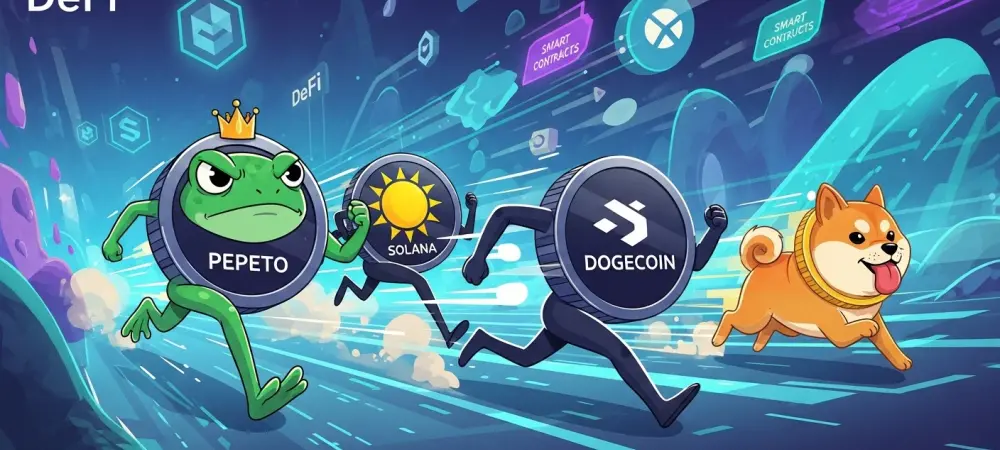
The persistent evolution of the decentralized finance sector is currently defined by a massive migration of capital away from legacy assets toward specialized ecosystems that prioritize security over mere brand recognition. As the global cryptocurrency market enters a more mature phase in 2026, the reliance on celebrity endorsements and social media hype is rapidly giving way to a demand for verifiable utility and robust technical infrastructure. This shift is particularly evident as established giants struggle to maintain their dominance in the face of persistent technical vulnerabilities and a lack of innovative updates. Modern investors are no longer satisfied with holding assets that offer limited functionality; they are increasingly seeking out projects that provide tangible tools for wealth preservation and growth in an increasingly volatile digital landscape. The current environment reflects a broader trend where the “first-mover advantage” is being challenged by newer, more agile protocols that have learned from the mistakes of their predecessors, setting the stage for a dramatic reshuffling of the market leaderboard.
The Fragility of Established Blockchain Giants
Assessing Solana’s Systemic Security Risks
The recent failure within the Drift Protocol has served as a sobering reminder that even the most well-funded and popular blockchain networks are not immune to catastrophic technical errors. When the exploit occurred, it did not merely affect a single application; it initiated a cascade of failures that impacted roughly twenty interconnected projects across the Solana network. This contagion highlights the inherent risks of a monolithic architecture where a single smart contract vulnerability can drain liquidity from multiple sources simultaneously. For many institutional and retail participants, this event has shattered the illusion of Solana as a bulletproof alternative to older blockchains. The network is currently grappling with a significant loss of confidence, as developers and liquidity providers reconsider the safety of deploying large amounts of capital on a chain where interconnected dependencies can lead to such widespread financial damage.
Building on these security concerns, the market performance of Solana (SOL) has mirrored the underlying technical anxiety that currently pervades the community. The asset is navigating a difficult path as it attempts to maintain critical support levels around the $80 mark, a figure that sits nearly 75% below its historic peak. This bearish price structure is not merely a result of market-wide fluctuations but is deeply tied to the perception of the network’s long-term reliability. Recovery for Solana is hindered by the recurring nature of these security breaches, which force the foundation to focus on damage control rather than the implementation of new, growth-driving features. As capital flows toward more secure environments, the total value locked in Solana-based protocols is under immense pressure, making it increasingly difficult for the asset to regain its former momentum without a fundamental overhaul of its security protocols and cross-project liquidity management.
The Stagnation of Legacy Meme Coins
Dogecoin represents a fascinating case study in how an asset can become a victim of its own success and massive market capitalization. Once a symbol of the retail investor’s power to disrupt traditional finance, DOGE is now struggling with a profound crisis of identity as it fails to integrate meaningful technological advancements into its ecosystem. The exclusion of the coin from major financial infrastructure updates, such as the X Money launch, has signaled to the market that the asset may have reached the limits of its utility. Without a native smart contract layer or a robust decentralized finance ecosystem, Dogecoin remains an inflationary currency that is heavily reliant on the unpredictable whims of influential figures and “whale” wallets. For the modern trader, the lack of fundamental catalysts makes the prospect of holding DOGE less attractive compared to newer projects that offer active income through staking or fee-sharing models. The mathematical reality of Dogecoin’s current market cap also presents a significant hurdle for those seeking the exponential returns that defined previous cycles. With a valuation hovering around $15 billion, the amount of capital required to double or triple the price is astronomically higher than it was during its initial meteoric rise. This saturation point often leads to a “diminishing returns” scenario where the risk-to-reward ratio no longer favors the average investor. While the coin still maintains a loyal community, the absence of a clear roadmap for technical integration means it is increasingly viewed as a stagnant legacy asset. Investors are noticing that while Dogecoin requires massive social media campaigns to see even modest gains, newer utility-driven projects are achieving similar or better results through technological innovation. This shift in sentiment suggests that the era of the “pure meme” coin may be ending, replaced by a preference for tokens that combine cultural relevance with real-world financial tools.
The Strategic Ascent of Pepeto in the DeFi Space
Establishing Trust Through Rigorous Audits
In a market where “exploit fatigue” has become a genuine psychological barrier for new participants, Pepeto has positioned itself as a sanctuary for those who prioritize the safety of their digital assets. The development team took a proactive stance by submitting the entire token supply of 420 trillion units to a comprehensive security audit performed by SolidProof before any major public launch. This level of transparency is designed to mitigate the fears associated with the types of vulnerabilities that recently plagued the Solana network. By ensuring that the smart contract code is free from common backdoors or logical errors, Pepeto provides a foundation of trust that is often missing in the high-speed world of decentralized finance. This commitment to security acts as a filter, attracting serious participants who are looking for long-term stability rather than short-term gambles on unverified protocols.
Furthermore, the emphasis on audited code serves as a powerful marketing tool in an environment where investors are increasingly skeptical of new projects. Pepeto’s strategy involves making security documentation easily accessible to the public, allowing users to verify the integrity of the project for themselves. This approach contrasts sharply with many legacy projects that only address security issues after a breach has occurred. By integrating safety into the core identity of the token, Pepeto is effectively building a “trust moat” that protects it from the volatility caused by technical uncertainty. This focus on reliability is especially important for the project’s goal of facilitating large-scale cross-chain movements, as users need absolute confidence that their funds will not be lost during the bridging process. As more capital flows into the ecosystem, this pre-verified security layer will likely become the standard against which other emerging DeFi projects are measured.
Delivering Functional Tools for Modern Traders
Pepeto distinguishes itself from its competitors by moving beyond speculative value to offer a suite of integrated financial instruments that solve real-world problems for traders. At the heart of this ecosystem is a zero-fee swap engine, which addresses one of the most persistent complaints in the DeFi space: the erosion of profits through high transaction costs. By removing the fee barrier for internal trades, the project encourages higher liquidity and more frequent engagement from its user base. This utility is further enhanced by a sophisticated cross-chain bridge that allows for the seamless movement of assets across different blockchain networks. This functionality is essential for modern traders who need to move capital quickly to capitalize on opportunities in various ecosystems without being delayed by the technical hurdles or excessive fees that usually accompany such transfers.
In addition to its trading tools, Pepeto has implemented a high-yield staking mechanism that provides an immediate incentive for long-term holding. With an annual percentage yield that significantly outperforms traditional financial products and even many established DeFi protocols, the staking program allows early adopters to compound their positions effectively. This creates a supply-side pressure that can support price stability as the project matures. Unlike many legacy coins that offer no rewards for holding, Pepeto’s ecosystem is designed to redistribute value back to its most active participants. This combination of zero-fee trading, cross-chain flexibility, and rewarding staking options transforms the token from a simple asset into a comprehensive financial platform. By providing these tools, Pepeto is positioning itself as a central hub for decentralized trading activity, attracting a diverse range of users from day traders to long-term yield seekers.
Market Positioning and the Path to Liquidity
The successful execution of the Pepeto presale, which has already generated more than $8.1 million, reflects a strong market appetite for projects that bridge the gap between viral meme culture and serious financial utility. This significant capital raise provides the development team with the resources necessary to scale the infrastructure and maintain a high level of operational security. A critical component of the project’s roadmap is the confirmed listing on Binance, which represents a major milestone for liquidity and global accessibility. For any emerging project, a listing on a top-tier exchange acts as a massive catalyst for price discovery, as it opens the doors to millions of retail and institutional investors who prefer trading within regulated and highly liquid environments. This path to the public market is much clearer for Pepeto than for many of the stagnant coins currently littering the DeFi landscape.
The leadership behind Pepeto brings a unique blend of industry experience, featuring veterans from established exchange platforms and successful marketing experts. This combination ensures that the project is not only technically sound but also strategically positioned to capture the attention of the broader market. By leveraging the recognizable aesthetics of the meme genre while providing the professional-grade tools of a DeFi powerhouse, Pepeto is effectively targeting two distinct segments of the crypto community simultaneously. This dual-track strategy allows the project to benefit from the viral growth potential of social media while maintaining the credibility required for institutional adoption. As capital continues to rotate out of ecosystems that have failed to innovate, Pepeto is standing ready to absorb that liquidity, offering a modern, secure, and highly functional alternative that is built for the demands of the current market cycle.
Future Considerations for Decentralized Portfolios
The transition from legacy assets like Solana and Dogecoin toward utility-focused projects like Pepeto suggested a fundamental shift in how value was perceived within the digital economy. Investors who prioritized proactive security audits and functional trading tools found themselves better protected against the systemic failures that characterized older, more vulnerable networks. The move toward zero-fee swap engines and cross-chain bridges became a standard requirement for any protocol wishing to remain competitive in a landscape that demanded both speed and cost-efficiency. By focusing on verified code and clear exchange listing paths, participants were able to navigate the market with a level of confidence that was previously unattainable during the era of speculative meme coins.
Moving forward, the primary focus for market participants should be the continuous evaluation of a project’s underlying utility and its ability to adapt to new security threats. The success of the Pepeto model demonstrated that cultural relevance was most effective when backed by robust technical infrastructure and high-yield incentives. Future strategies should involve diversifying into ecosystems that provide tangible services, such as seamless asset migration and cost-effective trading, rather than relying solely on social sentiment. By monitoring the integration of these tools into daily trading habits, investors can identify the next generation of market leaders before they achieve mainstream dominance, ensuring that their portfolios are positioned for both resilience and growth in the evolving DeFi landscape.