

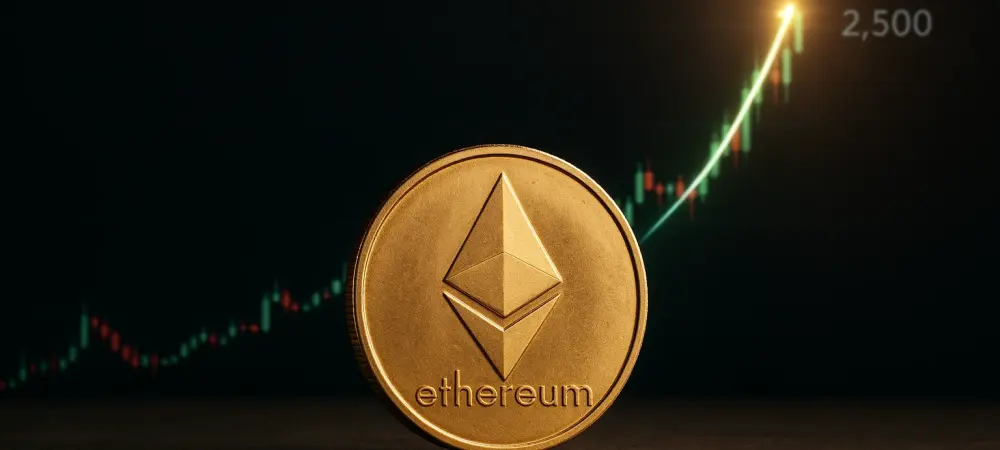
The recent surge in Ethereum to $2,370 marks a pivotal shift in market dynamics following a historic $4 billion liquidation of short positions across the cryptocurrency sector. This massive unwinding of bearish bets acted as a powerful catalyst, propelling the price through long-standing resistance zones that had previously capped gains. Traders who had anticipated a further decline were forced to buy back their positions, creating a self-reinforcing upward cycle of buying pressure. This phenomenon, known as a short squeeze, often precedes major trend reversals or significant breakout attempts. Currently, the market is assessing whether this momentum is sufficient to challenge the psychological barrier of $2,500. Observers noted that the sudden volatility disrupted stagnant trading ranges, bringing renewed interest from retail and institutional participants alike. The efficiency of the recovery suggests that underlying demand remains robust, even as the broader macroeconomic environment continues to evolve.
Market Mechanics: The Path Toward the Breakout
The interaction between spot buying and derivative market activity remains a critical factor in determining the next phase of this rally. While the short squeeze provided the initial spark, a continued move upward requires consistent organic demand from investors seeking long-term exposure. Market participants are closely watching exchange outflows and staking participation rates, which serve as indicators of supply constraints. A decrease in available supply on exchanges typically correlates with bullish price movements, as it reduces the immediate selling pressure. Moreover, the integration of layer-two scaling solutions has reached a point of maturity where network utility is driving fundamental value. This transition from speculative trading to utility-based demand provides a more stable backdrop for price appreciation. If the network continues to see high transaction volumes without a corresponding increase in gas fees, the path toward $2,500 becomes increasingly clear for most observers who track the correlation.
Institutional adoption continues to play a decisive role in the valuation of Ethereum, especially as more traditional financial entities integrate blockchain technology into their operations. In 2026, the landscape of digital asset investment has evolved to include more diverse products, ranging from direct spot access to sophisticated yield-bearing instruments. This influx of professional capital provides a stabilizing effect, as institutional investors tend to have longer time horizons compared to retail traders. The recent price action has reportedly piqued the interest of hedge funds and pension managers who view the $2,370 level as a compelling entry point. This shift in participant demographics is essential for overcoming the heavy resistance expected at the $2,500 threshold. Additionally, the regulatory environment has become more predictable, allowing for larger allocations without the fear of sudden legal hurdles. As these entities continue to deploy capital, the resulting buy-side pressure could potentially eclipse selling interest.
The market’s reaction to the record short squeeze demonstrated a high degree of maturity and resilience that paved the way for future strategic maneuvers. Investors who closely monitored the liquidation levels and volume spikes found themselves better positioned to capitalize on the subsequent price expansion. It became evident that maintaining a diversified approach to asset management, incorporating both spot holdings and staking rewards, offered a robust defense against volatility. Experts suggested that tracking whale movements and exchange net flows provided the necessary data to anticipate the next leg of the rally. Those who focused on the underlying network upgrades and adoption metrics rather than short-term price fluctuations gained a clearer perspective on Ethereum’s long-term trajectory. It was recommended that stakeholders prioritize security protocols and liquidity management to navigate the anticipated price discovery phase effectively. Ultimately, the transition toward the $2,500 target required a focus on growth.