

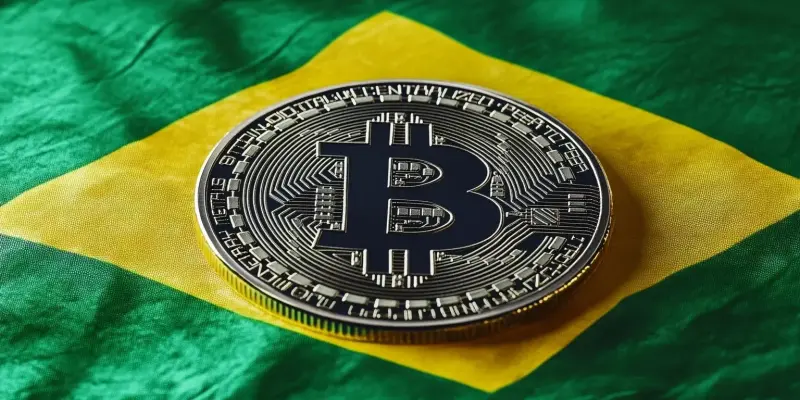
Brazil, one of the world’s largest economies with a population eager to embrace digital assets, faces significant regulatory challenges that could hinder its potential to become a major player in the global cryptocurrency market. Despite the country’s promising prospects, the Brazilian government’s conflicting stances on cryptocurrency regulation have created an environment of uncertainty, impeding the growth of its crypto economy. Although lawmakers passed a comprehensive cryptocurrency law in 2022, sanctioned by President Lula in 2023, unresolved debates around stablecoin regulation continue to cloud the industry’s future.
Governmental Uncertainty and Its Impact
A central issue contributing to Brazil’s regulatory conundrum is the Brazilian central bank’s recent proposal that dollar-pegged stablecoins be treated as foreign currency. The implications of this proposal are far-reaching and severe for the industry, as compliance challenges would increase drastically. Crypto exchanges would need to obtain two separate licenses, and Brazilian users would find their access to self-custody wallets and decentralized exchanges severely restricted. These measures, if implemented, could create a prohibitive regulatory environment, deterring both local and international crypto ventures from setting up operations in Brazil.
Further compounding the complexity is the newly appointed President of the Central Bank of Brazil, Gabriel Galipolo. Galipolo has been vocal about his concerns regarding stablecoins, highlighting their potential misuse for activities like tax evasion and money laundering. This stance suggests that stricter oversight and more stringent regulations are on the horizon, making the landscape even more unpredictable. The lack of a clear, unified regulatory approach signals to the industry that Brazil’s government is divided on the issue of cryptocurrency, further fueling the uncertainty that plagues the market.
Leadership and Its Influence
For Brazil to overcome these regulatory hurdles and establish itself as a crypto hub, unified and pro-crypto leadership is essential. Currently, this is an area where Brazil significantly lags behind other countries that have successfully embraced the crypto economy. For instance, El Salvador has made headlines with its bold move to adopt Bitcoin as legal tender, backed by unwavering support from its government. Similarly, in the United States, despite varying degrees of regulation across states, there is a strong presence of crypto-positive leaders pushing for innovation-friendly policies.
President Lula, despite introducing favorable draft regulations in the National Congress, appears ambivalent regarding crypto support. His focus on anti-dollar and pro-national currency initiatives does not necessarily align with a pro-crypto stance, which further complicates matters. Without dedicated leadership driving forward a cohesive strategy for cryptocurrency adoption and regulation, Brazil’s path to becoming a global crypto haven remains uncertain. The country’s potential as a major crypto player is immense, but it is hindered by the absence of strong, unified guidance from its leaders.
Future Prospects and Necessary Steps
Brazil, recognized as one of the world’s largest economies with a tech-savvy population poised to embrace digital assets, confronts significant regulatory hurdles that could stall its ascent as a key player in the global cryptocurrency arena. The country’s favorable prospects clash sharply with its government’s inconsistent approaches to cryptocurrency regulation, creating a climate of instability that hampers the growth of Brazil’s crypto market. Although legislators succeeded in passing a comprehensive cryptocurrency law in 2022, which received President Lula’s sanction in 2023, unresolved debates about stablecoin regulation continue to cast a shadow over the industry’s trajectory. This ongoing uncertainty around stablecoins and other regulatory aspects remains a formidable barrier to Brazil’s potential to fully exploit its promising position in the global digital assets domain. Thus, while Brazil holds substantial promise, its regulatory ambiguity must be addressed to unlock its cryptocurrency market’s full potential.