

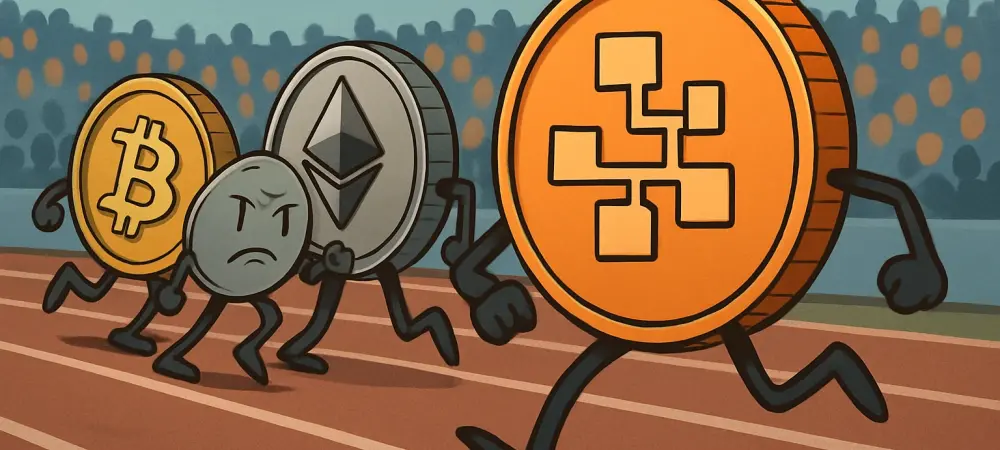
Imagine a digital asset market where billions of dollars change hands daily, and the race for supremacy among cryptocurrencies intensifies with every technological leap, placing XRP, Chainlink, and BlockDAG as formidable contenders. In this high-stakes arena, each vies for dominance in payments, decentralized finance (DeFi), and blockchain utility. This roundup dives into diverse opinions and insights from industry analysts, developers, and market watchers to assess whether BlockDAG, a rising star, can eclipse the established might of XRP and Chainlink. By compiling varied perspectives, the goal is to uncover which project might lead the pack in shaping the future of finance.
Unpacking the Blockchain Battleground
XRP’s Drive for Payment Innovation
Industry observers note that XRP remains a key player in the cross-border payments sector, bolstered by Ripple’s strategic moves. Many highlight a significant $200 million acquisition of a stablecoin platform as a game-changer, positioning XRP to streamline global transactions with enhanced efficiency. This move has sparked optimism among payment-focused analysts who see XRP as a bridge between traditional finance and crypto ecosystems.
On the flip side, some market watchers express caution about XRP’s growth trajectory. While price forecasts suggest a range of $3.40 to $8 in the coming years, resistance at $3.17 looms as a critical hurdle. A segment of experts argues that historical legal and market challenges could temper enthusiasm, questioning whether XRP can fully capitalize on its real-world use cases.
Further complicating the outlook, opinions differ on XRP’s ability to sustain momentum. Certain financial strategists emphasize that institutional adoption will be pivotal, yet they warn of lingering uncertainties in regulatory landscapes that might hinder widespread acceptance. This divide in thought underscores the nuanced challenges XRP faces in solidifying its position.
Chainlink’s Surge in Enterprise Relevance
Turning to Chainlink, numerous industry voices celebrate its recent price climb above $24, attributing the surge to robust oracle services fueling enterprise adoption. Partnerships with major entities like Intercontinental Exchange (ICE) are frequently cited as evidence of Chainlink’s growing importance in connecting blockchain with real-world data. Many see this as a cornerstone for its continued relevance.
However, not all feedback is unanimously positive. Some analysts point to critical support levels between $23.5 and $23.6, suggesting that maintaining these thresholds is essential for further gains into the $30s. A few market observers caution that volatility remains a significant risk, potentially undermining Chainlink’s ability to hold its newfound ground amid broader economic fluctuations.
A contrasting perspective comes from tech developers who focus on Chainlink’s token buyback initiatives. They argue that such mechanisms bolster investor confidence and could drive long-term stability. Yet, even among this group, there’s acknowledgment that external market pressures might challenge Chainlink’s role as a backbone for blockchain interoperability if not addressed strategically.
BlockDAG’s Disruptive Potential and Early Traction
BlockDAG, a newer entrant, garners significant buzz among crypto enthusiasts and developers for its hybrid blockchain design. Many in the tech community praise its full Ethereum Virtual Machine (EVM) compatibility, which has attracted over 4,500 developers and supported more than 300 decentralized applications (dApps). This innovative approach is often highlighted as a potential disruptor in the DeFi space.
Market analysts also weigh in, pointing to BlockDAG’s impressive early metrics, including a testnet with over 110,000 users and a mobile mining community of 2.5 million. A notable presale figure of $383 million further fuels excitement, with some suggesting that early gains of 2,600% for investors signal untapped potential. Optimistic voices project ambitious targets of $4 to $5 in the long term.
Despite the hype, skepticism persists among seasoned investors. Several argue that early success does not guarantee sustained impact, especially in a crowded market. Questions arise about whether BlockDAG can transition from presale momentum to real-world scalability post-mainnet launch, with critics urging caution against viewing it as more than a speculative bet at this stage.
Community and Adoption: Where Opinions Converge and Diverge
Community engagement emerges as a focal point across discussions of these projects. Many crypto forum contributors and social media influencers emphasize BlockDAG’s grassroots appeal, citing initiatives like a 10,000 BDAG airdrop as a driver of user involvement. This bottom-up approach is often contrasted with XRP’s institutional focus, which some corporate analysts argue provides a more stable foundation for growth.
Adoption metrics also spark varied takes from different corners of the industry. While BlockDAG’s presale success is lauded by early-stage investment enthusiasts, others compare it to Chainlink’s enterprise partnerships, suggesting that corporate backing offers a more reliable path to mainstream integration. A few DeFi developers note that sustained adoption hinges on balancing both community and institutional support, a balance none of the three has fully achieved yet.
Another angle comes from data-driven analysts who dissect engagement models. They point out that XRP’s reliance on strategic alliances might limit its agility compared to BlockDAG’s rapid user growth. However, a counterargument from blockchain consultants stresses that corporate ties, as seen with Chainlink, often translate to greater resilience during market downturns, creating a complex debate on what truly builds a lasting ecosystem.
Investor Insights from Across the Spectrum
For investors navigating this competitive terrain, diverse tips surface from financial advisors and crypto commentators. Many recommend closely tracking XRP’s ability to break key resistance levels as a signal for entry or exit points. This technical focus is seen as a pragmatic way to gauge short-term potential without overcommitting to long-term uncertainties.
Others turn attention to Chainlink, advising vigilance on support levels as indicators of stability. A subset of investment strategists suggests that Chainlink’s enterprise connections make it a safer bet for risk-averse portfolios, though they acknowledge that sudden market shifts could disrupt even the strongest fundamentals if not monitored closely.
Regarding BlockDAG, presale participants and growth-focused analysts urge investors to watch its mainnet launch as a critical milestone. Additional advice includes diversifying across utility-driven projects to mitigate risks, with some emphasizing the value of staying updated on testnet feedback and developer activity as predictors of BlockDAG’s future trajectory in DeFi and beyond.
Reflecting on the Crypto Clash
Looking back, this roundup captured a spectrum of insights on XRP, Chainlink, and BlockDAG, revealing a market defined by innovation and uncertainty. Each project showcased unique strengths, from XRP’s payment ambitions to Chainlink’s enterprise foothold and BlockDAG’s explosive early traction. The debates and perspectives underscored how utility and adoption shaped opinions across the board.
For those eager to dive deeper, exploring detailed whitepapers and community forums offers a pathway to nuanced understanding. Keeping an eye on upcoming technical milestones, such as mainnet launches or partnership announcements, provides actionable steps for staying ahead. Ultimately, engaging with ongoing market analyses ensures that investors and enthusiasts alike remain equipped to navigate the evolving landscape of digital assets.