

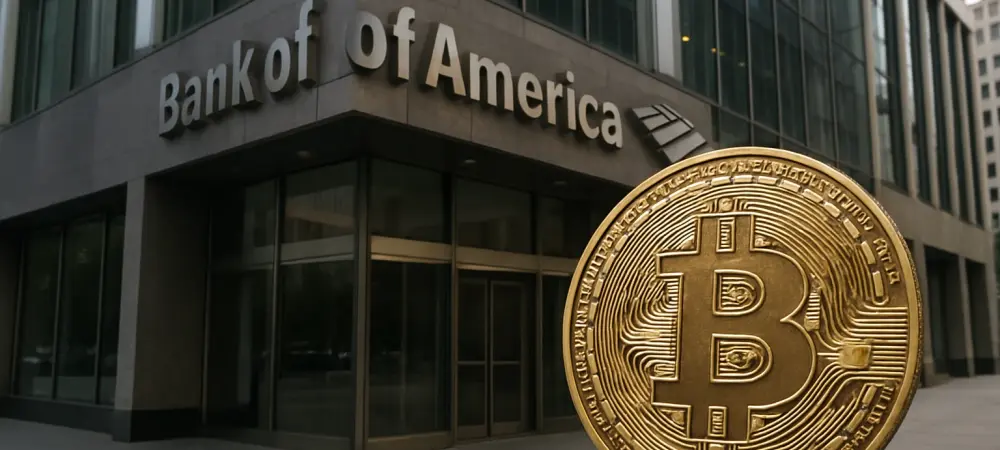
With a career spanning decades at the intersection of traditional finance and emerging technology, our guest is a leading voice on the institutional adoption of digital assets. Today, we’re exploring a landmark moment: Bank of America’s decision to empower its wealth advisors to proactively recommend cryptocurrency products to clients. This move signals a significant maturation of the market, but it comes with immense responsibility. We’ll delve into the operational readiness behind this shift, the specific client profiles being targeted, how the bank is managing the conversation around extreme volatility, and what this all means for the future of wealth management.
Starting January 5th, Bank of America is shifting advisors from just executing crypto orders to actively recommending them. What specific training, risk frameworks, and client communication protocols have been put in place to manage this significant change in an advisor’s responsibilities?
This is a seismic shift, moving from a passive order-taker to an active fiduciary on a highly volatile asset. It’s not something you can just flip a switch on. The preparation involves a multi-layered approach. First, there’s intensive advisor training focused not just on the mechanics of crypto ETPs, but on the entire digital asset ecosystem and its unique risk profile. Second, the risk frameworks are being completely overhauled. Expect to see new, explicit suitability questionnaires and mandatory risk disclosures that clients must sign, acknowledging they understand the potential for severe drawdowns. Finally, communication is being standardized. Advisors will be equipped with pre-approved talking points and educational materials that frame this as a speculative, high-risk allocation, ensuring a consistent and compliant message is delivered to every single client.
The bank’s CIO, Chris Hyzy, suggests a 1% to 4% allocation for certain clients. Can you break down the specific investor profile that fits this recommendation, and what key metrics will advisors use to decide whether a client is better suited for the 1% or the 4% end?
You really have to peel back the layers on the client profile mentioned: someone with a “strong interest in thematic innovation” and “comfort with elevated volatility.” This isn’t your typical retiree looking for income. A client suited for a 1% allocation might be a more traditional, high-net-worth individual who is crypto-curious and wants a small, speculative position that won’t impact their overall financial plan if it goes to zero. The 4% allocation is likely reserved for more aggressive, sophisticated investors—perhaps those with a background in tech or venture capital—who have a much higher risk tolerance and a longer time horizon. The key metric for advisors won’t just be net worth; it will be a qualitative assessment of the client’s emotional capacity to stomach a loss like the $18,000 drop Bitcoin saw in November without making a panic-driven decision.
The article mentions that clients with certain asset thresholds have had access since early 2024. What has the bank learned from this initial phase, and what specific client demand or market data prompted the decision to now remove asset thresholds for ETP recommendations?
That initial phase with high-net-worth clients was essentially a controlled pilot program. The bank learned two critical things. First, their operational and compliance plumbing could handle the product without any major breaks. They tested the systems in a lower-volume, sophisticated-investor environment. Second, and more importantly, they saw that the demand wasn’t just coming from the top; they were getting persistent inquiries from clients at all levels of the Merrill and Merrill Edge platforms. Removing the asset threshold is a direct response to that widespread client demand. It’s a strategic decision to capture an interested audience they were previously turning away, but doing so through the regulated and familiar wrapper of an ETP, which is a much safer way to offer access to the masses than direct crypto ownership.
Given the article highlights Bitcoin’s recent $18,000 monthly loss and Merrill’s own warning about “speculative excess,” how will advisors navigate conversations about such extreme volatility with clients, and what guardrails are in place to prevent emotional, ill-timed investment decisions?
The advisor’s primary job here is to be the voice of reason and to set expectations from the very first conversation. They won’t be hiding from the volatility; they’ll be leading with it. They will use that $18,000 monthly loss as a real-world stress test in client discussions, asking, “How would you have felt seeing your allocation drop by this much in 30 days?” The most critical guardrail is the modest allocation size itself. By capping it at 1% to 4%, the bank ensures that even a catastrophic loss in the crypto portion of the portfolio doesn’t derail the client’s long-term financial goals. This, combined with Merrill’s own candid warnings about “speculative excess,” empowers advisors to frame this not as a safe bet, but as a calculated, high-risk venture within a well-diversified portfolio.
What is your forecast for the role of traditional wealth management firms in the digital asset space over the next five years as institutional adoption and regulatory landscapes continue to evolve?
Over the next five years, the role of traditional wealth firms will transform from that of a gatekeeper to a curator and a bridge. This move by Bank of America is the blueprint. Instead of simply blocking access, firms will provide a carefully vetted, risk-managed “walled garden” of digital asset products, almost exclusively through regulated instruments like ETPs. They will become the primary on-ramp for mainstream capital, leveraging their brands, compliance infrastructure, and advisory relationships to bring a new class of investors into the fold. The focus won’t be on crypto maximalism but on responsible integration, treating digital assets as a small, speculative sleeve within a traditional, diversified portfolio. They will essentially domesticate the asset class for the mass affluent.