

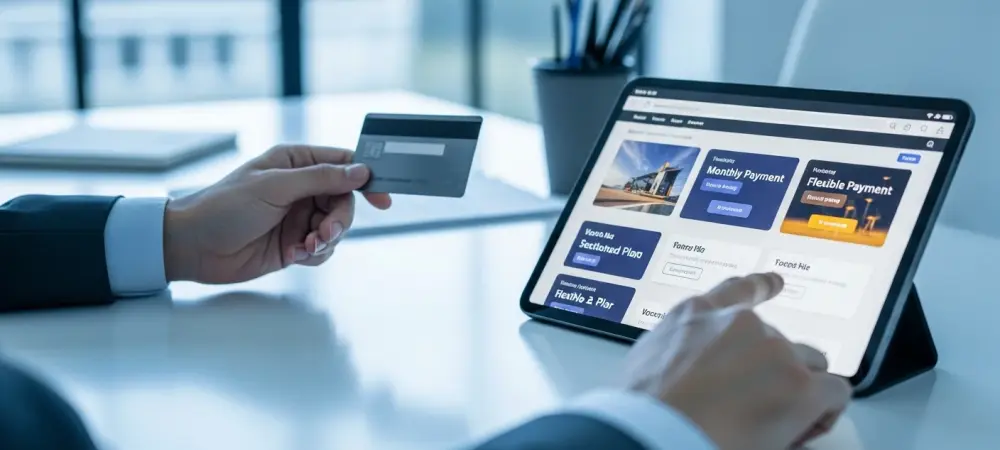
A modern consumer standing at the digital crossroads of commerce no longer asks whether a product exists, but rather if the merchant facilitating the sale supports their specific financial ecosystem. This fundamental transformation marks the arrival of the everyday spending era, where Buy Now, Pay Later (BNPL) and installment-based financing have evolved from simple checkout tools into the primary engines of merchant selection. Recent investigations into the habits of 2,763 U.S. consumers indicate that the availability of credit is no longer a secondary consideration but a front-end filter that dictates where the journey begins.
The Invisible Filter at the Start of the Customer Journey
The traditional shopping model suggests that a customer identifies a need, selects a product, and then decides how to pay. However, a subtle yet profound shift in behavior has inverted this sequence, creating an invisible filter where the payment method dictates the store choice long before a product enters a digital cart. Consider a traveler planning a vacation who bypasses a major airline website in favor of a third-party aggregator. The decision is not driven by ticket prices or flight times, but by a “Pay in 4” badge that aligns with their monthly budget.
This scenario is becoming the standard for millions of shoppers across the country. Data reveals that for a significant portion of the population, installment availability acts as a lighthouse, guiding them toward specific digital storefronts while causing others to disappear from their consideration set. By the time a consumer reaches the landing page, the “finance-first” decision has already been made, effectively narrowing the competitive landscape to only those providers that offer flexible payment structures.
Why Payment Flexibility Is Replacing Traditional Brand Loyalty
As financing options move “up the funnel,” they are fundamentally altering the concept of brand loyalty. In many sectors, products and services have become increasingly interchangeable, with price and quality reaching a level of parity that makes it difficult for merchants to stand out. In this crowded environment, flexible credit serves as the ultimate tie-breaker. Merchants are no longer competing solely on the merits of their inventory; they are competing on the flexibility of their financial terms.
This transition reflects a broader shift toward predictable and structured financial planning. Modern consumers view their spending not as a series of isolated transactions, but as a managed flow of capital. When a merchant provides an installment option, they are effectively offering a financial tool that helps the shopper maintain equilibrium. Consequently, the merchant becomes an essential partner in the consumer’s economic life, earning a level of preference that traditional loyalty programs struggle to match in the current market.
How High-Stakes Categories and Generational Shifts Redefine Retention
The impact of payment flexibility is particularly pronounced in high-stakes categories and among younger demographics. While routine expenditures like groceries remain somewhat resistant to these shifts, discretionary spending on travel, food delivery, and “experiences” shows a high degree of sensitivity to installment availability. Consumers are more likely to commit to these larger or more frequent purchases when they can visualize the cost spread over several months, making the choice of merchant a strategic financial decision.
Generational drivers are also playing a critical role in redefining retention. Millennials and Gen Z view installment-based credit as a mandatory requirement for doing business rather than a luxury. This expectation has even penetrated the healthcare sector, where younger patients are now choosing medical and dental providers based on the availability of structured payment plans. For these cohorts, the clinical or professional reputation of a provider is weighed against the financial accessibility of the service, forcing non-traditional sectors to adapt to retail-style financing models.
Unpacking the Psychology of the Installment Loyalty Loop
Research findings from PYMNTS Intelligence suggest that repeat usage of installment products creates a self-reinforcing cycle of merchant “stickiness.” Once a consumer successfully completes a transaction using a specific financing tool, they are exponentially more likely to return to that same merchant for future needs. This creates a “Loyalty Loop” where the established comfort and convenience of the payment process become more valuable than the potential savings offered by a competitor.
The psychology behind this loop is rooted in the reduction of cognitive load. Shoppers prefer to return to environments where their financial habits are already accommodated and where the transaction process is predictable. Expert insights into behavioral segmentation show that after the first successful transaction, the sensitivity to financing availability increases. The merchant is no longer just a place to buy goods; it is a trusted platform that supports the consumer’s lifestyle, creating a durable bond that resists external market pressures.
Actionable Strategies to Leverage Financing for Customer Acquisition
To capitalize on this shift, merchants must move financing options from footer-level technicalities to high-visibility marketing assets. Integrating installment choices into the earliest stages of the browsing experience—such as on product landing pages or in search results—allows brands to capture the “finance-first” shopper immediately. Highlighting these options early signals to the consumer that the merchant understands their needs and is prepared to facilitate their purchase with transparency and flexibility. The transition toward a finance-first shopping model solidified the merchant’s role as a financial partner. Businesses that successfully integrated these tools transformed their sales funnels into enduring loyalty engines. As the market moved into a period of heightened consumer expectations, the focus shifted toward embedding payment structures into the very fabric of the brand identity. This approach ensured that merchants remained relevant in an era where the method of payment became just as important as the product itself.