

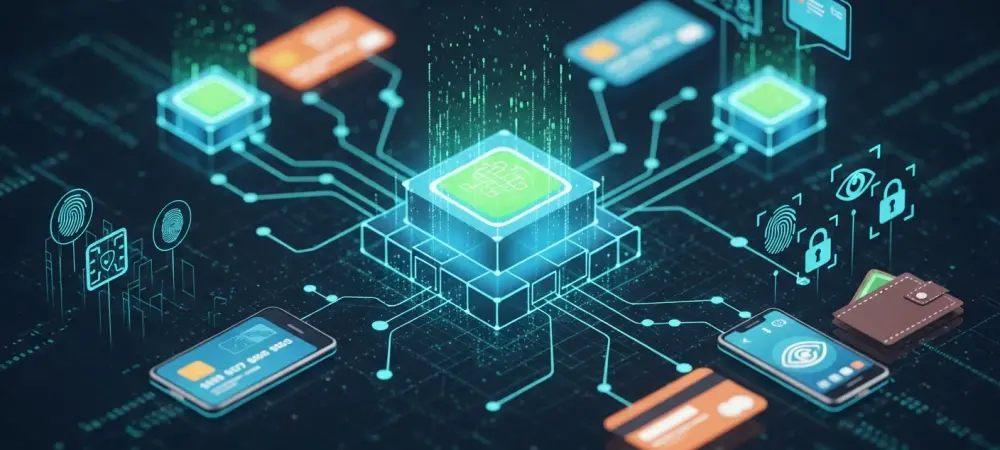
The landscape of global commerce has undergone a radical transformation as decentralized ledgers move beyond the fringes of experimental finance to become the invisible backbone of the global digital economy. In the current year, the integration of blockchain technology into everyday digital services has shifted from a speculative trend to a fundamental requirement for global marketplaces and fintech platforms alike. By operating as a robust back-end system, this technology allows for the direct transfer of value and creates a permanent, transparent record of activity that does not rely on a central authority’s word alone. This structural change effectively eliminates the need for blind trust in a single entity, replacing it with a mathematically verifiable system that provides unprecedented security and transparency. As these systems become more integrated into daily digital life, the emphasis has moved away from simply trading assets toward using blockchain as a reliable, high-speed ledger for verifying both payments and complex data.
The Mechanics of Direct Digital Payments
Wallet Efficiency: Streamlining Peer-to-Peer Transactions
The transition toward a wallet-to-wallet architecture represents one of the most significant changes in the financial landscape observed during the current expansion of digital infrastructure. In a standard credit card transaction, a payment must travel through a complex chain of intermediaries, including acquiring banks, payment gateways, and international card networks, all of which add significant costs and processing delays. Blockchain bypasses this hierarchy entirely, allowing funds to move directly between digital addresses across any geographical border without the interference of traditional banking hours. This is particularly beneficial for cross-border transactions that were previously bogged down by correspondent banking fees and multi-day settlement periods. Modern enterprises are increasingly adopting this direct model to streamline their supply chain payments, ensuring that vendors are paid instantly upon the fulfillment of smart contract conditions rather than waiting for outdated clearinghouse cycles.
By decentralizing the flow of capital, businesses can significantly reduce the overhead associated with maintaining multiple merchant accounts and foreign currency reserves. The peer-to-peer nature of these interactions fosters a more inclusive financial ecosystem, where small-scale entrepreneurs in emerging markets can participate in global trade with the same ease as large corporations. This efficiency is not limited to mere cost savings; it also enhances liquidity management by providing real-time visibility into cash flows. Furthermore, the removal of the middleman reduces the risk of centralized points of failure, where a single bank’s technical outage could halt an entire region’s commerce. As a result, the global marketplace has become more resilient, relying on a distributed network of validators rather than a handful of vulnerable financial institutions. This shift is not just a technical upgrade but a fundamental rethinking of how value is exchanged globally in a connected world.
User Responsibility: Managing Finality and Protocol Alignment
While this direct model increases operational efficiency, it simultaneously places a greater burden of precision on the individual user or the automated system initiating the transfer. Unlike traditional banking environments where a customer support representative can often reverse a mistaken wire transfer, blockchain transactions are generally considered final once they are confirmed by the network. This immutability ensures the integrity of the ledger but requires users to be extremely diligent about technical details, such as verifying recipient addresses and ensuring they are utilizing compatible network protocols. Failing to align these parameters, such as sending a token on a layer-two network to a legacy layer-one address, can result in the permanent loss of digital assets with no recourse for recovery. Consequently, the industry has seen a massive rise in educational initiatives and the development of more intuitive user interfaces designed to prevent these errors before they occur. Deep technical awareness has become a prerequisite for participating in the modern digital economy, as the lack of a safety net demands a higher standard of operational excellence. Organizations must now implement rigorous internal controls and multi-signature approval processes to mitigate the risks associated with transaction finality. These protocols ensure that no single person can authorize a large transfer, adding a layer of organizational security that mirrors the decentralized nature of the underlying technology. Moreover, the complexity of managing different blockchain standards requires a sophisticated understanding of how various networks interact. For instance, the distinction between Ethereum-compatible chains and non-EVM networks is critical for ensuring that assets are not inadvertently sent into an unrecoverable state. As the technology matures, the focus is shifting toward creating fail-safe mechanisms that alert users to potential protocol mismatches before a transaction is broadcasted.
Stability and Speed in Modern Commerce
Stablecoin Utility: Reducing Volatility in Daily Trade
To combat the price volatility associated with earlier digital assets, the modern payment sector has largely converged on the use of stablecoins like USDT and USDC. These digital currencies are pegged to the value of the U.S. dollar, providing the necessary predictability for everyday retail purchases, payroll, and long-term service subscriptions. Businesses can now enjoy the benefits of decentralized settlement without the fear that the value of their revenue will fluctuate significantly before it can be converted or spent. Retailers, in particular, have benefited from the ability to accept payments that settle in seconds, providing them with immediate access to working capital that was previously locked in credit card processing holds for several days. This rapid access to funds allows for more dynamic inventory management.
The operational reality of digital commerce is also heavily influenced by the throughput capabilities of the underlying network, with many platforms prioritizing high-speed options like Solana or Tron. These networks offer the low transaction fees and high transaction-per-second counts necessary for micro-payments and high-volume retail environments. However, a critical distinction remains between network confirmation and fund availability within specific service platforms. Therefore, while the technology allows for nearly instantaneous movement of value, the regulatory and safety layers still impose a necessary cadence on the final availability of capital. This delay is often necessary to satisfy anti-money laundering requirements and ensure that the source of funds is legitimate. Therefore, while the technology allows for nearly instantaneous movement of value, the regulatory and safety layers still impose a necessary cadence on the final availability of capital.
Cryptographic Verification: Ensuring Data and Asset Integrity
The security of digital holdings in the current era depends heavily on the chosen custody model, which dictates who maintains control over the private keys to a digital wallet. Self-custody offers users total sovereignty over their assets but requires a high level of technical competence to prevent theft or loss of access. On the other hand, custodial platforms provide the convenience of traditional banking, including password recovery and insurance, but introduce counterparty risk. Because users in a custodial model are essentially dependent on the platform’s solvency and its internal security protocols, industry experts strongly advise against maintaining large balances on services that do not provide transparent, independent audits. This tension between convenience and control has led to the rise of hybrid solutions, where users keep their daily spending funds on custodial platforms while storing their long-term reserves in highly secure, self-custodied hardware wallets that offer superior protection.
Beyond the realm of simple financial transactions, blockchain is establishing a new gold standard for data integrity through the sophisticated use of cryptographic hashes. These unique digital fingerprints allow platforms to prove that information has not been altered or tampered with after it was recorded, creating a verifiable audit trail. This technology is most prominently displayed in provably fair systems used within the digital gaming and entertainment sectors. Participants in these environments can independently verify the mathematical randomness of an outcome, ensuring that results are generated honestly rather than being manipulated by the service provider. While this level of transparency is revolutionary, it is important to remember that cryptographic proof does not entirely replace the need for traditional oversight. Regulatory licensing and responsible corporate governance remain essential to ensure that the logic being verified by the blockchain is itself designed to be ethical and compliant with laws.
Strategic Pathways: Future-Proofing Digital Financial Operations
Strategic leaders recognized that the successful integration of blockchain required a balanced approach between innovation and risk management. It became clear that the first step for any organization was to conduct a comprehensive audit of current payment workflows to identify bottlenecks where decentralized ledgers could provide the most immediate value. Furthermore, businesses prioritized the implementation of robust internal training programs to ensure that staff members understood the technical nuances of digital asset management. This proactive stance allowed companies to leverage the speed and transparency of the technology while mitigating the risks associated with finality and custody. By focusing on interoperable solutions and adhering to emerging regulatory frameworks, the industry moved toward a more stable and efficient digital economy. The path forward involved a commitment to ongoing security assessments and the adoption of hybrid custody models that combined the control of self-custody with the safety of institutional-grade security.