

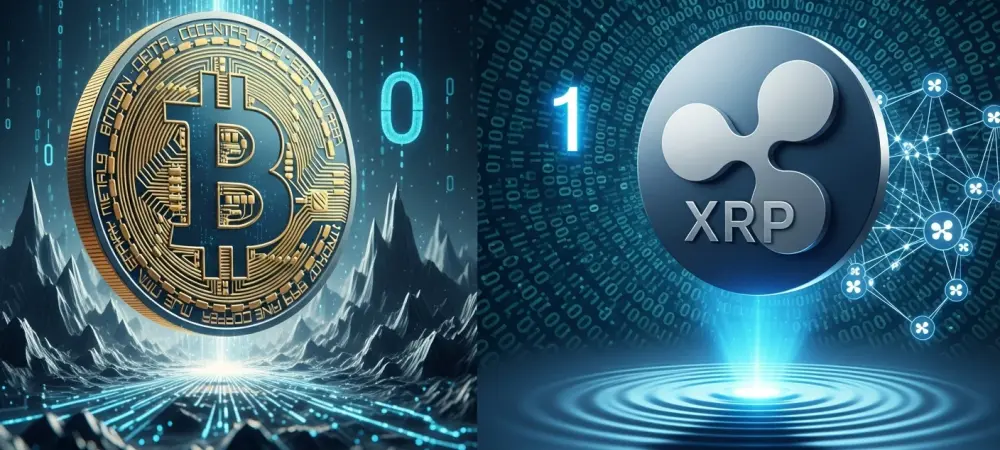
The divergence between the world’s most recognized decentralized currency and its most prominent institutional settlement asset has never been more pronounced than it is in the current financial climate. Investors no longer view the digital asset space as a monolithic block of speculative tokens; instead, they are forced to choose between competing visions of how value should be stored and transmitted. While one asset seeks to provide a sovereign alternative to the traditional banking architecture, the other aims to become the very plumbing that makes those traditional systems functional in a high-speed, globalized economy. Navigating this landscape requires a deep understanding of the structural differences that define Bitcoin and XRP.
Choosing between these two pillars is a strategic decision that reflects an individual’s or institution’s outlook on the future of global commerce. As the digital finance ecosystem matures, the distinction between assets designed to overhaul the financial system and those built to optimize it becomes the primary driver of portfolio construction. This analysis explores the contrasting technical architectures, governance models, and strategic roles of these two giants. By examining the “Digital Gold” versus “Global Settlement” paradigms, market participants can better align their holdings with specific financial goals and risk appetites.
Navigating the Dual Pillars of the Digital Asset Era
The foundational philosophies of Bitcoin and XRP offer a study in contrast that began at their respective points of origin. Bitcoin was introduced as a peer-to-peer electronic cash system designed to bypass intermediaries entirely, serving as a direct response to the vulnerabilities of centralized banking. Its history is characterized by a slow, organic rise from an experimental niche to a trillion-dollar asset class. This trajectory has solidified its reputation as a “headless” entity, where no single corporation or government can dictate its path, making it the ultimate tool for those seeking financial sovereignty.
In contrast, XRP was developed with a specific corporate focus, aiming to solve the “pre-funding” problem that plagues international banking. These historical paths have shaped a landscape where Bitcoin acts as a sovereign reserve asset while XRP functions as a high-speed utility for the movement of value across borders. The evolution of these technologies suggests that they are not necessarily competitors for the same market share but are instead building different sections of the modern financial infrastructure. One provides the bedrock of value, while the other provides the velocity.
The Strategic Divergence of Value and Utility
Digital Scarcity: The Internet of Value
The most critical distinction between these two assets lies in their primary economic function and how they interact with the concept of supply. Bitcoin is increasingly viewed through the lens of digital gold due to its hard-capped supply of 21 million coins. This programmed scarcity makes it a premier hedge against currency debasement and long-term inflation, attracting those who seek a store of value that cannot be manipulated by central authorities. This “buy and hold” mentality has turned Bitcoin into a macro-economic anchor for many modern portfolios.
Conversely, XRP is designed to facilitate what is often called the Internet of Value. Its purpose is not to be tucked away in cold storage for decades but to move rapidly through the global financial system to settle obligations. By acting as a bridge between different fiat currencies, XRP provides on-demand liquidity, allowing money to move as fast as digital information. This utility-driven approach means its value is derived more from its throughput and adoption by payment providers than from its scarcity as a static asset.
Security through Power: Efficiency through Consensus
The technical designs of these networks offer contrasting benefits regarding security and scalability. Bitcoin utilizes a Proof-of-Work (PoW) mechanism, where participants expend massive amounts of computational energy to secure the database. This “brute force” security makes the network the most immutable and censorship-resistant record in existence, though it inherently limits transaction speed. For those who prioritize the absolute integrity of their assets over the speed of a transfer, this trade-off is often considered a necessary feature of a truly decentralized system. XRP utilizes a consensus protocol that does not require mining, allowing the network to settle transactions in mere seconds for a fraction of a cent. While XRP offers the high throughput necessary for global payments and retail remittances, it trades the extreme decentralization of PoW for the industrial efficiency required by the banking sector. This allows the XRP Ledger to handle thousands of transactions per second, making it a viable competitor to traditional payment rails like SWIFT, provided the users are comfortable with a more structured validator system.
Sovereign Decentralization: Corporate Innovation
A significant point of debate involves the governance and oversight of these protocols. Bitcoin is the embodiment of decentralization; no company controls its development, making it highly resistant to regulatory or political pressure. This makes it an ideal “trustless” asset where the rules are enforced by code rather than by a board of directors. This lack of a central authority is Bitcoin’s greatest strength in the eyes of many, as it prevents the asset from being “turned off” or altered by any singular interest group.
The XRP ecosystem, while operating on an open-source ledger, is heavily influenced by corporate entities that act as primary developers and advocates for the asset’s adoption. This corporate backing enables rapid innovation and the formation of strategic partnerships with global banks and central authorities. While this structure facilitates a faster integration into the existing financial world, it also introduces a level of centralized influence that distinguishes it from Bitcoin’s community-led model. Investors must decide if they value the protection of a headless network or the growth potential of a managed ecosystem.
The Evolving Landscape of Regulation and Adoption
The future of both assets is being shaped by shifts in the global regulatory and technological environment. Bitcoin has achieved a high degree of regulatory clarity in major jurisdictions, often classified as a commodity, which has paved the way for massive institutional integration through exchange-traded products. This trend suggests that Bitcoin will continue to serve as a core component of retirement accounts and corporate treasuries. As more governments look toward digital reserves, Bitcoin’s position as a neutral, global asset becomes even more entrenched.
XRP is navigating a complex legal landscape that is slowly providing the clarity needed for broader institutional use. As central banks explore the implementation of Digital Currencies (CBDCs), the role of XRP as a neutral bridge asset could become a cornerstone of next-generation financial infrastructure. This potential for XRP to act as a “mediator” between various national digital currencies suggests a future where it is deeply embedded in the mechanics of international trade settlement, redefining how liquidity is managed on a global scale.
Aligning Your Strategy with the Right Digital Asset
To effectively apply these insights, a market participant must first define their primary objective. If the goal is wealth preservation and protection against systemic financial risk, Bitcoin’s decentralized nature and absolute scarcity make it the logical choice for a long-term strategy. It functions as a safeguard against the unpredictability of traditional monetary policy. On the other hand, if a strategy is based on the digital transformation of the banking system and the rise of high-frequency utility tokens, XRP offers exposure to the efficiency gains of modern fintech.
Many professionals find that a balanced approach provides the most robust exposure to the blockchain revolution. By treating Bitcoin as a core “safe haven” and XRP as a “utility play,” an investor can capture growth from two very different sectors of the economy. This diversification accounts for the possibility that the future of finance may involve both a parallel decentralized system and a highly optimized version of the current institutional framework. Understanding the nuances of each asset allows for a more sophisticated response to market volatility and technological shifts.
Choosing Your Path in the New Financial Frontier
The analysis of these two digital titans revealed that the choice between them was never about identifying a single winner, but about recognizing different roles within a portfolio. Bitcoin established itself as the premier instrument for those who sought independence from centralized control, while XRP carved out a niche as the essential lubricant for institutional liquidity. Both assets proved their resilience through various market cycles, demonstrating that the digital finance era was large enough to accommodate multiple successful ideologies.
Moving forward, the focus shifted toward the practical application of these technologies in everyday operations. Institutions began to implement Bitcoin as a hedge against the volatility of fiat currencies, while payment providers integrated XRP to eliminate the delays inherent in cross-border transfers. The strategic takeaway for the coming years involved a commitment to staying informed about regulatory shifts that could alter the utility of these assets. Market participants were encouraged to maintain a flexible stance, ensuring their digital strategies remained aligned with the rapid pace of global financial innovation.