

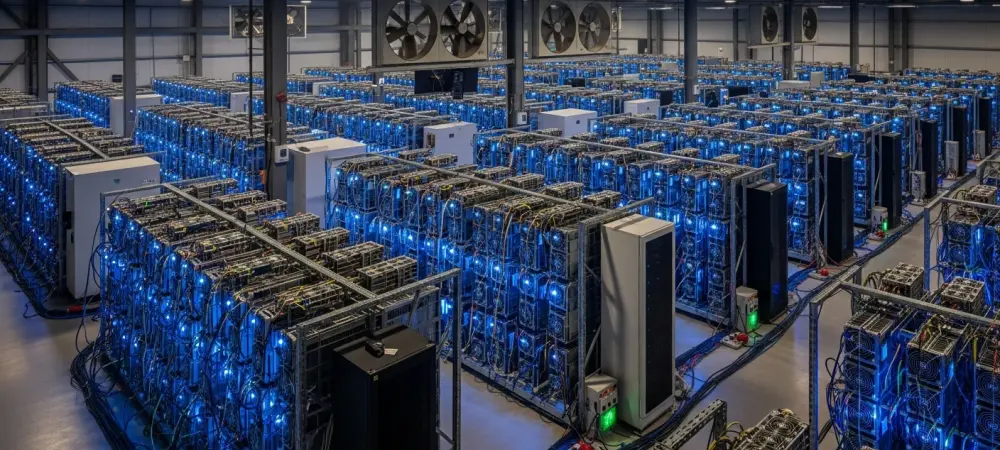
The profitability of a single Bitcoin no longer depends on the silicon in a garage but on the gigawatts of a professional data center, marking a definitive end to the era of the hobbyist miner. As the network difficulty reaches unprecedented heights, the strategic move toward professional hosting has transformed from an elective luxury into a biological necessity for financial survival. This review examines the current state of Bitcoin mining hosting, exploring how the sector has shifted from simple “space for rent” models to sophisticated, vertically integrated energy ecosystems that dictate the success or failure of global digital asset production.
Evolution and Core Principles of ASIC Colocation
The genesis of ASIC colocation began as a response to the cooling and power limitations of residential electrical grids, which were never designed to handle the continuous, high-density heat loads of modern miners. Historically, a miner would struggle with noise complaints and thermal throttling in a home environment; today, hosting providers offer specialized environments that treat mining hardware as high-performance computing (HPC) assets. This evolution has introduced a separation between the ownership of the machine and the technical management of its lifecycle, allowing investors to focus on capital allocation while experts handle the industrial-scale physics of the operation.
At its core, modern hosting is built on the principle of economies of scale, where providers secure long-term Power Purchase Agreements (PPAs) that are inaccessible to the general public. These agreements often involve grid-balancing services, where data centers agree to power down during periods of high demand in exchange for lower base rates. This symbiotic relationship with the energy grid has made hosting providers central players in the broader technological landscape, acting as flexible loads that can stabilize renewable energy sources like wind and solar by consuming excess capacity that would otherwise go to waste.
Key Features and Performance Metrics
Industrial-Grade Infrastructure and Power Delivery
The backbone of a superior hosting operation is its ability to maintain a consistent electrical envelope under extreme conditions. Unlike traditional data centers that prioritize uptime for servers with varying loads, mining facilities must manage a constant, 100% load factor. This requires specialized transformers and switchgear designed for continuous duty. High-quality facilities now utilize custom-built airflow systems or immersion cooling tanks that move thousands of cubic feet of air or gallons of dielectric fluid per minute. This infrastructure does more than just keep the machines running; it prevents the microscopic thermal expansion and contraction that leads to premature solder joint failure in the ASIC chips.
Performance in this sector is measured by the stability of the voltage delivered to the hashboards. Fluctuations in power can cause “zombie” hashboards or frequent reboots, which eat into the thin margins of the mining process. Leading providers have implemented advanced telemetry that monitors power quality in real-time, ensuring that the hardware operates at its peak efficiency curve. By maintaining a steady environment, these industrial centers extend the hardware’s lifespan by years compared to the dusty, variable-temperature environments of amateur setups.
Precision Billing and All-In Cost Models
Transparency has become the primary differentiator in a market previously known for hidden fees and “nickel-and-diming” clients. The industry has moved toward precision billing, an accounting method where the client is only charged for the exact kilowatt-hours consumed while the machine is successfully submitting shares to a pool. This shift is critical because it eliminates the financial sting of downtime. If a fan fails or a circuit breaker trips, the client’s billing stops immediately, aligning the provider’s financial incentives with the client’s operational uptime.
Furthermore, the “all-in” cost model has replaced the fragmented pricing of the past, which often separated space, cooling, and internet fees. A single, consolidated rate per kilowatt-hour allows for easier financial modeling and more accurate ROI projections. However, the trade-off for these streamlined models is often a higher base rate. While a miner might see a low “electricity only” price elsewhere, the all-in model accounts for the hidden costs of insurance, physical security, and remote-hands support, providing a more honest reflection of the total cost of ownership in a competitive market.
Integrated Maintenance and Rapid Repair Cycles
The most significant bottleneck in any mining operation is the time a machine spends offline for repairs. In the past, a broken hashboard meant shipping the unit across borders, resulting in weeks of lost revenue and high shipping costs. Modern hosting providers have solved this by integrating specialized repair centers directly into their facilities. These centers are staffed with technicians capable of component-level repairs, such as replacing individual MOSFETs or ASIC chips. This proximity turns a potential month-long outage into a 48-hour turnaround, which is vital during periods of high Bitcoin price volatility.
These rapid repair cycles do more than just restore hashing power; they preserve the hardware’s residual value. A machine that is regularly cleaned and professionally maintained will command a higher price on the secondary market than one that has been left to accumulate grime and heat damage. By offering proactive maintenance schedules—such as semi-annual deep cleans and thermal paste reapplications—hosting providers have transitioned from being simple landlords to being the guardians of their clients’ capital investments.
Emerging Trends in Mining Technology
A significant shift is currently occurring as the industry moves away from traditional air-cooling toward liquid immersion and hydro-cooling. Immersion cooling involves submerging the entire ASIC in a non-conductive liquid that captures heat much more efficiently than air. This allows for “overclocking,” where the machine runs at higher speeds without the risk of overheating. This trend is driven by the need to squeeze every possible satoshi out of aging hardware as the network difficulty continues to climb. Providers that offer immersion-ready racks are becoming the preferred destination for high-net-worth miners who want to maximize their hardware’s potential.
Moreover, the integration of artificial intelligence into facility management is becoming standard. AI algorithms now predict potential component failures before they happen by analyzing subtle changes in power draw and fan speed. This predictive maintenance allows providers to swap out a failing power supply unit before it causes a cascading failure across a rack. This level of technological sophistication has narrowed the gap between cryptocurrency mining and traditional high-performance computing, making the sector more attractive to institutional investors who demand rigorous operational standards.
Real-World Applications and Sector Deployment
The deployment of Bitcoin mining hosting is no longer restricted to remote areas with cheap coal power. In many regions, hosting providers are partnering with municipal utilities to help manage the energy transition. For instance, in areas with high wind power penetration, mining centers act as a “virtual battery.” When the wind blows at night and demand is low, the miners ramp up to consume the excess power, preventing the grid from overloading and providing the utility with a reliable customer. This application has turned mining into a tool for grid resilience rather than a drain on resources.
In the corporate sector, we see the rise of “sovereign mining” where small nation-states or local municipalities utilize hosting providers to monetize stranded energy assets, such as flared natural gas or excess geothermal heat. By deploying mobile containerized hosting units directly at the energy source, these entities can convert wasted energy into a liquid digital asset. This use case demonstrates that hosting technology is modular and adaptable, capable of operating in harsh environments where traditional industry would find it impossible to thrive.
Operational Challenges and Regulatory Hurdles
Despite the technological gains, the hosting sector faces persistent challenges regarding jurisdictional risk. Governments can change their stance on mining overnight, as seen in various regions where sudden tax hikes or outright bans have forced providers to relocate thousands of machines. This creates a “nomadic” risk for the hosting industry, where the most successful providers are those with a global footprint, allowing them to shift operations between different political climates to protect their clients’ assets.
Technically, the industry is also grappling with the physical limits of power density. As ASICs become more powerful, they require more electricity per square foot, straining the cooling capacity of older facilities. Upgrading these sites is a capital-intensive process that can lead to temporary service interruptions. Furthermore, the reliance on a few major hardware manufacturers creates a supply chain vulnerability; if a new generation of chips is delayed or has a manufacturing defect, hosting providers find themselves with empty racks and no revenue, highlighting the delicate balance between infrastructure and hardware availability.
Future Outlook and Technological Breakthroughs
The next frontier for Bitcoin mining hosting lies in the total circularity of energy use. We are seeing the first generation of “heat-recycling” data centers, where the massive amounts of thermal energy generated by the miners are captured and redirected to heat greenhouses, district heating systems, or industrial processes. This transformation turns a waste product—heat—into a secondary revenue stream, significantly lowering the effective cost of power. As this technology matures, mining hosting will likely become an integral part of urban planning and industrial design, rather than being relegated to the fringes of the desert.
Furthermore, the development of decentralized hosting protocols is on the horizon. These systems would allow for more transparent auditing of hashpower through blockchain-based smart contracts, ensuring that the host cannot “skim” hashrate from the client. By combining the physical reliability of industrial hosting with the cryptographic transparency of decentralized finance, the industry will move toward a trustless model of colocation. This will likely lower insurance premiums and attract even more conservative capital into the mining space, further stabilizing the network.
Final Assessment and Industry Impact
The transition of Bitcoin mining from a fragmented, amateur pursuit into a sophisticated hosting-driven industry has fundamentally changed the security architecture of the network. Professional hosting has introduced a level of operational stability and geographic diversity that was previously unthinkable. By centralizing the technical complexities of mining while decentralizing the ownership of the hardware, the sector has created a robust ecosystem that can withstand both market volatility and technical failures. The move toward “all-in” pricing and precision billing has finally brought professional accountability to a space once defined by opaque practices. Strategic investments in hosting shifted the focus from merely chasing the lowest power price to prioritizing the longevity and uptime of the equipment. The data showed that a slightly more expensive hosting rate in a stable, well-maintained facility often yielded higher net returns than the cheapest possible power in a subpar environment. Operators who embraced vertical integration and in-house repair capabilities set a new benchmark for the industry, forcing competitors to either innovate or face obsolescence. As the landscape continues to mature, the hosting provider’s role as an energy steward and hardware guardian will remain the most critical factor in the democratization of institutional-grade mining.