

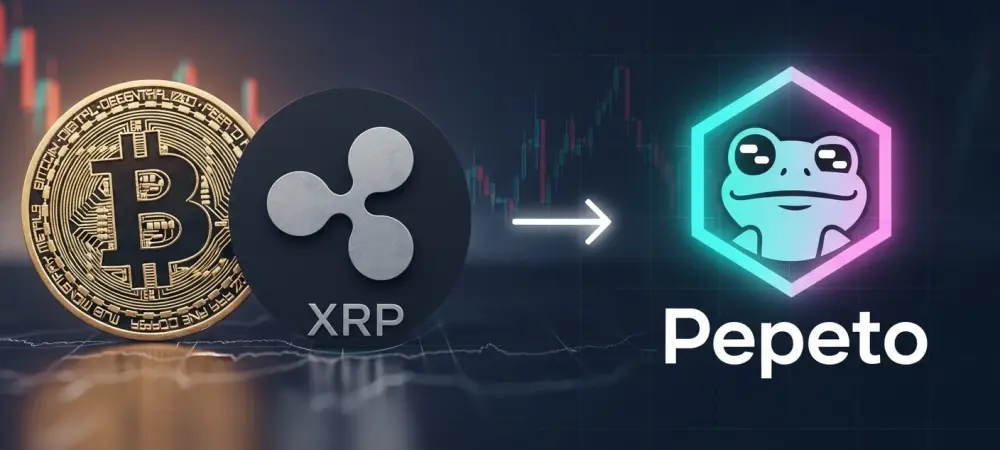
The modern financial landscape is witnessing a historic transition where digital currencies, once dismissed as fringe experiments, have finally achieved the status of bedrock institutional assets. This transformation has fundamentally altered the risk-return calculus for global participants, forcing a strategic re-evaluation of how wealth is generated in a market that no longer rewards simple speculation. As the current cycle progresses through 2026, the focus has moved beyond the mere possession of digital coins toward the identification of utility-driven ecosystems that solve the structural inefficiencies of decentralized finance. This analysis explores the migration of capital from “blue-chip” stability toward the high-growth potential of the Pepeto presale, highlighting why the next phase of market expansion favors infrastructure over pure brand recognition.
The Shift Toward High-Growth Opportunities in a Maturing Crypto Market
The cryptocurrency ecosystem is currently operating as a sophisticated financial machine, leaving behind the days of retail-driven chaos and unpredictable flash crashes. Institutional adoption has brought a sense of equilibrium to the sector, with major banking entities and exchange-traded funds providing a floor for price action that was previously unthinkable. However, this newfound stability acts as a double-edged sword for those who entered the space seeking the legendary multipliers of the past. As volatility decreases in the top-tier assets, the “smart money” is increasingly seeking out the “timing premium” found in early-stage presales.
Strategic investors are currently balancing their portfolios by maintaining core positions in established tokens while aggressively pursuing emerging projects that offer functional necessity. The narrative is no longer about which coin might “go to the moon” based on a social media trend, but rather which project can provide the plumbing for the next generation of global trade. This migration of capital is not a flight from safety, but a calculated hunt for the exponential growth that occurs when a project transitions from a private presale to a public listing. The Pepeto presale has emerged as the primary beneficiary of this trend, capturing the attention of those who recognize that the largest gains are always realized before an asset becomes a household name.
From Volatile Experiments to Institutional Pillars: The Evolution of Digital Assets
To grasp the magnitude of the current market pivot, one must acknowledge the monumental journey of the industry’s most prominent players. For years, Bitcoin was a speculative vehicle, but it has now firmly established itself as “digital gold,” supported by consistent weekly institutional inflows exceeding $700 million. This maturation has turned it into a cornerstone of the modern portfolio, yet it has also capped its ability to deliver the thousand-fold returns seen in its infancy. Similarly, XRP has evolved from a payment protocol under legal scrutiny into a vital tool for cross-border liquidity, used by financial institutions to move value instantly across the globe. These developments have provided the industry with the legitimacy required for mass adoption, but they have also redefined the risk-reward profile of the entire sector. Established coins now behave with a decorum similar to blue-chip equities or sovereign bonds. While they provide essential security and a hedge against inflation, their massive market capitalizations mean that doubling or tripling in value requires an enormous influx of new capital. This reality has created a vacuum in the high-growth segment of the market, which is now being filled by innovative presale projects that offer the same early-entry advantages that Bitcoin and XRP provided a decade ago.
Assessing the Growth Ceiling of Established Market Leaders
The Mathematical Reality of Diminishing Returns for Bitcoin and XRP
As the market enters the latter half of the current cycle, investors are facing the cold logic of market capitalization math. With Bitcoin currently trading at a premium and targets set for further expansion, the potential for an ROI exceeding 3x is becoming statistically difficult to achieve in the short term. The capital required to move the needle on a trillion-dollar asset is staggering, leading to a natural deceleration in percentage gains. For XRP, the situation is even more transparent; for the token to reach the astronomical prices often discussed in online forums, its market cap would need to exceed the total historical value of the entire cryptocurrency sector combined.
The Rise of Utility-Driven Ecosystems Over Pure Speculation
The days of the “pure” meme coin, which rose and fell on the strength of a single viral image, are largely over. In the 2026 landscape, investors demand a “utility-first” approach where a token serves a tangible purpose within its own ecosystem. This shift is evident in the way capital is flowing toward projects that manage liquidity or facilitate complex transactions. Investors are no longer satisfied with holding an asset and hoping for the best; they are looking for infrastructure-heavy entrants that solve existing problems in decentralized finance. This demand for functional value is what separates the long-term winners from the transient hype cycles of the past.
Addressing Structural Pain Points in Modern Decentralized Finance
The current pivot is also a reaction to the persistent technical friction that still plagues the blockchain world. High transaction fees on legacy networks and the fragmentation of assets across dozens of different chains remain significant barriers to efficient trading. Furthermore, the complexity of moving value between different blockchain environments often leads to user error or security vulnerabilities. Projects that address these specific pain points—by offering zero-tax swaps or seamless cross-chain bridges—are seeing a massive influx of interest. By fixing the “unsolved” problems of the previous years, these new platforms are creating a sustainable value proposition that established assets simply cannot match.
Emerging Trends and the Future of Presale Investing
The future of digital asset growth is increasingly defined by the “timing premium,” where the most significant rewards are reserved for those who participate in a project’s lifecycle before it hits the open market. We are seeing a trend where presales are no longer just about raising funds; they are about establishing a dedicated community and a technical foundation that can withstand the scrutiny of a public listing. Innovations like high-yield staking models are being utilized to ensure long-term commitment from holders, effectively reducing the sell-pressure that often ruins new launches. Looking ahead, the standard for any successful project will include rigorous security audits and a clear roadmap for solving interoperability issues.
Strategic Synthesis: Navigating the 2024-2026 Bull Cycle
The major takeaway for the current era is that the crypto landscape has bifurcated into two distinct categories. On one hand, Bitcoin and XRP offer a safe haven for capital preservation with predictable, moderate returns; on the other hand, projects like Pepeto—which has already secured $7.5 million in demand—represent the frontier of high-multiplier potential. The most effective strategy involves maintaining a foundational stake in institutional assets while allocating a portion of capital to audited, utility-driven presales. By securing early positions in ecosystems that provide cross-chain trading and cost-efficient swaps, participants are positioning themselves for the significant returns that have become rare in the top-tier market.
The Final Window for Exponential Growth
The maturation of Bitcoin and XRP into institutional staples signaled the end of the era of effortless gains for those specific assets, as their massive valuations created a ceiling for percentage-based growth. Consequently, the focus of the market shifted toward the Pepeto presale and similar infrastructure-focused projects that merged cultural relevance with technical necessity. This transition represented a significant evolution in the investor mindset, moving from speculative gambling toward a more nuanced, strategic positioning within the DeFi ecosystem. For those who recognized the value of these utility-driven platforms before they achieved mainstream status, the potential for substantial outcomes remained a reality. The path forward involved embracing the new standard of interoperability and efficiency, ensuring that capital was deployed where innovation was most active. In this environment, the most successful participants were those who looked beyond the established names to find the next generation of digital infrastructure.