

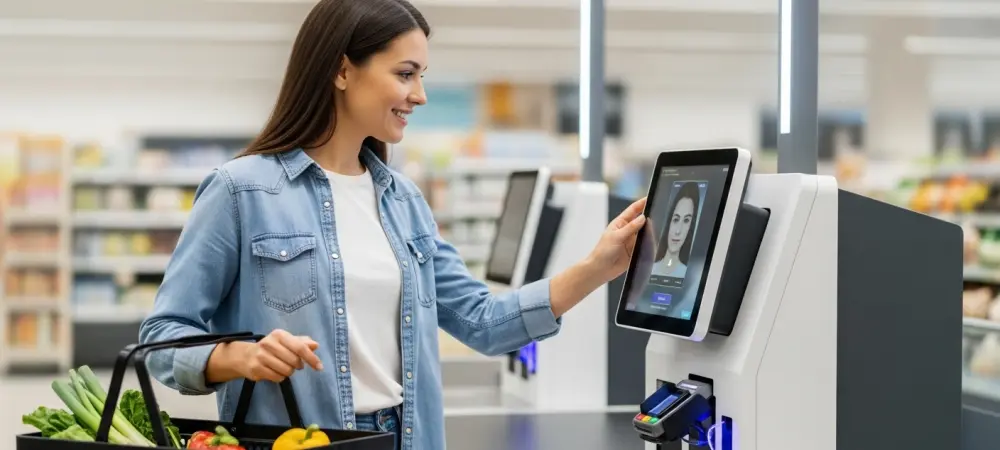
The once-ubiquitous act of recalling a complex PIN at checkout is rapidly becoming a relic of the past as the integration of biological identifiers reshapes consumer expectations for secure and effortless digital transactions. Biometric payment authentication represents a significant advancement in the financial technology sector. This review will explore the evolution of the technology, its key features, and the impact of its large-scale implementation within India’s Unified Payments Interface (UPI). The purpose of this review is to provide a thorough understanding of the technology, its current capabilities, and its potential to accelerate global adoption.
An Introduction to Pin-Less Payments
Biometric authentication replaces traditional knowledge-based methods like PINs or passwords with unique biological characteristics to verify a user’s identity. This technology leverages fingerprints, facial recognition, or other physiological traits to authorize transactions, promising a more secure and frictionless payment experience. Its relevance has grown substantially as consumers, already accustomed to using biometrics to unlock their personal devices, now expect a similar level of convenience in their financial interactions.
This shift toward biometrics is not merely about convenience; it represents a fundamental change in how security is perceived and implemented. Instead of relying on something a user knows, which can be forgotten or stolen, this method relies on something a user is. This intrinsic link between the individual and the authentication process creates a more robust and personal layer of security that is difficult to replicate or compromise, setting a new standard for digital payment integrity.
A Deep Dive into the UPI Biometric Framework
Redefining Convenience with a Seamless Checkout
The core feature of UPI’s new system is the ability to approve transactions up to ₹5,000 (approximately $56) with a simple fingerprint or facial scan. This innovative approach eliminates the need for users to recall and manually enter a multi-digit PIN, significantly reducing both transaction time and cognitive friction. The immediate result is a faster, more intuitive checkout process that aligns perfectly with modern consumer expectations for speed and simplicity in every digital interaction.
Moreover, this streamlined experience has a compounding effect on user behavior and merchant operations. For customers, the reduced effort encourages more frequent use of digital payments for smaller, everyday purchases. For merchants, faster transaction throughput can reduce queues and improve the overall customer experience, creating a more efficient and satisfying commercial environment that benefits both parties.
Fortifying Security with On-Device Verification
A key component of this technology is its enhanced security model, which utilizes device-specific credentials to protect sensitive user information. Biometric data, such as a fingerprint map or facial scan, is typically stored securely within a device’s hardware enclave—a protected area of the main processor. Crucially, this data is never transmitted to the merchant, the bank, or any external servers during the transaction process.
This localized verification process provides robust protection against the kind of large-scale, remote data breaches that have plagued traditional payment systems. By keeping the authentication credential on the user’s device, the framework decentralizes risk and offers a significant security upgrade over PIN-based systems, where credentials could be intercepted during transmission. This on-device approach ensures that even if a merchant’s system were compromised, the user’s biometric data would remain secure.
Current Trends and Adoption Metrics
A major trend driving this innovation is the growing consumer demand for biometric solutions, fueled by their widespread and normalized use in everyday device interactions. The initial rollout on UPI has seen remarkable success, with early adopters like Amazon Pay reporting that over 90% of its eligible users have opted for biometrics in peer-to-peer payments. This strong and immediate uptake signals a high degree of consumer readiness and trust in the technology.
This impressive adoption rate serves as a powerful proof-of-concept for the technology’s market viability and user appeal. It demonstrates that when presented with a more convenient and secure alternative, consumers are eager to move away from legacy authentication methods. This data provides a compelling case for other financial institutions and payment platforms to accelerate their own integration of biometric features.
India as a Catalyst for Global Implementation
The most significant real-world application of biometric payment authentication is its integration into India’s UPI network, which processes nearly half of the world’s real-time digital transactions. While Amazon Pay is a smaller player compared to market leaders PhonePE and Google Pay, its rapid implementation has positioned it as a trailblazer in this space. Its launch serves as a crucial, large-scale case study for the global payments industry.
This deployment demonstrates how biometric authentication can be successfully integrated within a dominant national payment infrastructure, providing invaluable insights into technical challenges, user behavior, and security performance at scale. The success within the UPI ecosystem offers a tangible blueprint for other countries and payment systems considering a similar transition, potentially acting as a catalyst that speeds up global implementation timelines.
Challenges Hindering Widespread Adoption
Despite its clear benefits, the global adoption of biometric payments has been notably slow. A primary challenge is the lack of widespread infrastructure capable of accepting these payments, particularly in markets dominated by traditional card systems like the United States. In such environments, the existing point-of-sale terminals and payment gateways are not universally equipped to handle biometric authentication, creating a significant barrier to entry.
Furthermore, overcoming consumer inertia and encouraging active opt-in requires significant investment in education and awareness campaigns. Many users are comfortable with existing, familiar payment methods and may not immediately see the value in switching. Building trust and clearly articulating the dual benefits of enhanced security and superior convenience are essential to convincing a critical mass of consumers to embrace this new technology.
The Outlook for a Passwordless Future
The successful implementation of biometrics on UPI is poised to be a watershed moment, potentially creating a clear and replicable blueprint for other payment systems worldwide. The future could see an accelerated push toward standardizing biometric protocols across different platforms and countries, fostering greater interoperability and a more consistent user experience. This would be a crucial step in moving beyond fragmented, proprietary solutions.
As this technology matures and becomes more ubiquitous, it holds the potential to usher in a new era of digital commerce defined by passwordless, secure, and effortlessly simple transactions. The long-term vision is a global payment ecosystem where a user’s identity is verified seamlessly and securely, removing the final layers of friction from the digital economy and making secure payments accessible to everyone.
Conclusion: A Pivotal Moment for Digital Payments
This review highlighted the transformative potential of biometric payment authentication. While global progress had been hampered by significant infrastructural and market-related hurdles, the large-scale adoption within India’s UPI ecosystem marked a significant turning point in the technology’s journey. This critical real-world test case demonstrated both a strong consumer appetite for frictionless payments and the technical feasibility of deploying such a system at an unprecedented scale. Ultimately, this success provided the critical momentum needed to begin overcoming existing barriers and driving the future of secure, seamless payments on a global stage.