

Nikolai Braiden, an early adopter of blockchain, is our resident FinTech expert. He strongly advocates for financial technology’s transformative potential in reshaping digital payment and lending systems and has extensive experience advising startups on leveraging technology to drive innovation and advancement within the industry. Today, he joins us to dissect the Bank of England’s new public consultation, which could fundamentally reshape how UK consumers pay for goods and services, potentially introducing a direct, real-time payment system to challenge the dominance of credit and debit cards.
The Bank of England aims to lower transaction fees for small retailers, who can pay up to four times more than large chains. How exactly would a direct bank payment system achieve this, and what specific metrics would define its success in creating real competition with card networks?
The beauty of a direct, account-to-account system is its simplicity and efficiency. It fundamentally cuts out the middlemen. When you use a card, the payment goes through a complex chain involving acquiring banks, issuing banks, and the card networks themselves, with each party taking a slice. For small retailers who lack the transaction volume to negotiate better rates, these fees can be incredibly burdensome, sometimes four times higher than what a large supermarket chain pays. A direct system would bypass this entire structure, creating a straight line from the consumer’s bank account to the retailer’s. The primary success metric wouldn’t just be the number of transactions, but the tangible reduction in merchant service charges, especially for those small businesses. If we see a measurable drop in their payment processing costs and they start passing those savings on to customers, that’s when we’ll know it’s truly working.
Systems like Brazil’s Pix and Sweden’s Swish offer a model for seamless mobile payments. What key lessons, both in technology and user adoption, can the UK learn from these countries? Please share a specific example of a feature to replicate or a pitfall to avoid.
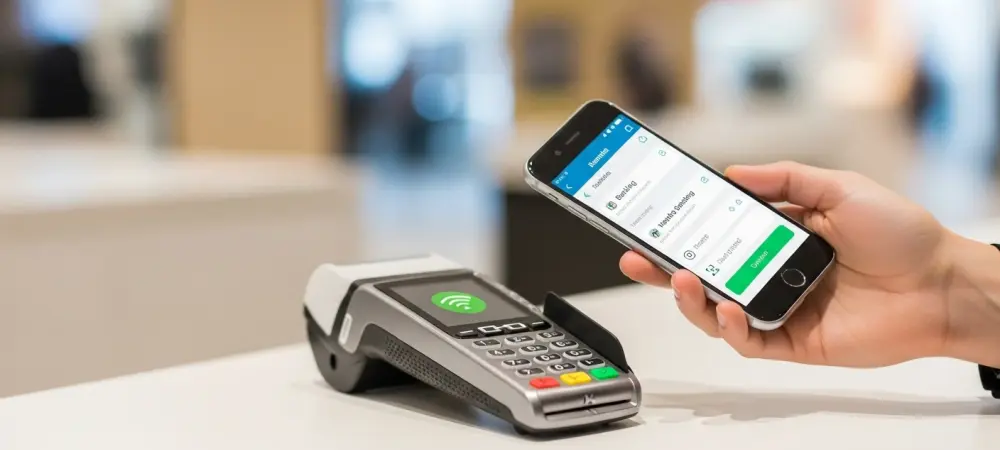
The most critical lesson from systems like Pix is the power of a frictionless user experience. They succeeded by making payments feel utterly seamless and integrated into daily life. The UK must replicate that intuitive mobile-first approach. For example, a feature to absolutely replicate is the universal QR code standard that allows any participating bank’s app to initiate a payment at any storefront. It’s simple, fast, and removes the need for physical cards or terminals. A major pitfall to avoid, however, is assuming that a good system will sell itself, especially in a mature market. In places like Brazil and India, there was a greater need for digital payment infrastructure. In the UK, where cards are deeply ingrained, the system will need a powerful push with clear incentives from day one, something that wasn’t as critical for adoption in those other markets.
Given the UK’s high credit and debit card usage, a new system will need to coexist with established habits. What specific incentives would be most effective in persuading consumers to switch from cards, and what would be the step-by-step process for building that initial user base?
You’re right, habits are hard to break, especially when nearly two-thirds of transactions are on cards. The initial push has to come from the merchants. Since retailers are the primary beneficiaries of lower costs, they must be empowered to pass on a piece of that savings to the consumer. The most effective incentive will be a direct, visible discount at the point of sale—something like “Pay from your bank and get 1% off.” The process would be a gradual build. First, you create awareness through a joint campaign from banks and retailers. Second, you focus on adoption by offering these tangible incentives to get people to try it once. Finally, as the user base grows, you reach a state of ubiquity where it becomes a standard, expected way to pay, co-existing alongside cards but holding its own.
The proposed system is expected to support various forms of money, including regulated stablecoins. What practical challenges and opportunities does this create for everyday retail payments, and how would it differ from the way stablecoins are currently used in crypto transactions?
This is where things get really exciting and a bit complex. The opportunity is immense; integrating regulated stablecoins could offer near-instant settlement for merchants and open the door to programmable payments in the future. Imagine a subscription that pays itself fractionally in real-time. The biggest challenge is moving stablecoins from their current niche in the crypto world—where they’re mostly used for trading—to being a trusted, stable medium for buying a cup of coffee. This requires a robust regulatory framework, which the Bank of England and FCA are working on, to ensure one-to-one backing and consumer protection. It would feel very different to the user; instead of a speculative asset, it would simply be another “form of money” in their digital wallet, regulated and as reliable as the pound in their bank account, but with the technological benefits of the blockchain.
Experts anticipate a gradual adoption curve, moving from initial awareness to eventual ubiquity. Can you describe what this journey might look like over the next five years? What key milestones will indicate whether the system is gaining meaningful traction with both shoppers and merchants?
The journey will be a slow burn, not a big bang. In the first year, the key milestone will simply be a successful launch and getting the first wave of major retailers and banks onboard. The next two to three years will be about driving adoption. We’ll be watching transaction volumes, of course, but a more meaningful milestone will be seeing small, independent shops actively promoting it as their preferred payment method. That’s the real sign of traction. By year five, success would mean the system has achieved ubiquity. It’s no longer a novelty but a standard option at every checkout, online and in-store. The ultimate milestone is when you see a noticeable shift in the national payments data, with this new method carving out a significant, permanent share from the card networks.
What is your forecast for the future of UK retail payments?
My forecast is one of diversification and choice. I don’t believe we’ll see a mass exodus from traditional card products; they are too embedded in our financial lives. However, this direct payment system will successfully establish itself as a powerful and popular alternative. Retailers, especially smaller ones, will welcome the lower processing costs and become its biggest advocates. Consumers, drawn in by initial incentives and the sheer convenience of seamless mobile payments, will increasingly adopt it for everyday transactions. The future isn’t about one system replacing another, but about creating a more competitive, resilient, and innovative payments ecosystem where cards, direct bank payments, and even regulated digital currencies coexist, giving both consumers and merchants the freedom to choose what works best for them.