

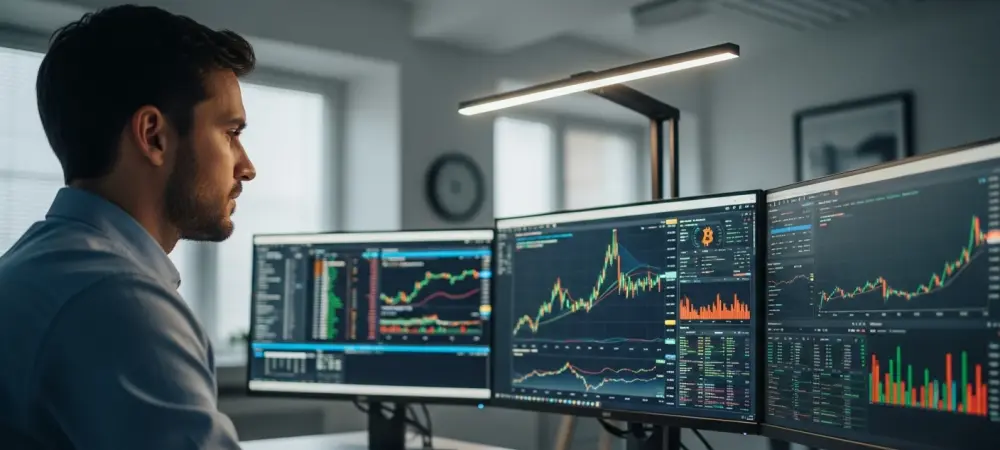
The ceaseless, 24/7 nature of the global cryptocurrency market has fundamentally challenged the limits of human endurance and emotional discipline, paving the way for automated systems to become an indispensable tool for the modern investor. Automated crypto trading, once the exclusive domain of large financial institutions, has evolved into a sophisticated yet accessible technology for private individuals. This review explores the current state of these automated systems, dissecting their core mechanics, essential features, and strategic applications. The analysis aims to provide a clear understanding of the technology’s capabilities, its inherent limitations, and its trajectory within the broader digital asset ecosystem.
Understanding the Mechanics of Automated Crypto Trading
At its heart, an automated trading system operates on a foundation of logic and predefined rules, stripping emotion from the decision-making process. These platforms execute trades when specific market conditions, programmed by the user, are met. This rule-based execution ensures that a trading plan is followed with mechanical precision, avoiding the common pitfalls of fear-driven panic selling or greed-fueled over-trading that often undermine manual efforts.
The bridge between an automated platform and a cryptocurrency exchange is the Application Programming Interface (API) key. This secure connection grants the software permission to place and manage orders on the user’s behalf without ever gaining direct access to their funds. A critical security standard is the use of API keys with withdrawal permissions disabled, ensuring that the platform can trade but cannot transfer assets out of the user’s exchange account. This separation of functions is a cornerstone of modern platform security.
In contrast to manual trading, which demands constant vigilance and is susceptible to emotional bias, automation offers distinct advantages. It provides continuous market access, allowing strategies to run around the clock and capitalize on opportunities that may arise in different time zones. Moreover, it enforces a level of disciplined risk control that is difficult for a human trader to maintain consistently, applying stop-loss and take-profit orders without hesitation.
Essential Features of a Modern Trading Platform
The effectiveness of an automated trading system is determined by the quality and depth of its features. Modern platforms have moved beyond simple execution to offer a comprehensive suite of tools designed for strategy development, risk management, and performance analysis. These features empower users to build, test, and refine their approaches in a controlled and data-driven environment.
Strategy Configuration and Customization
A hallmark of a contemporary automated platform is its flexible strategy editor. These tools allow users to construct and customize trading plans ranging from simple, recurring actions to complex, multi-layered systems. Popular pre-built strategies often include Dollar-Cost Averaging (DCA), which facilitates steady asset accumulation over time, and grid trading, designed to profit from market volatility within a defined price range.
Beyond these templates, customization is key. Users can define precise entry and exit conditions based on a wide array of inputs, including price levels, percentage movements, or signals from technical indicators like Moving Averages and the Relative Strength Index (RSI). This granular control allows traders to translate their unique market perspective into an executable, automated process.
Integrated Risk Management Tools
Robust risk management is arguably the most critical component of any trading system. Automated platforms integrate these controls directly into the strategy, making discipline an inherent part of the execution process. Features like automated stop-loss orders are fundamental, automatically closing a position when it reaches a predetermined loss threshold to protect capital from significant drawdowns.
Equally important are take-profit targets, which secure gains by closing a position once a desired profit level is achieved. Advanced platforms also offer sophisticated position sizing rules, enabling users to automatically calculate the amount of capital to allocate to each trade based on their overall portfolio value and risk tolerance. These integrated tools transform risk management from a manual chore into a systematic, automated safeguard.
Performance Analytics and Reporting
Without clear and transparent feedback, strategy improvement is impossible. Modern platforms provide detailed performance analytics and reporting dashboards that offer a comprehensive view of trading activity. These tools present real-time statistics on executed trades, profit and loss (P&L) metrics, and portfolio drawdowns, giving users an unfiltered look at what is working and what is not.
This data-driven approach allows traders to move beyond intuition and make informed decisions. By analyzing historical performance, identifying patterns, and understanding the conditions under which a strategy thrives or falters, users can continuously refine their approach. This iterative cycle of execution, analysis, and optimization is central to achieving long-term consistency in automated trading.
Current Trends Shaping Automated Trading in 2026
The landscape of automated trading in 2026 is being defined by several key trends, primarily centered around accessibility, strategic focus, and interoperability. The technology has matured significantly, shedding its reputation as a complex tool for quantitative analysts and becoming a practical solution for a broader investor base. This shift is reshaping not only how people trade but also how they approach digital asset investment as a whole. A dominant trend is the democratization of sophisticated trading tools. Platforms are increasingly designed with user-friendly interfaces, intuitive strategy builders, and extensive educational resources. This focus on accessibility empowers investors with varying levels of technical expertise to leverage automation, leveling the playing field between retail participants and institutional players. The emphasis has moved from writing complex code to configuring strategies through visual, easy-to-understand interfaces. Furthermore, there is a noticeable pivot toward structured, long-term investment approaches over high-frequency, speculative trading. As the market matures, more investors are using automation for systematic wealth-building rather than short-term gambling. This is reflected in the popularity of strategies like automated portfolio rebalancing and DCA, which align with disciplined, long-term financial planning. Finally, multi-exchange support has become a standard expectation. Leading platforms now integrate with numerous cryptocurrency exchanges, allowing users to deploy and manage strategies across different liquidity pools from a single, unified dashboard. This not only provides greater flexibility and access to a wider range of assets but also enables arbitrage opportunities and diversification of exchange-specific risk.
Real World Use Cases for Investors
The theoretical benefits of automated trading come to life through its practical applications. Investors are leveraging these systems to execute specific, goal-oriented strategies that would be impractical or impossible to manage manually. These use cases demonstrate how automation serves as a powerful tool for achieving diverse financial objectives.
A primary example is the use of DCA for long-term asset accumulation. An investor seeking to build a position in a major cryptocurrency like Bitcoin or Ethereum can set up an automated rule to purchase a fixed dollar amount of the asset at regular intervals, such as daily or weekly. This approach averages out the purchase price over time, reducing the risk associated with trying to “time the market” and promoting disciplined, steady investment.
In contrast, grid trading strategies are widely used to capitalize on sideways or range-bound market conditions. A trader can define a price range for an asset and instruct the system to automatically place a series of buy orders at incremental levels below the current price and sell orders at levels above it. As the price fluctuates within the grid, the system continuously buys low and sells high, generating small, consistent gains from market volatility.
Automation is also invaluable for managing diversified portfolios. Investors can establish target allocations for various digital assets—for example, 50% Bitcoin, 30% Ethereum, and 20% in other altcoins. An automated rebalancing tool will monitor the portfolio and periodically execute trades to restore these target weights, systematically selling assets that have become overweight and buying those that are underweight to maintain the desired risk profile.
Inherent Challenges and Strategic Limitations
Despite its advancements, automated trading technology is not without its challenges and limitations. Users must be aware of the technical dependencies, market-related constraints, and psychological hurdles associated with handing over execution to a machine. Acknowledging these factors is crucial for setting realistic expectations and navigating potential pitfalls.
Technical reliability is a primary concern. Automated systems are entirely dependent on the stability of the exchange’s API. Any latency, downtime, or technical glitch on the exchange’s end can lead to failed or delayed order executions, potentially turning a winning strategy into a losing one. Similarly, the platform itself can experience downtime, creating a critical gap in market coverage.
Market-related limitations are also significant. Strategies are typically designed for specific market conditions and can fail spectacularly during unexpected “black swan” events or abrupt shifts in market structure. For example, a grid trading strategy designed for a ranging market may incur substantial losses if the price breaks out of the grid and enters a strong, sustained trend. No automated strategy is universally effective in all market environments.
Finally, there is a profound psychological challenge: learning to trust the system. The temptation to manually intervene during periods of high volatility or apparent underperformance can be overwhelming. Overriding a well-designed strategy based on an emotional impulse often leads to worse outcomes and defeats the primary purpose of automation, which is to enforce discipline.
The Future Trajectory of Automated Trading
The evolution of automated trading is poised to accelerate, driven by advancements in artificial intelligence and a maturing regulatory landscape. The next generation of platforms is likely to move beyond predefined, static rules toward more adaptive and dynamic systems that can learn from and respond to changing market conditions in real time.
The integration of machine learning and AI holds immense potential. Future systems may be capable of analyzing vast datasets to identify complex patterns, optimize strategy parameters on the fly, and even predict potential market shifts with greater accuracy. This would represent a significant leap from current rule-based systems, creating strategies that are more resilient and responsive to market dynamics. Greater regulatory clarity, particularly in financially sophisticated jurisdictions, will also play a pivotal role. As frameworks for digital assets become more established, it will likely foster greater trust and wider adoption of automated trading platforms. Clear regulations can also spur innovation by providing a stable operating environment for developers and attracting more institutional capital to the space.
In the long term, automated digital asset management is expected to become a standard component of personal finance. Just as robo-advisors have democratized access to traditional portfolio management, automated crypto platforms will make sophisticated digital asset strategies accessible to the average investor. This will further blur the lines between traditional and decentralized finance, integrating crypto into diversified, long-term investment portfolios.
Concluding Analysis and Overall Assessment
The review of automated crypto trading technology in 2026 confirmed its status as a powerful and increasingly indispensable tool. It successfully translated the core principles of disciplined, rule-based trading from an institutional concept into an accessible reality for private investors. By removing emotional decision-making and enabling constant market engagement, these platforms provided a structural advantage in navigating the volatile digital asset landscape. The technology proved most effective not as a replacement for sound strategy but as a superior execution mechanism.
A final assessment revealed that the technology’s greatest contribution was in fostering discipline and consistency. Features like automated risk controls and systematic strategy execution empowered users to adhere to their plans with a level of precision that manual trading could rarely achieve. However, its performance remained entirely dependent on the quality of the underlying strategy and the stability of the connected exchanges. Success was ultimately a function of a well-conceived plan, robust risk management, and an understanding of the technology’s inherent limitations. The systems were tools for enhancement, not guarantees of profit.