

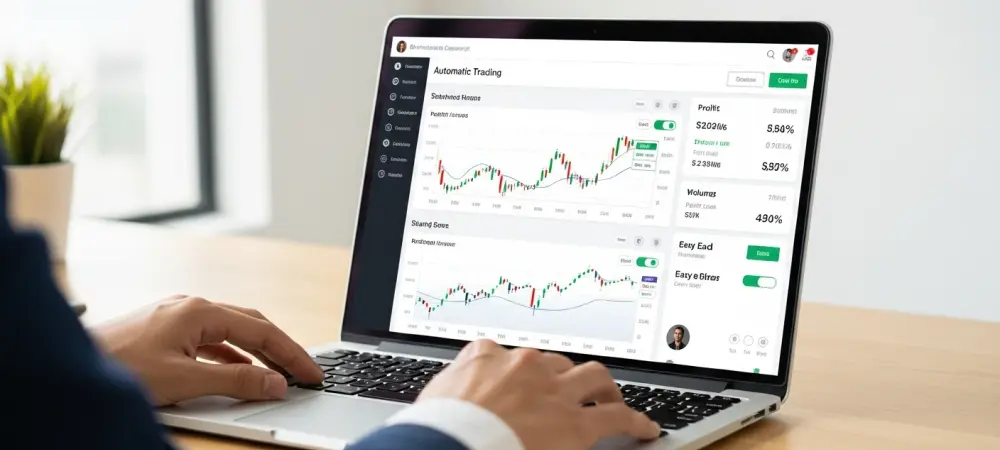
The relentless, twenty-four-hour nature of the cryptocurrency market has given rise to a new class of participant that never sleeps, never hesitates, and executes strategies with inhuman precision. This is the domain of automated crypto trading, a significant advancement in financial technology that is fundamentally reshaping how investors interact with digital assets. As this technology matures, it moves beyond a niche tool for quantitative analysts, becoming increasingly accessible to a broader audience. This review will explore the evolution of automated trading, dissect its key features, evaluate its performance metrics, and assess the profound impact it has had on the cryptocurrency landscape. The purpose here is to provide a thorough understanding of the technology’s current capabilities and its potential for future development.
Understanding Automated Crypto Trading
At its core, automated crypto trading is the practice of using specialized software to execute buy and sell orders on behalf of a trader. This technology operates on a set of predefined rules and criteria, effectively removing the emotional and psychological pressures that often lead to poor manual trading decisions. The system’s logic dictates its actions, allowing for a disciplined and consistent approach to the market that is difficult for humans to replicate, especially over extended periods. These systems are not merely simple order placers; they are sophisticated programs designed to analyze market conditions and react instantly.
The fundamental components that power this technology are Application Programming Interfaces (APIs) and trading algorithms. APIs act as the secure bridge between the trading software and cryptocurrency exchanges, allowing the program to receive market data and send trade orders directly to the exchange’s matching engine. The algorithms, in turn, are the brains of the operation, containing the encoded trading strategy that determines when to enter or exit a position. The emergence of this technology is a direct response to the unique challenges of the crypto market—its ceaseless operation and extreme volatility. For both retail and institutional investors, automation offers a method to participate more efficiently, capture fleeting opportunities, and manage risk around the clock.
Core Components of Automated Trading Systems
Trading Algorithms and Strategy Automation
The algorithm is the intellectual heart of any automated trading system, functioning as the coded embodiment of a trader’s strategy. These algorithms can range dramatically in complexity. At the simpler end of the spectrum are rule-based systems that execute trades based on classic technical indicators, such as a moving average crossover signaling a trend change or the Relative Strength Index (RSI) indicating overbought or oversold conditions. These straightforward strategies are popular among retail traders for their clarity and ease of implementation.
Moving up in sophistication, quantitative models employ advanced statistical and mathematical formulas to identify market inefficiencies and predictive patterns that are invisible to the naked eye. These models might analyze correlations between different assets, factor in volatility metrics, or use complex regression analyses to forecast price movements. The true power of automation lies in its ability to execute these complex strategies flawlessly and without deviation, ensuring the trading plan is followed with machine-like discipline. Before any real capital is put at risk, a critical validation process known as backtesting is employed. This involves running the trading algorithm against historical market data to simulate how it would have performed in the past. Backtesting allows developers and traders to assess the strategy’s potential profitability, its drawdown characteristics (the peak-to-trough decline in capital), and its overall robustness across various market conditions. While past performance is not a guarantee of future results, a rigorously backtested strategy provides a much higher degree of confidence and allows for the fine-tuning of parameters to optimize performance.
Real-Time Market Data Analysis
For an automated trading system to be effective, it must be fed a constant, reliable stream of market data. This connection is facilitated through exchange APIs, which provide direct access to real-time information. Modern trading bots often utilize WebSocket APIs, which establish a persistent connection to the exchange server, allowing data to be pushed to the bot the instant it becomes available. This is a significant improvement over older methods that required the bot to repeatedly request, or “poll,” the server for updates, introducing unnecessary delays.
The data processed by these systems is vast and multi-faceted. It includes not only the last traded price but also the entire order book, which shows the depth of buy and sell orders at different price levels. Bots analyze this order book data to gauge market sentiment and liquidity. They also process the firehose of tick-by-tick trade data, tracking every single transaction to analyze volume flow and momentum. By synthesizing these disparate data points in milliseconds, the algorithm builds a comprehensive, real-time picture of the market, forming the basis for its trading decisions.
In the world of automated trading, particularly for strategies like arbitrage or scalping, speed is paramount. Low latency—the minimal delay in transmitting and receiving data—is a critical factor for success. A system with lower latency can receive price updates faster and submit its orders to the exchange ahead of slower competitors. This allows the bot to capture opportunities at more favorable prices before the rest of the market reacts, turning a few milliseconds of advantage into a significant competitive edge over time.
Risk Management Protocols
Perhaps the most crucial function of any automated trading system is its ability to manage risk and protect capital. Without robust safety features, a malfunctioning algorithm or an unexpected market event could lead to catastrophic losses. Essential to this is the automated implementation of stop-loss and take-profit orders. A stop-loss order automatically closes a losing position once it hits a predetermined price level, capping the potential loss on any single trade. Conversely, a take-profit order closes a profitable position to lock in gains, preventing greed from turning a winning trade into a losing one.
Beyond individual trade management, sophisticated systems incorporate portfolio-level risk controls through precise position sizing. Instead of risking an arbitrary amount, the algorithm calculates the size of each trade as a small, fixed percentage of the total account equity. This ensures that a string of consecutive losses does not severely deplete the trading capital, allowing the system to survive market drawdowns and continue operating. These rules are applied systematically, enforcing a level of discipline that human traders often struggle to maintain during periods of high stress or excitement.
Effective risk management also involves preparing for system or exchange failures. A well-designed bot includes protocols to handle connectivity issues, API errors, or situations where an order is only partially filled. For instance, it might have a “kill switch” that halts all trading activity if it detects anomalous behavior or if certain loss thresholds for the day are breached. These built-in safeguards are not just features but necessities, providing a critical layer of defense against both market volatility and technical glitches.
User Interface and Platform Accessibility
While the underlying algorithms and data processing are complex, the user-facing side of automated trading technology has become increasingly streamlined and accessible. A high-quality platform provides an intuitive dashboard that serves as the command center for the trader. This interface allows users to easily deploy, monitor, and halt trading strategies without needing to write a single line of code. Key performance metrics such as profit and loss, win rate, and portfolio growth are typically displayed through clear data visualizations, giving the user an at-a-glance understanding of their system’s performance.
Customization is another vital aspect of modern trading platforms. Users should be able to adjust strategy parameters, such as the indicators used, risk settings like stop-loss levels, and the specific crypto assets to be traded. This flexibility empowers traders to tailor the automation to their specific market views and risk tolerance. Furthermore, robust alert systems are essential, notifying the user via email or mobile push notifications of significant events, such as large trades being executed, a new profit high being reached, or a strategy being stopped due to risk limits. Ultimately, the goal of the user interface is to democratize access to automated trading. By abstracting away the underlying technical complexity, these platforms enable traders with varying levels of expertise—from seasoned quants to ambitious retail investors—to leverage the power of automation. A well-designed UI builds trust and confidence, making what was once an opaque, code-heavy field more approachable and manageable for a wider audience.
Emerging Trends in Automated Trading
The landscape of automated trading is in a constant state of flux, driven by technological innovation and evolving market structures. One of the most significant trends is the integration of Artificial Intelligence (AI) and Machine Learning (ML). Unlike static, rule-based algorithms, ML models can learn from new market data and adapt their strategies over time. These systems are being used for advanced predictive analytics to forecast price movements and for sentiment analysis, where bots scrape social media, news articles, and forums to gauge market mood and anticipate shifts in momentum. Another powerful trend is the rise of social and copy-trading platforms. These services create a community-driven ecosystem where successful traders can allow others to automatically replicate their trades in real time. This lowers the barrier to entry for newcomers, who can leverage the expertise of proven traders without having to develop their own strategies from scratch. It represents a fusion of social networking and financial technology, creating a new paradigm for how trading knowledge and signals are distributed and monetized. Furthermore, with the explosive growth of Decentralized Finance (DeFi), a new generation of trading bots designed specifically for decentralized exchanges (DEXs) is emerging. These bots navigate the unique mechanics of automated market makers (AMMs), executing complex strategies like liquidity provision, yield farming, and triangular arbitrage across different DeFi protocols. As the DeFi ecosystem continues to expand, the sophistication and importance of these specialized bots will only grow.
Practical Applications and Use Cases
The applications of automated trading technology are diverse, extending far beyond simple trend-following strategies. One of the most prominent use cases is high-frequency arbitrage trading. Arbitrage bots are designed to exploit tiny price discrepancies for the same asset across different exchanges. They might simultaneously buy a cryptocurrency on an exchange where it is cheaper and sell it on another where it is more expensive, capturing a small, low-risk profit. These operations happen in microseconds and require sophisticated, low-latency infrastructure to be profitable. Market making is another critical application, particularly for exchanges and token projects. Market-making bots provide liquidity by placing both buy and sell orders on the order book simultaneously, profiting from the bid-ask spread. This activity is vital for market health, as it tightens spreads, reduces volatility, and ensures that traders can easily enter and exit positions without causing significant price slippage. Both large financial institutions and individual traders deploy these bots to earn a steady stream of income while facilitating a more efficient market. For long-term investors, automated trading offers powerful tools for portfolio management. Automated portfolio rebalancing bots can be programmed to maintain a target asset allocation. For example, if a portfolio is meant to be 50% Bitcoin and 50% Ethereum, the bot will automatically sell some of the asset that has outperformed and buy the underperforming one to restore the desired balance. This disciplined, automated approach removes emotion from investment decisions and ensures the portfolio’s risk profile remains consistent with the investor’s long-term goals.
Inherent Risks and Systemic Challenges
Despite its numerous advantages, automated trading technology is not without significant risks and challenges. Technical hurdles are a constant concern. API downtime at an exchange can render a bot useless, leaving open positions unmanaged and vulnerable. Latency, or lag in data transmission, can cause a bot to execute trades based on outdated information, leading to what is known as “slippage”—executing at a worse price than intended. These technical failures can have immediate and severe financial consequences.
A primary operational risk lies within the algorithm itself. A poorly designed or inadequately tested strategy can contain logical flaws that lead to rapid and substantial losses. Moreover, the risk of “over-optimization” or “curve-fitting” is pervasive. This occurs when a strategy is so finely tuned to past historical data that it performs exceptionally well in backtests but fails spectacularly when exposed to live, unpredictable market conditions. The algorithm essentially learns the past noise instead of the underlying market signal.
Finally, the technology operates within a challenging and uncertain market and regulatory environment. The extreme volatility inherent in cryptocurrencies can trigger unexpected behavior in algorithms that were not designed to handle such rapid price swings. Unpredictable “black swan” events, like a major exchange collapse or a sudden regulatory crackdown, can invalidate the assumptions on which a trading strategy was built. The evolving regulatory landscape for digital assets adds another layer of uncertainty, as future rules could impose restrictions on or even prohibit certain types of automated trading activities.
The Future of Automated Crypto Trading
Looking ahead, the trajectory of automated crypto trading points toward greater sophistication, integration, and accessibility. The continued advancement of AI and ML will likely lead to the development of truly adaptive trading systems. These future bots may be capable of generating their own novel trading strategies, dynamically adjusting their risk parameters in real time based on changing market regimes, and interpreting complex, unstructured data sets far beyond the scope of current systems. Deeper integration with the burgeoning world of Decentralized Finance (DeFi) is another inevitable development. As DeFi protocols become more complex and interconnected, the demand for sophisticated bots that can navigate this landscape will soar. We can expect to see automated systems that manage complex yield farming strategies across multiple chains, execute flash loans for intricate arbitrage opportunities, and participate in decentralized governance by automatically voting with staked tokens based on predefined criteria. This will position automated systems as core infrastructure for the DeFi economy. Ultimately, the future of automated crypto trading will be defined by its potential for wider mainstream adoption. As platforms become more secure, regulated, and user-friendly, the technology will become a standard tool in the arsenal of the average investor, not just the professional trader. This democratization of advanced financial tools could level the playing field, allowing more individuals to participate in the crypto markets in a disciplined and systematic manner, further cementing the technology’s role in the future of finance.
Conclusive Review and Assessment
The current state of automated crypto trading technology presents a compelling duality. On one hand, it offers unparalleled benefits in efficiency, speed, and emotional discipline. The ability to execute complex strategies 24/7 with machine-like precision provides a distinct advantage in the volatile cryptocurrency markets. For traders and investors, automation removes the burdens of manual execution and constant monitoring, enabling a more systematic and scalable approach to capital management. Its ongoing evolution continues to push the boundaries of what is possible in financial technology. However, these powerful capabilities are balanced by inherent and significant risks. The technology is susceptible to technical failures, algorithmic flaws, and the unpredictable nature of the market itself. The dangers of flawed backtesting, API instability, and unforeseen “black swan” events underscore the need for robust risk management and continuous oversight. While automation removes human emotion from the execution process, it does not remove the need for human intelligence in strategy design, testing, and supervision. In its final assessment, automated crypto trading stands as a transformative but maturing technology. Its impact on the cryptocurrency sector is already profound, influencing market structure, liquidity, and accessibility for all participants. Its potential for future growth remains immense, particularly as AI and DeFi integrations deepen. The key to successfully harnessing its power lies in a clear-eyed understanding of both its remarkable strengths and its critical vulnerabilities, making it a powerful tool for the well-prepared but a potential hazard for the unwary.