

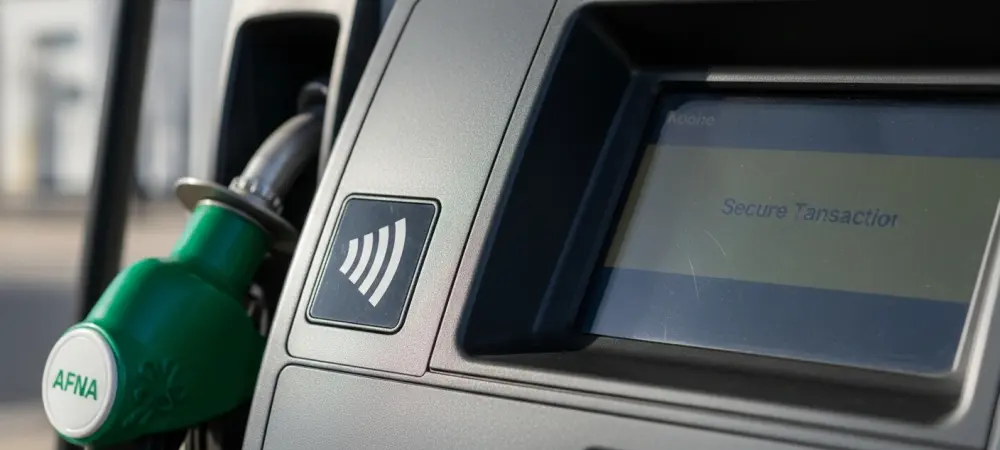
Drivers across the nation recently encountered a puzzling visual at the fuel pump that triggered a massive wave of anxiety across social media platforms regarding the safety of modern payment methods. Throughout 2026, TikTok and Facebook have been flooded with viral clips showing concerned citizens peeling off “tap-to-pay” decals to reveal older logos underneath, accompanied by urgent claims of high-tech skimming devices. These warnings, which spread rapidly through digital communities, suggested that a new breed of cybercriminal was targeting the ubiquitous contactless payment symbol to harvest sensitive financial data from unsuspecting travelers. While these individuals likely intended to protect their peers from theft, the resulting hysteria forced law enforcement agencies and retail security experts to step in and address the growing confusion. This widespread panic illustrated how easily a misunderstanding of industrial maintenance can transform into a full-scale public safety concern when amplified by the algorithmic reach of modern social networking sites.
The Anatomy: How Misinformation Spreads Online
The misinformation surrounding these fuel pump decals typically followed a highly specific visual narrative that effectively exploited the public’s inherent distrust of unfamiliar hardware. In these videos, an individual would approach a terminal and physically pry a sticker featuring the universal four-wave contactless payment symbol off the machine to uncover what appeared to be an identical or slightly older graphic underneath. To the untrained eye, this layered appearance served as definitive evidence that a malicious overlay had been surreptitiously applied by a criminal organization to intercept wireless signals. The narrators of these videos often used urgent and authoritative tones to describe the top sticker as a “skimmer” or a “fake reader,” designed specifically to capture data from a card the moment it was tapped. These social media posts frequently accumulated millions of views, as the dramatic “reveal” of the second sticker offered a sense of validation for those who already felt vulnerable to digital theft.
Beyond the simple claim of data harvesting, two distinct and somewhat contradictory theories emerged within the online discourse to explain how these supposed stickers functioned. One school of thought suggested that the decals contained thin, flexible electronic components that could record credit card numbers through near-field communication when a customer made a payment. A competing theory proposed that the stickers were intentionally designed to block the reader’s sensor, forcing a failure of the tap-to-pay feature. According to this second logic, criminals intended to frustrate drivers until they reverted to using the traditional physical card slot where a mechanical magnetic stripe skimmer was already hidden. This more complex explanation played on the reality that older skimming methods are well-documented, making the newer sticker-based threat seem like a logical evolution of criminal tactics. However, neither of these theories provided any concrete evidence of how such a thin piece of plastic could actually store or transmit stolen data.
Operational Reality: Maintenance and Law Enforcement Findings
Law enforcement agencies and intelligence bodies, including the Texas Financial Crimes Intelligence Center, performed comprehensive investigations into these claims to determine if any actual threat existed. Intelligence Operations Captain Jeff Roberts clarified in an official capacity that there had been zero confirmed reports of these stickers being utilized as electronic skimming devices or data-harvesting tools. Instead, the thorough investigation by state experts revealed that the decals were standard industry tools used by gas station owners to refresh the appearance of their equipment. Fuel pumps are subject to constant environmental stress, including intense UV exposure, extreme weather fluctuations, and the physical wear and tear of thousands of daily transactions. Over time, the original graphics printed on the terminals tend to fade, crack, or become difficult to read. Applying a fresh, durable sticker with the correct payment icons proved to be a standard operational procedure across the fuel retail industry.
Retail corporations like QuikTrip found themselves at the center of the controversy when specific footage showing their equipment went viral, prompting immediate responses from company officials. Corporate representatives and state regulators quickly confirmed that the controversial stickers were placed by authorized maintenance personnel as part of a routine brand management program. For a large-scale business, replacing a faded or damaged plastic decal is a significantly more cost-effective and efficient solution than commissioning the replacement of an entire payment terminal assembly. These official statements highlighted a massive gap between the perceived criminal activity seen on smartphone screens and the mundane reality of corporate equipment maintenance. Despite these clarifications, the initial videos remained online, creating a situation where factual administrative responses struggled to compete with the high-stakes drama of the original hoax. The disconnect between public perception and operational necessity underscored the difficulty of managing brand reputations.
Security Architecture: The Benefits of Contactless Payments
Cybersecurity professionals pointed out that the viral videos ironically encouraged behaviors that actually increased the risk of financial theft for the average consumer at the fuel pump. Near-field communication technology, which powers tap-to-pay transactions, is inherently more secure than traditional card swiping or inserting because it utilizes advanced tokenization. When a card or mobile phone is tapped against a reader, it transmits a one-time digital code, or token, rather than the actual credit card number or the sensitive CVV security code. If a criminal were to somehow intercept this transmission, the data would be useless for any subsequent transactions because the token expires immediately after the initial use. In contrast, the magnetic stripe on the back of a standard credit card contains static information that remains identical every time it is read. By frightening the public away from the security of contactless payments, the viral hoax inadvertently pushed many drivers back toward using the more vulnerable readers.
The enduring persistence of this specific hoax illustrated the profound challenges of managing digital misinformation when it is packaged as a public service or a community warning. Fear-based content tends to bypass logical analysis and travels through social networks far more rapidly than factual corrections issued by law enforcement or media outlets. Even after the sticker theory was definitively debunked by multiple state agencies, the original videos continued to circulate because the visual act of peeling back a sticker felt like a “gotcha” moment to viewers. This psychological phenomenon creates a cycle where misinformation overrides the testimony of experts, complicating the public’s understanding of how to actually protect their personal information. The visual nature of the “reveal” offered a false sense of empirical evidence that was hard to counteract with verbal explanations about tokenization or industry maintenance schedules. Consequently, the public remained divided between those who trusted the official reports and those who believed the hoax.
Proactive Defense: Verified Methods for Secure Transactions
To minimize the actual risks associated with fuel pump security, experts recommended that drivers adopt the use of mobile wallets such as Apple Pay or Google Pay for their transactions. These platforms added an extra layer of security because they required biometric authentication, like a fingerprint or facial scan, before the payment could even be initiated. Security professionals also suggested that individuals get into the habit of giving the card reader housing a quick physical tug to check for any loose components or overlays that felt out of place. If a terminal appeared to be blocked, unresponsive, or unusually bulky, the most secure move was to avoid the pump entirely and pay the attendant inside the building. This shift in behavior ensured that financial data remained protected from genuine skimming devices, which were typically much more substantial than a simple plastic sticker. By focusing on verified security practices, consumers were able to bypass the noise of viral misinformation and maintain safety.
Authorities ultimately concluded that the most effective way to combat these types of digital hoaxes was through consistent public education and a healthy dose of skepticism regarding viral claims. By understanding that a simple sticker was almost never a sophisticated electronic device, the public began to look for more realistic signs of tampering during their daily commutes. The incident served as a reminder that the best defense against evolving criminal tactics was not found in reactionary social media posts, but in the deliberate use of the most advanced payment technologies available. Moving forward, the focus shifted toward encouraging widespread adoption of contactless methods while maintaining a vigilant eye for physical anomalies that matched the profile of known skimming hardware. This transition allowed for a more balanced approach to personal security that respected the reality of technological threats without succumbing to groundless panic. The situation reinforced the importance of verifying sources regularly.