

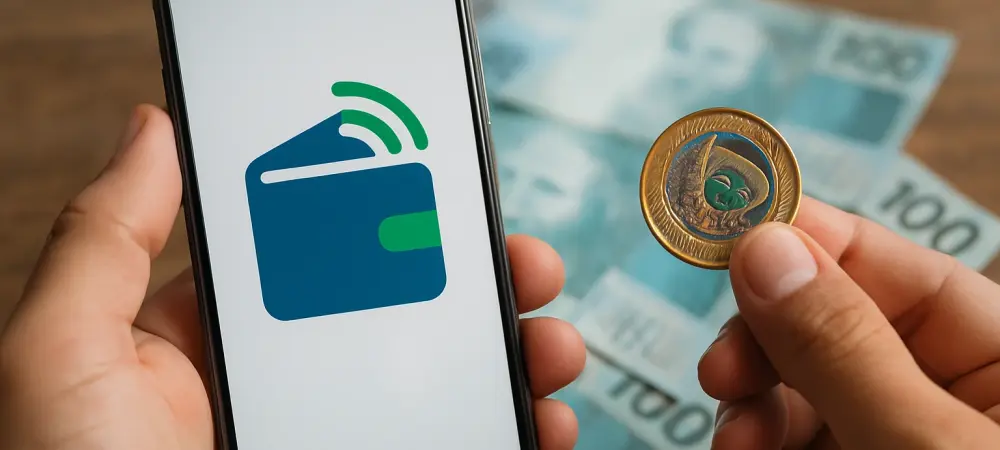
With an extensive background advising startups in emerging markets, Nikolai Braiden has a unique vantage point on the forces reshaping finance in Latin America. Today, he joins us to unpack the meteoric rise of digital wallets in Brazil, a market where these platforms are evolving far beyond simple payment tools. We’ll explore how wallets are fiercely competing with the dominant Pix system, their crucial role in fostering financial inclusion for millions, and the strategic battles between giants like Mercado Pago and NuPay for market supremacy.
Digital wallet usage surged 20% last year, outpacing even Pix’s growth. What specific features are driving this acceleration, and how are wallets differentiating themselves from Brazil’s dominant instant payment system? Please provide some concrete examples of this competitive dynamic.
It’s a fascinating moment in the Brazilian market. While Pix is a phenomenal success story for instant, direct payments, digital wallets are playing a different, more comprehensive game. Their 20% growth, even surpassing Pix’s 18%, is fueled by their transformation into all-in-one financial hubs. Unlike their global counterparts, which are often just a place to store card details, Brazilian wallets are packed with features like low-cost accounts, loans, and, most importantly, native credit and installment options. Think of it this way: Pix is like digital cash—fast and simple. A digital wallet, however, is the entire bank in your pocket. This distinction is crucial for higher-value purchases where a consumer needs financing, something Pix simply doesn’t offer on its own.
Digital wallets hold a 9% market share, trailing Pix and credit cards, which are both over 40%. What key consumer behaviors or merchant hurdles must be overcome for wallets to close this gap? Could you detail the steps a merchant might take to integrate them successfully?
That 9% share is a signal of massive potential, not a limitation. The primary hurdle is habit. For years, Brazilians have been conditioned to reach for either a credit card or, more recently, a Pix QR code. To close that gap, wallets must become synonymous with value beyond the transaction itself. For consumers, this means more attractive loyalty programs, better installment terms, and a seamless user experience. For merchants, the challenge is perception and integration. They might see it as just another payment method to manage. However, successful integration is quite straightforward. A merchant would partner with a payment processor that offers a digital wallet option. At checkout, the wallet appears alongside cards and Pix. When a customer chooses it, they are redirected to their wallet app to approve the payment, which can be a single payment or an installment plan. The key is for merchants to understand that this isn’t just another button; it’s a gateway to a new customer segment and larger basket sizes.
Unlike many global counterparts, Brazilian digital wallets often include loans, installment plans, and savings accounts. How does this expanded functionality drive financial inclusion for the 30% of Brazilians without credit cards? Could you share an anecdote illustrating this impact on a consumer’s purchasing power?
This is the heart of the revolution. We know that roughly 70% of Brazilians have credit cards, but smartphone penetration is at 88% and climbing. That gap represents tens of millions of people who are digitally connected but excluded from traditional credit. By embedding financial services directly into the phone, wallets are democratizing access. Imagine a young person who wants to buy an online course to improve their career prospects but lacks a credit card. With a digital wallet, they can apply for a small loan or, more likely, pay for the course in installments directly through the wallet’s native feature. They are approved in moments, not days. Suddenly, a purchase that was impossible becomes manageable. They are not just buying a product; they are gaining access to the global digital economy on their own terms.
A global travel company reportedly saw a 47% revenue jump after adopting digital wallets. How do native credit and installment features within wallets specifically boost sales for high-ticket items? Please walk us through the mechanics of how these transactions work for both the consumer and the merchant.
That 47% jump in daily revenue is a figure that makes everyone sit up and take notice. For high-ticket items like travel, the mechanics are a game-changer. Let’s say a customer wants to book a flight. At checkout, they select a digital wallet like Mercado Pago as their payment option. The wallet’s interface will then present them with the choice to pay in full or in several installments. This all happens within the wallet’s secure environment, leveraging its own credit-granting capabilities. The customer chooses their plan and confirms. For the merchant, the beauty is they receive the full payment upfront from the wallet provider, minus a fee. They don’t have to carry any of the credit risk. For the consumer, they’ve just made a significant purchase affordable without needing a traditional credit card. It’s a frictionless win-win that directly translates into higher conversion rates and revenue.
Subscription-based services like streaming and gaming are turning to digital wallets to grow. How does this technology solve the challenge of recurring payments for customers without a credit card? What specific metrics should these companies track to measure the impact of adding wallet payment options?
This is a critical growth vector. The subscription economy is built on the foundation of recurring credit card payments. But what do you do in a market where 30% of the population doesn’t have one? Digital wallets solve this elegantly. A user can authorize a recurring debit directly from their wallet balance, which they can top up using methods like Pix or bank slips. This opens up the entire subscription market—streaming, gaming, software-as-a-service—to a massive, untapped audience. To measure success, these companies should be tracking a few key metrics: the conversion rate for new sign-ups choosing the wallet option, the customer lifetime value (LTV) of wallet users versus credit card users, and, most importantly, the involuntary churn rate. I’d bet they see a significant reduction in churn from failed payments, as wallet balances are often more consistently maintained than credit card limits.
With Mercado Pago holding a 40% share and NuPay leveraging over 100 million potential users, the market is highly competitive. What distinct strategies are these two leaders using to attract and retain users? Please elaborate on how their value propositions differ for Brazilian consumers.
We’re watching a classic battle between an established incumbent and a powerful challenger. Mercado Pago, with its 40% share and roots in e-commerce, built its ecosystem from the ground up. Its strategy is one of deep integration—it’s the default payment method for the largest online marketplace in the region. They retain users by being an indispensable part of the entire shopping journey, from discovery to payment to credit. NuPay, on the other hand, is leveraging the colossal user base of its parent digital bank, which has over 100 million potential clients. Their strategy is built on trust and convenience. For an existing banking customer, using NuPay is a seamless, one-click extension of a financial relationship they already have. Mercado Pago’s value is in its commerce ecosystem, while NuPay’s is in its frictionless integration with a user’s primary digital bank.
What is your forecast for the digital wallet market in Brazil?
The trajectory is undeniably upward. While it won’t overtake Pix or credit cards overnight, the projected 13% compound annual growth through 2028 feels not just achievable, but perhaps even conservative. The fundamental driver is the smartphone; as it becomes the primary interface for every aspect of life, turning it into a complete financial center is the logical next step. I foresee a future where the lines between banking, payments, and credit blur completely within these wallet ecosystems. They will become even more indispensable, especially as they integrate more sophisticated financial products, ultimately solidifying their position as the third pillar of the Brazilian digital economy.