

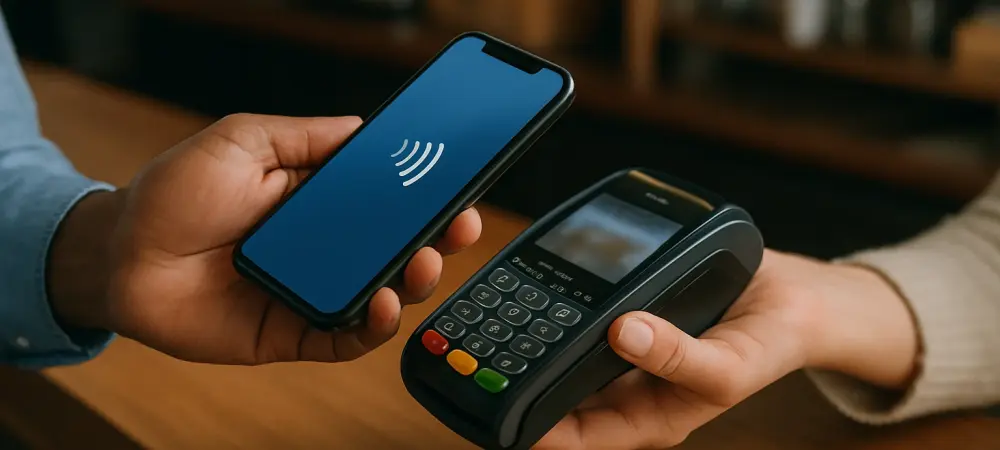
Imagine a small business owner in a bustling market, juggling customer interactions and sales without the burden of cumbersome payment hardware, simply using a smartphone to seal the deal. This is the reality that Apple’s Tap-to-Pay technology brings to life, transforming iPhones into point-of-sale (POS) terminals. In an era where digital payments dominate, this innovation stands out by empowering merchants, especially small-scale and mobile operators, to accept cashless transactions effortlessly. This review dives into the intricacies of this technology, exploring its features, real-world performance, and its potential to reshape the digital payments landscape.
Core Features and Functionality
At the heart of Apple’s Tap-to-Pay system is its ability to enable seamless payment processing directly on iPhones. Merchants can accept payments from digital wallets and physical cards with a simple tap, eliminating the need for traditional POS devices. This feature is a game-changer for mobile vendors and gig workers who thrive outside conventional storefronts, offering them a sleek, hardware-free solution. The user experience is intuitive, with transactions processed quickly through the iPhone’s built-in capabilities, reducing friction for both seller and buyer.
Another standout aspect is the integration with local payment ecosystems. Apple has partnered with major providers like Adyen, Visa, and Mastercard to ensure compatibility across diverse markets, including recent expansions in regions like Singapore. This adaptability allows merchants to tap into established payment networks, ensuring reliability and trust. Such technical synergy not only boosts performance but also enhances accessibility for businesses navigating varied financial landscapes, making it a versatile tool for global adoption.
Performance and Market Impact
The performance of Apple’s Tap-to-Pay technology shines in its global reach, now spanning 50 markets with Singapore as a recent milestone. This expansion reflects a strategic push to cater to small businesses and independent workers, providing them with secure, cost-effective payment solutions. Feedback from merchants highlights the efficiency of processing transactions without fixed infrastructure, positioning this technology as a rival to established platforms like Square and Clover. Its ability to handle contactless payments aligns with the growing consumer preference for speed and convenience.
Moreover, Apple’s decision to open its NFC (Near Field Communication) technology to third-party developers has spurred innovation and competition in the payment space. This move intensifies the race against competitors who have long relied on hardware-centric models. While challenges like regulatory hurdles and market-specific obstacles persist, the widespread use of iPhones gives Apple a unique edge, embedding payment solutions into a device already in millions of hands. This near-ubiquity fuels its potential to dominate over alternative offerings.
Real-World Applications
Across industries, Apple’s Tap-to-Pay technology is making waves by addressing the needs of diverse users. Small business owners, creators, and field service providers benefit immensely from its portability and ease of use. In markets like Belgium and Denmark, for instance, mobile merchants have adopted it to streamline operations at pop-up events and on-the-go services, showcasing its flexibility in dynamic settings. These implementations underline how tailored solutions can empower non-traditional business models.
In contrast, the technology also serves gig economy workers who require quick, reliable payment methods without investment in expensive equipment. Whether it’s a freelance artist at a local fair or a delivery driver settling a transaction, the ability to process payments instantly via a personal device bridges a critical gap. This democratization of payment processing reveals a broader impact, leveling the playing field for individuals and micro-enterprises in an increasingly digital economy.
Challenges and Limitations
Despite its promise, Apple’s Tap-to-Pay faces notable hurdles in a competitive landscape. Established POS platforms like Square and Clover offer robust, feature-rich alternatives that cater to merchants with more complex needs, such as staffed operations. Apple’s solution, while ideal for solo entrepreneurs, may struggle to match the depth of these systems, potentially limiting its appeal to larger small businesses. Navigating this rivalry requires continuous innovation to stay relevant.
Additionally, technical and regulatory challenges loom large. Ensuring consistent performance across varied global markets, each with unique compliance demands, poses a significant obstacle. Efforts to address these issues are ongoing, with Apple refining its platform to meet merchant expectations. Overcoming such barriers will be crucial for sustained growth, especially as competitors advance their own mobile payment offerings in parallel.
Final Thoughts and Next Steps
Reflecting on the journey of Apple’s Tap-to-Pay technology, its impact on small businesses and independent workers stood out as a transformative force. The expansion into 50 markets, including Singapore, highlighted a commitment to accessibility that reshaped how transactions were conducted. Its seamless integration and user-friendly design marked a pivotal shift in the digital payments arena, even as competition intensified.
Looking ahead, the focus should pivot toward enhancing functionality to meet evolving merchant demands, such as advanced analytics or multi-user capabilities. Apple could explore deeper partnerships with local financial entities to navigate regulatory landscapes more effectively. As the payments industry continues to evolve, staying attuned to user feedback and technological advancements will be vital to solidify this technology’s place as a cornerstone for small-scale commerce in a cashless world.