

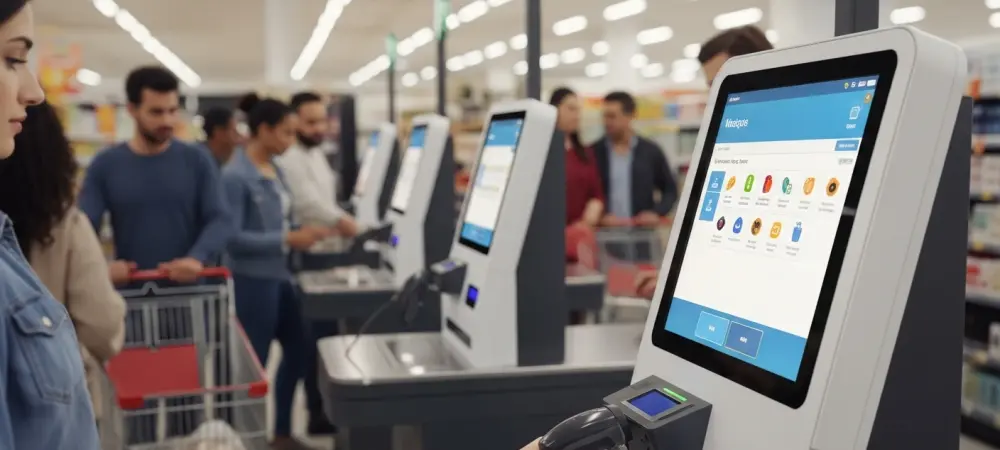
From In-House Experiment to Industry-Wide Service
Amazon’s recent decision to close all 72 of its Amazon Go and Amazon Fresh cashierless stores marks a pivotal moment, not of failure, but of strategic realignment. While the closures signal the end of a high-profile experiment in consumer-facing retail, they simultaneously herald the beginning of a new chapter for the technology that powered them. This article explores Amazon’s calculated pivot from using its “Just Walk Out” system as a direct-to-consumer feature to marketing it as a powerful business-to-business (B2B) solution. This analysis will delve into why the initial model struggled, how the technology is thriving in new environments, and what this shift reveals about the future of automated retail.
The Grand Vision and Commercial Reality of Just Walk Out
When Amazon Go first launched, it was hailed as a glimpse into the future of retail—a world without lines or traditional checkouts. The concept was simple yet revolutionary: customers would walk in, take what they wanted, and simply walk out, with their Amazon account automatically billed. This frictionless experience was powered by a sophisticated blend of computer vision, sensor fusion, and deep learning. The company later expanded this vision to its larger Amazon Fresh grocery stores. However, the ambition to revolutionize its own grocery operations ran into the complex realities of consumer behavior, where the novelty of the technology did not always outweigh shoppers’ preference for familiar checkout routines. This context is essential to understanding that the recent store closures represent not a technological dead end, but a strategic course correction.
Analyzing the Strategic Shift in Retail Technology
Decoding the Disconnect Why Shoppers Resisted the Future
The core reason for phasing out “Just Walk Out” from Amazon’s own grocery stores was not a technical shortcoming but a commercial one. While the system worked as designed, it failed to win over a critical mass of mainstream grocery shoppers who were accustomed to, and often comfortable with, traditional self-checkout or staffed lanes. For many, the perceived benefit of skipping the final checkout step did not justify the learning curve or the feeling of being constantly monitored. One industry expert framed this not as a failure, but as a necessary evolutionary step. Much like early inventions that struggled to find a commercial foothold, “Just Walk Out” needed to find its ideal application—a context where its benefits of speed and convenience would be overwhelmingly clear to the end user.
Finding the Right Fit The B2B Model’s Proven Success
Freed from the constraints of the traditional grocery store format, Amazon’s “Just Walk Out” technology is flourishing as a B2B service. The company is now actively licensing the system to third-party operators in environments where speed is paramount. With deployments in over 360 locations across five countries, the technology has found its true product-market fit in places like sports arenas, concert venues, hospitals, and university campuses. For example, a major hospital dramatically reduced cafeteria wait times, allowing staff to get back to their duties faster. Likewise, sports stadiums have seen a significant increase in concession sales, as fans can grab food and drinks without missing the action. These use cases demonstrate a clear and compelling value proposition that was less apparent in a weekly grocery shopping trip.
A Tale of Two Technologies Repurposing vs Retiring Innovation
Amazon’s strategic refinement of its retail tech portfolio is further illustrated by its handling of another innovation: the Amazon One palm recognition system. Unlike “Just Walk Out,” which is being repurposed, Amazon One is being retired completely. The decision was driven by low customer adoption, as consumers showed a clear preference for more familiar biometric authentications like fingerprint and facial recognition. In a move to underscore its commitment to user trust, Amazon has confirmed that all associated user data for the palm-scanning system will be permanently deleted. This contrast highlights a key lesson: while some technologies can be successfully pivoted to new markets, others fail to gain user acceptance and must be discontinued, underscoring the importance of aligning innovation with existing consumer behaviors.
The Future of Frictionless Commerce Amazon as a B2B Powerhouse
By shifting its focus, Amazon is repositioning itself from a retail competitor to a foundational technology provider for the entire industry. This B2B strategy allows the company to monetize its significant investment in “Just Walk Out” on a global scale, without the massive overhead of operating hundreds of its own physical stores. The future of this technology lies in becoming the invisible engine behind countless quick-service environments where eliminating friction is a competitive advantage. We can expect to see this system become a standard feature in airports, transit hubs, and corporate cafeterias, solidifying Amazon’s role as a key enabler of autonomous commerce.
Strategic Lessons from Amazon’s Retail Tech Evolution
The primary takeaway from Amazon’s journey is that technological innovation must solve a specific, tangible problem for its target user. For “Just Walk Out,” the problem wasn’t the weekly grocery run but the frustratingly long lines at a stadium concession stand. Businesses looking to adopt new technologies should focus less on novelty and more on identifying precise pain points where automation can deliver an undeniable benefit. Furthermore, the complete retirement of Amazon One serves as a crucial reminder that user acceptance is non-negotiable; even the most advanced technology will fail if it makes customers uncomfortable or seems overly intrusive. The best practice for any organization is to test, learn, and be willing to pivot or even abandon projects based on real-world market feedback.
A Calculated Pivot Toward a Broader Impact
In conclusion, Amazon’s closure of its Go and Fresh stores should not be misinterpreted as a retreat from physical retail innovation. Instead, it is a sophisticated and strategic pivot that repositions one of its most advanced technologies for greater, more widespread success. By shifting “Just Walk Out” to a B2B model, Amazon has transformed an expensive in-house experiment into a scalable, high-margin service that addresses clear needs in specific commercial environments. This move demonstrates a mature understanding that the ultimate value of a technology is determined not by its creator’s vision, but by the market’s practical embrace, ensuring its influence will be felt far beyond Amazon’s own digital and physical aisles.