

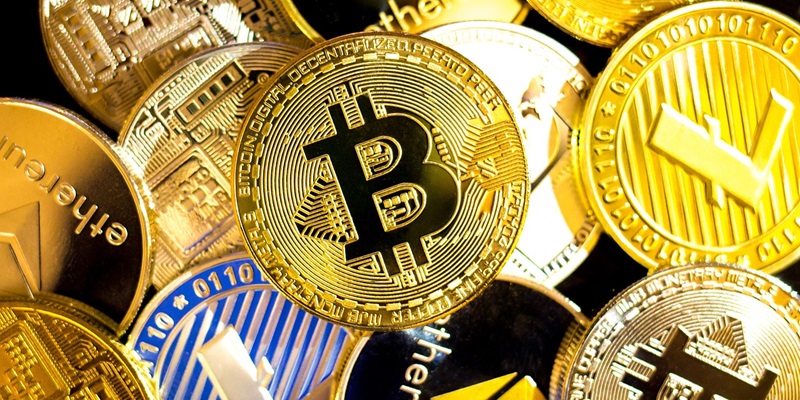
In recent years, the cryptocurrency market has witnessed significant growth and diversification with the emergence of altcoins – all cryptocurrencies other than Bitcoin. As we look ahead to 2024, understanding the potential impact of these rising stars is crucial for both seasoned investors and those entering the cryptocurrency space. This article explores the influence of four prominent altcoins – Ethereum, BNB, Cardano, and Solana – on the Bitcoin market, as well as the broader implications of their rise.
Ethereum’s Impact on the Bitcoin Market
Ethereum, a decentralized platform, has had a profound impact on the Bitcoin market. Its role as a platform for various decentralized finance (DeFi) applications has created a new wave of opportunities and possibilities. Through smart contracts, Ethereum empowers developers to build applications that enable financial transactions, lending, and even decentralized exchanges. These developments have influenced Bitcoin market dynamics as investors recognize the value of integrating DeFi applications with Bitcoin, potentially driving its adoption and liquidity.
BNB’s Potential Impact on the Bitcoin Market
BNB, the native token of the Binance ecosystem, has the potential to shape the Bitcoin market in several ways. Firstly, BNB’s ability to attract users seeking faster and more cost-effective transactions may pose a competitive challenge to Bitcoin. With the Binance platform’s vast user base, BNB’s popularity could indirectly influence Bitcoin’s transaction volume and demand. Additionally, BNB’s utilization as a trading pair with Bitcoin on Binance can impact its liquidity and market behavior.
Cardano’s Potential Impact on the Bitcoin Market
Cardano, known for its commitment to sustainability, addresses ongoing concerns related to energy consumption within the cryptocurrency space. As environmental issues become more critical, Cardano’s focus on energy-efficient mining and blockchain processes may position it as an attractive alternative to Bitcoin for environmentally conscious investors. This shift in perception could impact Bitcoin’s market reputation and influence its future market share.
Solana’s Potential Impact on the Bitcoin Market
Solana’s emphasis on speed and scalability makes it a potential game-changer in the cryptocurrency landscape. By offering fast transaction processing and the capacity to handle high volumes of transactions, Solana could attract users seeking a more efficient alternative to Bitcoin. This increased competition may put pressure on Bitcoin to improve its transaction speed and scalability, ultimately shaping the Bitcoin market.
Polkadot, a multi-chain platform, acts as a bridge between different blockchain networks, enabling interoperability. This functionality presents a unique opportunity to connect Bitcoin with other blockchains, potentially enhancing its utility and allowing for novel applications. Polkadot’s role as a facilitator of cross-chain transfers and interoperability could reshape the Bitcoin market landscape by expanding its capabilities and integration with other blockchain projects.
The rise of Altcoins introduces healthy competition and diversification within the cryptocurrency market. While Bitcoin remains the dominant force, the emergence of innovative Altcoins has spurred technological advancements, offering investors a range of investment opportunities beyond Bitcoin. This diversification reduces the concentration risk associated with solely holding Bitcoin and encourages investors to explore other promising projects.
Ripple Effect of Positive Developments from Altcoins
Positive developments or innovations from prominent altcoins can create a ripple effect, shaping not only how investors perceive those specific altcoins but also the cryptocurrency market as a whole. When altcoins demonstrate successful use cases, improved technology, or regulatory advancements, it instills confidence in the wider market. This ripple effect may attract new investors, increase mainstream acceptance, and foster further innovation across the cryptocurrency ecosystem.
The Growing Influence of Altcoins
The growing influence of altcoins signals an evolution in the cryptocurrency ecosystem. As altcoins carve out their niches and gain traction, they bring new perspectives, technologies, and solutions to the market. This evolution sparks healthy competition, fosters innovation, and encourages collaboration among blockchain projects. Ultimately, it contributes to the overall maturation and adoption of cryptocurrencies.
Altcoins, such as Ethereum, BNB, Cardano, and Solana, have the potential to significantly impact the Bitcoin market and the broader cryptocurrency landscape. Understanding their roles and potential effects is essential for investors and industry participants. The continued rise of altcoins introduces healthy competition, diversification, and technological advancements, ultimately shaping the cryptocurrency ecosystem as a whole. As the market continues to evolve, keeping a pulse on these developments is essential to staying informed and making informed investment decisions.