

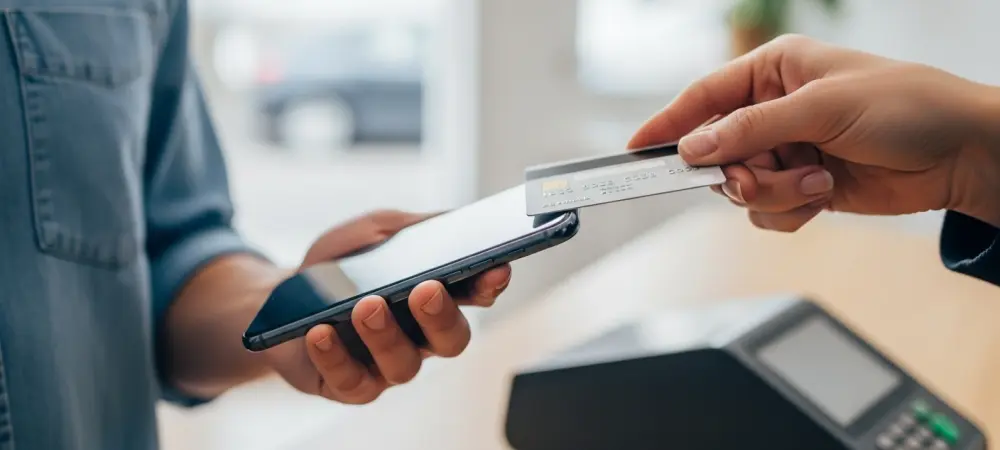
With a legacy spanning decades and a footprint across more than 20 countries, Arab Financial Services (AFS) has long been a powerhouse in the Middle East and Africa’s digital payments landscape. The company, backed by 37 banks and financial institutions, recently achieved a significant breakthrough by launching its SoftPOS solution nationwide in Egypt, becoming one of the first to do so with a full license from the Central Bank of Egypt. This move promises to democratize digital payments by turning any modern smartphone into a secure payment terminal. Today, we delve into the strategic thinking behind this launch, exploring how this technology will reshape the merchant experience, the crucial role of regulatory collaboration and security, and the company’s vision for fostering a more inclusive digital economy in Egypt and beyond.
The Central Bank of Egypt has licensed your SoftPOS solution. What were the key regulatory milestones in this process, and what are the strategic advantages of being one of the first entities to bring a fully licensed Tap-to-Phone solution to the Egyptian market?
Securing the license from the Central Bank of Egypt was a meticulous and collaborative process, not just a single event. It involved rigorous demonstrations of our platform’s security architecture, data handling protocols, and its overall reliability. The key was proving that a smartphone could meet the same stringent security standards as a traditional payment terminal. Being one of the very first to market with a fully licensed solution is a massive strategic advantage. It allows us to establish the standard for this technology and build a deep level of trust from the outset. For merchants, knowing that our solution is fully endorsed and regulated by the CBE provides a peace of mind that is simply invaluable as they take their first steps into digital payment acceptance.
For a small merchant in Egypt, how exactly does this technology lower the barrier to accepting digital payments? Could you walk us through the step-by-step onboarding process and detail the specific hardware and operational costs a business can now avoid by using their smartphone?
Imagine a small shop owner or a delivery driver who previously could only accept cash. The barrier to digital payments felt like a mountain. It meant applying for a traditional POS terminal, which involved paperwork, upfront costs, and often monthly rental fees for the hardware. Our SoftPOS solution completely flattens that mountain. The process is incredibly simple: they download our secure application onto their existing NFC-enabled Android smartphone, complete a straightforward digital onboarding process, and that’s it. Within minutes, their phone becomes a fully functional payment terminal. They completely avoid the cost of buying or renting a separate device, saving them a significant amount of money and eliminating the operational headache of managing another piece of hardware. It’s about turning a device they already own and use every day into a powerful tool for business growth.
CEO Samer Soliman called this launch a “transformative milestone.” Beyond initial adoption, what specific metrics will AFS track to measure its impact on financial inclusion in Egypt, and what new features or use cases are planned to further this goal?
“Transformative” is exactly the right word, and our measurement of success goes far beyond just counting downloads. We are tracking the number of micro, small, and medium-sized enterprises we onboard who have never accepted digital payments before—that’s a core metric for financial inclusion. We will also monitor their transaction volumes and values to see how this tool is helping them grow. But as our CEO mentioned, this launch is just the foundation. We are already planning to expand the feature set within the app. Think about adding simple tools for inventory management, digital receipting, or even micro-financing opportunities based on their sales history. It’s about evolving from a simple payment acceptance tool into a comprehensive digital commerce platform that truly empowers a digitally-enabled economy.
Given AFS’s experience serving over 60 clients in more than 20 countries, what key lessons from other markets are you applying to the nationwide rollout in Egypt? How does being owned by 37 banks influence your strategy for scaling this technology?
Our experience across the region has taught us that while the technology is global, the implementation must be deeply local. We understand the unique challenges and opportunities in each market. In Egypt, we are applying lessons about the importance of a simple user interface, robust customer support, and building trust through transparency. Our ownership by 37 banks and financial institutions is our greatest asset in this endeavor. It’s not just about capital; it’s about credibility and infrastructure. This backing gives us an unparalleled network for distribution and assures both merchants and consumers that we are a stable, secure partner. It means we aren’t just another tech company; we are an extension of the formal, trusted financial ecosystem, which is critical for driving mass adoption.
With businesses using personal smartphones as payment terminals, security is a major concern. What technical security measures are built into the SoftPOS solution, and what steps do you take to build trust with merchants who are new to accepting digital payments?
Security is non-negotiable, and it’s engineered into every layer of our solution. When a customer taps their card on the merchant’s phone, the card data is instantly encrypted and transmitted through secure channels. We utilize tokenization, which means the actual card number is never stored on the smartphone itself, rendering the device useless to a potential fraudster. But technical measures are only part of the equation. Trust is built through our actions. The fact that we are licensed by the Central Bank of Egypt is the most powerful trust signal we can send. We reinforce this with clear communication, straightforward terms, and accessible support to ensure merchants feel confident and secure from their very first transaction.
What is your forecast for the adoption of Tap-to-Phone payment technology in Egypt and the wider Middle East and Africa region over the next five years?
My forecast is incredibly optimistic. The convergence of high smartphone penetration and government-led digital transformation initiatives creates the perfect environment for this technology to flourish. In Egypt, I expect to see exponential growth as the word spreads among small business communities about the sheer cost-effectiveness and convenience. This will not be a slow burn; it will be a rapid acceleration. Looking at the wider region over the next five years, Egypt will serve as a powerful blueprint. Markets with similar dynamics will see an accelerated push, and I predict that Tap-to-Phone will become the default payment acceptance method for millions of small merchants across the Middle East and Africa, fundamentally changing the landscape of commerce.