

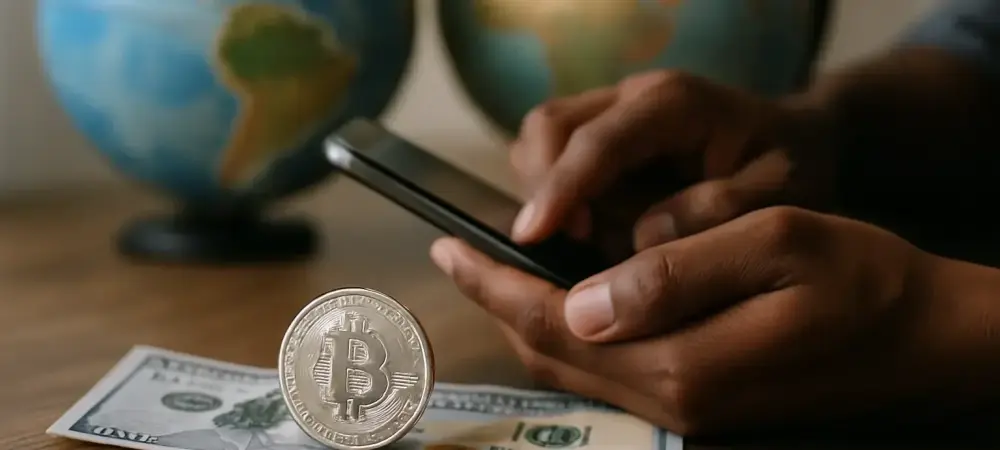
Sending money across borders remains a surprisingly complex and expensive endeavor, a friction point that modern technology has yet to fully resolve for millions globally. The use of stablecoins for these payments, however, represents a significant advancement, and this review explores this evolution through the strategic partnership between infrastructure provider Noah and consumer app Fin.com. By analyzing their joint solution, its performance potential, and its impact on global remittances, this review provides a thorough understanding of this application, its current capabilities, and its potential for future development.
An Introduction to a Modern Payments Infrastructure
The core principle of using stablecoins as a rail for international money transfers is to bypass the slow and costly correspondent banking system. This emerging model leverages blockchain technology for its speed, low cost, and accessibility. Regulated infrastructure providers are now collaborating with consumer-facing applications to abstract away the technical complexities of digital assets, making the benefits available to a non-technical audience.
This collaborative approach creates a new paradigm for global payments. It combines the efficiency and transparency of digital assets with the user-friendly experience of traditional financial apps. The result is a hybrid solution that delivers a superior end-user experience without requiring any knowledge of the underlying blockchain mechanics, aiming to make global money movement as simple as a local transfer.
Analyzing the Core Technology and Partnership Model
Noah’s Regulated Infrastructure Backend
The foundation of this model rests on the infrastructure provider’s role. Noah issues regulated virtual EUR and USD account details, which enables users of the partner app, Fin.com, to receive funds as if they were local transactions. This crucial step removes the initial friction associated with international transfers, making the service feel familiar to the sender.
Beyond providing virtual accounts, Noah manages the critical backend functions necessary for regulatory compliance. This includes all user onboarding, Know Your Customer (KYC) verification, and Anti-Money Laundering (AML) checks. Furthermore, continuous transaction monitoring ensures the platform remains secure and compliant, building a framework of trust essential for handling user funds.
Fin.com’s Seamless Consumer Facing Application
With the compliance and core infrastructure handled by Noah, Fin.com is able to focus exclusively on the consumer-facing element. The application is designed to provide a simple, intuitive interface for users to manage their funds, effectively hiding the complexity of stablecoin conversion and management. The primary goal is to deliver an accessible platform for a global user base, regardless of their technical expertise.
This focus on user experience is what makes the technology viable for mass adoption. The app presents balances in familiar currency terms and simplifies actions like holding, spending, or sending funds into a few taps. By abstracting the blockchain layer, Fin.com ensures that users can leverage the benefits of stablecoins without facing the steep learning curve often associated with digital assets.
The On Ramp and Off Ramp Payment Mechanism
The service’s technical core is its fluid on-ramp and off-ramp mechanism. The process begins when a user receives a traditional bank transfer into their virtual Noah-powered account. These funds are instantly and automatically converted into stablecoins and reflected in their Fin.com app balance, ready for immediate use.
The “off-ramp” is arguably the most critical feature for remittance corridors. It allows users to convert their stablecoin balance back into local fiat currencies in markets like India, Bangladesh, and the Philippines through Fin.com’s payment network. This end-to-end flow, from fiat to stablecoin and back to fiat, provides a complete and practical solution for cross-border value transfer.
Emerging Trends in Digital Asset Remittances
The Noah and Fin.com initiative exemplifies a growing trend of using digital assets to overcome traditional financial hurdles. This is particularly relevant in markets where volatile local currencies make saving and transacting difficult. Stablecoins offer a reliable store of value, giving users a way to protect their funds from inflation and devaluation without exiting the digital financial ecosystem.
This shift moves beyond simple remittances toward integrated solutions that offer stability and efficiency. The technology provides a powerful tool for savings and international wealth management, all without requiring users to have deep cryptocurrency knowledge. It represents a practical application of digital assets designed to solve real-world financial challenges for a global audience.
Real World Applications and Target Markets
The technology’s practical applications are most evident in its target markets across South Asia. The service provides users in these regions with a stable, dollar- or euro-denominated account to manage their funds, a service that is often difficult to access through traditional means. Key use cases include receiving salaries from overseas employers directly into a stable currency.
This model also facilitates low-cost remittances and enables seamless family support across borders. For many gig economy workers, international students, and families of expatriates, it eliminates the need to open a traditional bank account in Europe or the United States. This dramatically lowers the barrier to participating in the global economy, providing a direct and efficient financial lifeline.
Challenges and Considerations for Market Adoption
Despite its potential, the technology faces several challenges. Technical hurdles include scaling the infrastructure to securely support massive transaction volumes as the user base grows. Moreover, a key market obstacle is building trust among a user base that may be new to or skeptical of digital assets, requiring clear communication and a flawless user experience.
The complex and evolving regulatory landscapes in both sending and receiving countries present another significant consideration. Navigating these different legal frameworks is crucial for sustained operation and widespread adoption. As regulators worldwide continue to define their stance on stablecoins, their decisions could directly affect the service’s performance and accessibility.
Future Outlook and Scalability
The initial outlook for this model appears strong. Based on early demand and projections, the infrastructure is poised to support over $250 million in monthly transaction volume, signaling significant market potential and a clear need for such a solution. This early traction suggests the partnership is well-positioned for rapid growth.
Future plans likely involve expansion into new payment corridors and the introduction of additional financial services. The long-term impact of this model could be transformative, contributing significantly to financial inclusion by providing safe, affordable, and accessible financial tools to underserved populations and reshaping the broader remittance industry.
Conclusion A New Model for Global Financial Access
The strategic partnership between an infrastructure provider like Noah and a consumer application like Fin.com presents an effective and scalable model for deploying stablecoin-based payment solutions. By dividing responsibilities, the model plays to each partner’s strengths, combining regulatory rigor with a user-centric design. Ultimately, this technology demonstrates a clear potential to significantly reduce the cost and friction of cross-border payments. It stands as a powerful example of how digital assets can be harnessed to enhance financial access, offering a more inclusive and efficient system for individuals and families participating in the global economy.